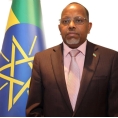
Dr. Gonzalo Castro de la Mata
Since being awarded the rights to host the 2022 FIFA World Cup over 12 years ago, Qatar has been well and truly in the spotlight. The country’s efforts to deliver a tournament that set new benchmarks for social, economic, and environmental standards were regularly under scrutiny. However, critics often analysed Qatar’s performance using standards and frameworks that failed to consider the unique context in which the tournament was set, and therefore did not accurately portray the progress being made.
Sustainability and climate change have been particular focus areas for negative commentators. Qatar’s commitment to greener practices – a natural extension of the nation’s environmental and sustainability goals – has often been challenged due to misconceptions about carbon emissions and biodiversity.
These conclusions often use standardised models to assess the country’s environmental performance and fail to understand what sustainability means in the context of the country’s climate and natural conditions, or to properly capture Qatar’s contributions to global sustainability. This article looks at two of the common sustainability-related criticisms Qatar faces and responds to these by highlighting the wider context and consideration.
Biocapacity deficit A commonly used ecological footprint measurement considers Qatar as having one of the largest “biocapacity deficits” in the world, meaning that it uses its renewable natural resources beyond their regenerative capacity.
Sustainability is often defined as the development path that meets current needs without compromising the needs of future generations. For most countries, this translates to development strategies and policies that do not encourage the depletion of resources beyond their natural regenerative capacity. For example, a country that relies primarily on timber exports to finance its economy should not cut its forests at a rate that exceeds the growth needed to replace them.
Qatar’s territory, however, is very small and sits on the harshest desert on the planet. Therefore, its economy cannot be sustained by its natural environment or its “biocapacity.” Instead, it is an economy in which non-renewable natural resources (primarily exports of natural gas) have enabled the creation of massive human and infrastructure capital and savings, thus generating vast prosperity for its population. Sustainability needs to be understood in the context of this capital transformation.
Climate change Qatar is often condemned for having the highest greenhouse gas (GHG) emissions per capita on the planet. Greenhouse gasses are the main contributor to global climate change, and Qatar emits about 106 million tons of CO2 equivalents (a source of GHG emissions) per year - however this equates to less than one-fifth of one percent of overall global emissions. Of course, it is important to reduce emissions and promote energy efficiency and transition to renewable sources because this enhances economic productivity and helps meet the country’s international commitments. But it is misguided to point the finger at the country by calculating emissions on a per capita basis, particularly when its total emissions are negligible.
How about its gas exports? After all, Qatar is the largest exporter of liquified natural gas (LNG), a hydrocarbon that releases GHGs when burned. Natural gas, however, releases only one-half of greenhouse gases per unit of energy when compared with coal. Therefore, when Qatar’s gas exports go to countries that rely primarily on coal for generating electricity, the net effect of this coal displacement is a reduction of emissions to the atmosphere. The role of gas as a transition energy source to meet the Paris Agreement’s 1.5-degree target by 2050 is essential, as recognized by the IPCC in its latest report. In addition, there is also the element of energy security associated with gas that must be considered, as demonstrated by recent events in Europe.
Other positive news includes Qatar’s efforts to lead the way to lower emissions and decarbonize its LNG value chain by reducing flaring, and the significant investments Qatar is making in renewable energy to support its energy transition, as well as on new technologies for carbon capture and storage and hydrogen, investments that will benefit humankind at large.
Ultimately, Qatar is taking vigorous steps in the right direction and the examples above demonstrate that a sustainability framework for the country needs to reflect its own realities, rather than simply following international methods applied without sufficient analysis. In addition to developing a robust sustainability definition and framework, there are other sustainability issues that are also worth mentioning as part of a comprehensive agenda. These include the continued diversification of the economy, expansion of renewable sources, reducing waste, enhancing water efficiency and food security, and conserving the country’s unique desert biodiversity and ecosystems. These are all critical issues for Qatar but also for other countries in arid environments facing similar challenges.
In support of the country’s commitment to sustainability, the Earthna Center for a Sustainable Future was established in March 2022. Earthna, which means ‘our legacy’ in Arabic, is a policy center focused on dry and arid climates – to inform, create, and reframe the global narrative on environmentalism and sustainability.
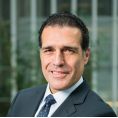
Dr. Gonzalo Castro de la Mata is the Executive Director of Earthna Center for a Sustainable Future