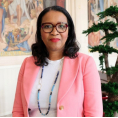
Dr. Carolyne Lunga
The Reuters Institute for the Study of Journalism and technology’s report on trends and predictions for 2026 motivated me to write this article which discusses the challenges and opportunities facing journalism as told from the viewpoints of media executives, and innovators.
As a professor of journalism, it is part of my responsibility not merely to follow the news, but to identify the structural changes reshaping the profession and bring those shifts into the classroom. These structures influence the way that journalism is practiced and the news that audiences consume. Students engage with developments in real time and deepen their learning while keeping up with industries of their choice.
Present day journalism is undergoing change due to various factors including generative AI, platform dependency, the rise of newsroom influencers and content creators, war and the challenges of reporting from conflict zones, economic precarity, and a deepening crisis of trust. To understand journalism today, it is not sufficient to consider the local context only, instead comparative approaches enables those interested in the profession to acquire a holistic understanding of the changes taking place in various contexts.
At the start of 2026, the Reuters Institute published Journalism, Media, and Technology Trends and Predictions 2026, one of the most closely watched annual barometers of the news industry. The report draws on a survey of 280 senior media leaders across 51 countries, including editors-in-chief, chief executives, managing directors, and heads of digital or innovation and 1 country in the Global South, South Africa. Although the sample is informed largely by countries in the Global North, the report remains valuable as it identifies the opportunities and challenges currently confronting the profession, some of which affect countries in the Global South. It is important to caution that for those countries which are not represented by the survey, readers should check locally produced industry reports and talk to journalists and media executives in those countries.
Some of the highlights of the report include the rise of content creators and podcasters who are playing a critical role in the news ecosystem, disseminating news from political leaders, celebrities and businessmen. These podcasters offer a forum where politicians directly address citizens thus bypassing traditional media whose gatekeeping function makes them less trustworthy and reliable particularly for younger news audiences who access their news on social media platforms such as YouTube, Tik Tok and X among others.
This trend has become popular in various parts of the world. As I write this article in May 2026, I have observed these trends online including in the UK and US among other countries. Declining trust in journalism calls for media organisations to rethink their roles particularly when it comes to impartiality, truth and accuracy as it pertains to how they cover big international news stories that are on the international news agenda. The Iran War, Ukraine War, War in Gaza, The Epstein files among others. Citizens are also on the lookout for media’s guidance on the economy, AI integration and impact in everyday life, Climate issues among others.
In its 2025 World Press Freedom Index, Reporters Without Borders (RSF) concluded that press freedom globally has fallen to its worst level since their Index began. World Press Freedom Day celebrations this year were marked by events in various parts of the world, celebrating the important role that journalists play in informing society of events happen under them under very challenging conditions.
The report acknowledges that journalists continue to be a target when they are known to be reporting about people in power. This has become a persistent problem meant to deter the media from effectively carrying out their responsibilities. Another key trend in the report is the increasing adoption of generative AI by publishers. Generative AI is used for newsgathering, faster coding and creating greater scale and efficiency in their operations. Some media organisations are using AI to draft stories freeing journalists to do original journalism. Artificial intelligence is also used for selecting images, tagging content, generating social media posts, and helping with factchecking.
The report states that for media to survive in this increasingly challenging environment, they should be distinct. ‘The importance of quality, originality and direct, meaningful relationships with audiences is considered key in this environment. Media organisations are encouraged to double down on content that is unique, for example original investigations/on the ground reporting, human interest stories and stories that are thoroughly explained and provide context.’ These are findings I have uncovered in my research, where readers are prepared to pay for investigative journalism because of the unique information and insights it offers. It also emerged from the report that there is a rise in new terminology associated with AI.
For example, words such as vibe coding defined as the practice of writing code, making web pages, or creating apps, by just telling an AI program what you want. Liquid content describes content or stories that are not static but adapt in real time based on the viewer's context, location, time, or interaction. Answer Engine Optimisation (AEO) describes ways in which content providers can get better visibility within AI chatbots and other AI driven interfaces, digital provenance. Digital provenance describes the ability to verify the origin and history of digital media in an AI-infused world where sophisticated deepfakes are becoming more common.
Media executives shared with the RISJ how they plan to put more effort on YouTube, AI platforms, TikTok, alternative traffic sources, Instagram in what is described as the videofication of everything greater brought by focus on more joyful creators who can keep people engaged and entertained within the feed than distressing journalistic. Journalism trends and predictions offer useful insights that call for media executives in various media contexts to reflect on while considering their own local contexts and how they can better serve their audiences.

Dr. Carolyne Lunga is an Associate Professor in Digital Communication and Media Production (DCMP) at the University of Doha for Science and Technology (UDST)