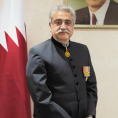
Dr. Afraa Al Noaimi
When we think of the Olympic Games, we usually think of competition, medals, and national pride. Yet beyond athletic performance, the Olympics are among the most powerful cultural stages in the world. They are moments when nations are not only represented, but interpreted by billions of viewers, often within a matter of minutes.
This was particularly evident during the Milan–Cortina Winter Olympics, where the opening ceremony revealed an important shift: sport is no longer only a field of competition, but a platform for cultural diplomacy. What stood out was not excess or spectacle, but something distinctly Italian fashion used as a cultural language.
The Olympics as a cultural stage
Olympic opening ceremonies are carefully curated performances. They are not neutral celebrations; they are symbolic moments through which host countries communicate who they are and how they wish to be understood.
In Milan–Cortina, Italy did not attempt to reinvent itself. Instead, it leaned into cultural continuity craftsmanship, elegance, and restraint. This choice says a great deal about how cultural influence operates today. Influence is no longer about being the loudest or the most technologically overwhelming; it is about being coherent.
Fashion beyond industry
Fashion is often discussed as an industry or a trend-driven market. In a diplomatic context, however, fashion operates very differently. It becomes a non-verbal language, capable of communicating identity without explanation. Fashion does not argue. It does not persuade directly. It invites recognition.
In a global ceremony watched across cultures and languages, this matters deeply. Fashion bypasses linguistic and political barriers, allowing meaning to circulate with minimal resistance. It engages audiences emotionally and visually, creating familiarity rather than instruction.
This is precisely why fashion works so effectively in ceremonial diplomacy.
Why Armani matters
The presence of Giorgio Armani in the cultural framing of the Milan–Cortina Olympics was not about celebrity endorsement. Armani represents something deeper in the Italian cultural imagination: discipline, and timeless elegance.
These qualities align seamlessly with diplomatic storytelling. They suggest confidence without arrogance and continuity without nostalgia. In this sense, fashion became a way for Italy to perform its identity rather than explain it.
Sport as carrier, culture as message
Sport brings attention. Culture gives it meaning. The Olympics provide the platform, but it is culture that shapes how a nation is remembered. Milan–Cortina demonstrated this clearly: the sporting event carried the global spotlight, but fashion shaped the narrative.
This is what effective sports diplomacy looks like today, not slogans, campaigns, or overt branding, but carefully embedded cultural signals that feel authentic rather than promotional.
Cultural diplomacy without imposition
The ceremony did not attempt to universalise Italian culture or present it as a model to be adopted. It simply offered it as a presence to be encountered.
This invitation-based approach reflects a mature form of cultural diplomacy, one that respects difference rather than seeking dominance. It acknowledges that influence does not require persuasion, and that recognition is often more powerful than agreement.
Why this matters beyond Italy
The Milan–Cortina case offers valuable lessons for states navigating an increasingly complex global environment. Cultural influence does not require scale or spectacle. It requires clarity of identity, coherence of expression, and confidence in one’s cultural voice.
In an age of geopolitical tension and cultural fatigue, moments like the Olympic opening ceremony remind us that diplomacy can still be practiced through shared experience, symbolism, and cultural memory.
In the end, the Milan–Cortina Olympic opening reminds us that diplomacy does not always arrive through speeches or agreements. Sometimes, it arrives through form, movement, and cultural presence. When sport carries culture and culture is expressed with clarity and restraint, it creates space for recognition rather than persuasion. This is where cultural diplomacy is at its most powerful: not in telling the world who you are, but in allowing the world to understand you.
— Dr. Afraa Al Noaimi is a cultural diplomacy researcher and creative and cultural strategist.