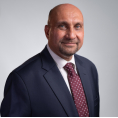
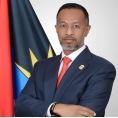
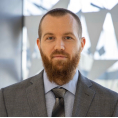
HE Karim Morcos, HE Andrii Kuzmenko & HE Olav Myklebust
Every morning at 9:00 am, Ukraine stops.
Across cities in Ukraine, loudspeakers normally used to warn of incoming Russian air strikes broadcast the steady tick of a clock.
City streets full of life fall silent.
Traffic lights turn red. Cars stop.
For one minute, a country pauses.
This is Ukraine’s daily moment of silence, a nationwide act of remembrance for those killed in Russia’s war in Ukraine. In workplaces, homes, schools, markets and on highways, Ukrainians pause to honour those who gave their lives defending their country’s sovereignty and freedom, and remember the thousands of civilians whose lives have been lost to Russia’s war with Ukraine.
The silence also mirrors the absence felt by thousands of families whose loved ones have yet to come home.
Among them are the thousands of Ukrainian children who have been forcibly transferred and unlawfully deported by Russia over the course of its war. Separated from their families and communities, many have had parts of their core identity stripped away: their language, their culture, and even their names.
Others are civilians unlawfully detained in territories temporarily occupied by Russia. Many have suffered consequences for teaching their language, practicing their culture, speaking out against occupation, or sharing the truth about what they have witnessed. Some have been transferred to detention facilities in Russia, where they are held without due process, denied contact with loved ones, deprived of adequate medical care, and shielded from independent monitoring.
For Ukrainian prisoners of war in Russian custody, conditions remain similarly concerning. Returnees have reported harsh treatment, while independent bodies have documented widespread abuse, including torture and sexual violence.
These are not side effects of Russia’s war. Russia’s actions are repeated and well-documented violations of international law, carried out at scale, in an attempt to bend the will of the Ukrainian people.
Behind every case is a human story: a parent waiting for a child, a spouse waiting for a phone call, a family waiting for someone to come home.
We know that the true measure of peace is found in these human-centred stories. It is found in a child returned to their family, a civilian released from unlawful detention, a prisoner of war reunited with loved ones, and a community given the chance to heal and rebuild.
The scope of this issue is immense, and no country or organization can address it alone. Success requires sustained cooperation among governments, international organizations, humanitarian actors, and civil society.
This is why Canada, Norway, and Ukraine convened foreign ministers and international partners in Toronto on September 28 and 29 for Pathways to Peace: Second International Conference on Returning Ukrainian Children, Detained Civilians, and Prisoners of War.
Building on the progress made at the Ministerial Conference on the same topic, hosted by our three countries in Canada in 2024, the conference brought international partners together to support Ukraine’s efforts to return, rehabilitate and reintegrate Ukrainian deported children, detained civilians, and prisoners of war.
Their return is a humanitarian imperative and critical to any peace process, helping to build trust and lay the groundwork of a just, lasting and dignified peace. Every person returned reunites a family. Every family reunited strengthens a community. And every community prospering helps rebuild Ukraine.
Qatar has been an important partner in these humanitarian efforts. The State of Qatar participated in the 2024 Ministerial Conference in Montreal, where it reaffirmed its commitment to diplomatic and humanitarian solutions and highlighted its ongoing mediation in reuniting Ukrainian children with their families. Since the beginning of these efforts, Qatari mediation has helped 83 Ukrainian children return and reunite with their families — a tangible result that demonstrates how sustained diplomatic engagement can change individual lives.
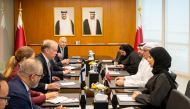
We therefore particularly welcome Qatar’s participation in this year’s Pathways to Peace conference in Toronto, led by H E Dr. Mariam bint Ali bin Nasser Al-Misnad, Minister of State for International Cooperation. Qatar brings to the table valuable practical mediation experience and a demonstrated ability to translate humanitarian commitments into concrete results.
Its continued engagement is especially important as the international community works not only to return deported Ukrainian children, but also to secure the release of unlawfully detained civilians and prisoners of war. We look forward to working closely with Qatar to improve the situation in the future and to advance practical humanitarian outcomes for those affected by Russia’s war against Ukraine.
Each morning, millions of Ukrainians pause to remember those who are gone and those who have yet to return. In their remembrance and with extraordinary courage and ingenuity, they also repair what Russia has damaged, care for one another, and strengthen the communities that Russian aggression has sought to tear apart.
It is our hope that Pathways to Peace will mobilize the international community not only to pause with Ukraine in remembrance, but to act alongside it to help bring home every deported child, detained civilian, and prisoner of war.
The views expressed in this article are the authors' own and do not necessarily reflect The Peninsula's editorial policy.

The Ambassador of Canada to Qatar H E Karim Morcos, Ambassador of Ukraine to Qatar H E Andrii Kuzmenko, and Norway Ambassador to Qatar (non-resident) H E Olav Myklebust