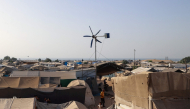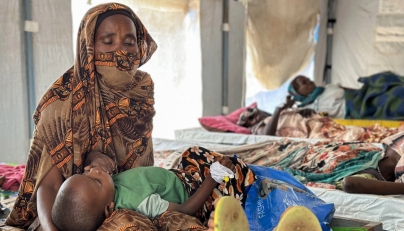
Khartoum: The United Nations has warned that about 15.4 million people in Sudan urgently need emergency shelter and essential household items, including millions who have chosen to return to their areas of origin. In a joint statement, the UN Refugee Agency (UNHCR) and the International Organization for Migration (IOM) said that the conflict in Sudan is deepening civilian suffering three and a half years after it began. Shifting front lines are forcing more families to flee, leaving many without shelter amid a severe funding shortfall. The two organizations explained that, because of funding constraints, humanitarian agencies can prioritize assistance for just 10 per cent of those in need, leaving a vast gap between growing needs and the resources available to respond. In remarks to reporters, Deputy Representative of UNHCR in Sudan Abubakarr Jalloh noted that three out of every four displaced people in the country are women and children. He added that El Nino had brought far less rain to Sudan this year, affecting harvesting across Darfur, Kordofan, and many other areas that are already impacted by the ongoing fighting. Although Sudan faces the world's largest displacement crisis, its 2026 Humanitarian Needs and Response Plan remains severely underfunded, having received only 47 per cent of the US$2.9 billion required.

Washington, United States: The United States has recorded more than 5,000 cases of measles this year, the highest number in 35 years, according to an official count released Friday. So far in 2026, 5,182 confirmed cases of the highly contagious but highly preventable disease have been reported across the country, according to the Centers for Disease Control and Prevention (CDC), the nation's leading public health agency. That compares with 2,289 cases during all of 2025, and is the highest level recorded by the CDC since 1991. State health officials have reported at least eight measles-related deaths, including among very young children. Pediatrician Adam Ratner, who specializes in infectious disease, told AFP such deaths are "tragic, and that is completely preventable." Measles was declared eradicated from the United States in 2000 thanks to vaccination, but in recent years it has made a strong comeback, fueled by declining vaccination rates and growing public distrust of health authorities. President Donald Trump's Health Secretary Robert Kennedy Jr. is accused of fanning that distrust. He is known for his vaccine skepticism and has repeatedly disseminated misinformation about the measles vaccine and downplayed the dangers of the disease. "Robert F. Kennedy Jr. does not believe that measles is a big problem and and does not want to believe that there are deaths from measles," Ratner said. "The burden of these diseases will fall on children, who are not the ones who are making these decisions." Measles causes fever, respiratory symptoms and a rash, and in some cases more serious complications such as pneumonia and brain inflammation, which can lead to severe long-term health problems or even death. Before the vaccine was developed in the early 1960s, measles killed hundreds of children each year across the US. It continues to claim tens of thousands of lives worldwide.
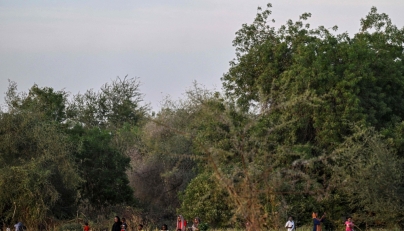
Khartoum: Throughout history, Sudanese women remained a symbol of pride and dignity, serving as an essential pillar in building society and shaping its narrative. Etched into the nation's history since the era of ancient Sudanese kingdoms, their contributions span national, social, cultural, and economic spheres. Far from being mere observers, women have acted as direct partners in shaping national events, guardians of cultural identity, nurturers of generations, and architects of hope under the direst of circumstances. Sudanese women have long embodied both strength of conviction and nobility of spirit, standing as exemplars of resilience and sacrifice as they continuously contribute to shaping Sudan's present and envisioning its future. The war that erupted in Sudan in April 2023 was not merely a military confrontation that brought daily life to a standstill and disrupted state institutions; it triggered profound shifts across the economic and social landscape. It imposed an extraordinary reality upon Sudanese women, burdening them with compounded responsibilities that extend well beyond family care to include securing livelihoods, managing crises, and devising innovative ways to endure. Amidst these severe repercussions, Sudanese women have proven to be far more than victims or passive witnesses to the conflict. They have emerged as a dynamic force, confronting the crisis directly, shielding society from fragmentation, and securing essential necessities for affected families. From leading humanitarian initiatives, community kitchens (takaya), and frontline healthcare services to launching productive economic projects, Sudanese women stand out as a model of resilience and initiative. Demonstrating an unwavering capacity to confront challenges and foster hope, they continue to pave the way toward recovery and reconstruction. Amid job losses, institution closures, market disruptions, and widespread displacement, many Sudanese women have turned to establishing small-scale enterprises and reviving home-based productive activities. Leveraging digital media to market their products, they actively manage online commercial and media platforms to build professional networks and generate alternative income streams. A Long Legacy of Participation and Achievement These contemporary efforts build upon a deep history of participation in public life and the labor market, a journey accelerated by the expansion of women's education in the early 20th century. The first school for girls was established in the city of Rufaa in 1907, followed by a women's teachers' training college in Omdurman in 1921. This marked the beginning of an upward trajectory characterized by growing involvement and excellence across academic, scientific, and research fields. In 1952, the first two Sudanese women graduated as physicians. Subsequently, female representation expanded rapidly across education, healthcare, law, administration, media, and politics, as well as agriculture, commerce, and self-employment. Sudanese women have also established a commanding presence within professional, legal, and judicial institutions. They have held leadership positions within the judiciary, public prosecution, and the courts, while managing high-level economic and administrative portfolios, including serving as Governor of the Central Bank, and directing diverse technical and service-oriented institutions. Furthermore, women have driven private enterprise and small-scale economic activities, particularly in food processing, handicrafts, agricultural production, and trade, though much of this labor historically remained outside official employment statistics. At the legislative level, Sudanese women first entered parliament in 1965. Female parliamentary representation grew alongside the country's political evolution, reaching 18 percent in 1999, 25 percent in the 2010 elections, and 30 percent in 2015. This sustained representation helped integrate women into the legislative process, advancing discussions on labor laws and public policy. The 2007 National Civil Service Act subsequently introduced provisions for equal pay for equal work, merit-based promotions, maternity leave, and specific arrangements for nursing mothers. However, full implementation of these legal rights, and their extension to women in the informal sector, remains an ongoing challenge. World Bank data, drawing on International Labour Organization (ILO) estimates, indicates that female labor force participation in Sudan stood at approximately 14.5 percent in 2022, compared to 61.6 percent for men. However, this metric does not fully capture the vast scope of women's contributions to domestic labor, agriculture, family businesses, and informal trade, all of which serve as vital pillars of household survival. With the conflict ongoing since April 2023, obtaining updated labor market data has become increasingly difficult due to the erosion of economic infrastructure and the disruption of national resources, including human capital, of which women form an essential component. War and Reshaping of Working Women's Reality The war caused widespread disruption across the labor market. Factories, commercial centers, and public institutions have ceased operations; infrastructure has suffered critical damage; and banking systems and transport networks remain severely impaired. Widespread displacement has stripped thousands of households of their primary income sources. Faced with these severe conditions, Sudanese women did not wait for external aid. Drawing on their experience and a strong sense of social responsibility, they took the initiative to establish grassroots coping mechanisms. In doing so, they have set a powerful example of protecting the social fabric and fostering solidarity during national crises. This contribution is particularly evident in women-led relief efforts across conflict and displacement zones. Community kitchens (takaya) and neighborhood support groups have emerged as vital components of the local humanitarian response, operating alongside grassroots endeavors to rebuild lost income streams. Given the immense logistical challenges facing international aid agencies in reaching frontline areas, women have taken the lead in managing community kitchens within neighborhoods and displacement centers, ensuring food reaches the most vulnerable. This leadership extends to the healthcare sector, which suffered extensive destruction, looting, and arson, where female physicians, nurses, and volunteer teams have become the primary backbone maintaining essential medical services across hospitals, shelters, and refugee camps. This presence extended beyond humanitarian relief into economics, media, and social organization, both within Sudan and across neighboring host countries. Despite losing properties, assets, and homes, thousands of displaced women have launched small enterprises and created innovative production and marketing operations covering handicrafts, food industries, and services, injecting critical liquidity into host community markets. Women in Media: Active Engagement and Resilience in War To gauge the role of Sudanese female journalists during the war, SUNA spoke with Professor of Journalism and Mass Communication at Omdurman Islamic University and Director of Sudan Academy for Communication Sciences and Media Training Dr. Salwa Hassan Siddiq. Dr. Siddiq highlighted that Sudanese women in media have emerged as vital partners in raising public awareness, acting as eyewitnesses, and chronicling the human and social impacts of the war despite facing displacement, personal loss, and severe professional and family pressures. Since the outbreak of the conflict, female journalists maintained their professional mission across official institutions, newspapers, and digital platforms. They have utilized diverse journalistic forms, from news reporting and features to investigative pieces and op-eds, to raise awareness and address complex political, economic, and social issues. She added that their role extended beyond reporting events to investigating sensitive files, chief among them sexual violence and war violations. They have documented citizen suffering firsthand while balancing family burdens and professional obligations under highly complex conditions, with some facing trials and legal challenges due to their coverage of war-related issues. Dr. Siddiq also pointed to active involvement of female journalists in relief and support associations, such as Esnad (Sudanese Support Association for War-Impacted) in Egypt. She noted her own documentation of wartime practices in her book From Zero Distance, a compilation of 30 stories published last April. This active engagement continues a legacy of Sudanese women in journalism dating back to the 1950s and 1960s, pioneered by figures such as Fatima Ahmed Ibrahim, Suad Al Fatih Al Badawi, and Nafisa Ahmed Al Amin, proving that the mission of female journalists intensifies during crises to safeguard truth and shape public consciousness. Women Business Leaders: Economic Initiatives Countering War Impact Vice President of Economic Services Division at Federation of Commercial Chambers Samia Shabo stands among the prominent business leaders working outside Sudan to encourage displaced women to join small-scale enterprises, establishing multiple projects to absorb war-affected women. Shabo stated in a statement to SUNA that the conflict generated severe economic and production challenges, including factory closures, disrupted supply chains, loss of income sources, and soaring production and raw material costs, directly impairing women-led enterprises. Despite these hurdles, businesswomen have sought to preserve and re-establish their ventures across host areas inside and outside Sudan. Production continued across food industries, bakery items, soap and detergents, perfumes, fashion design, traditional Sudanese attire (thoubs), and handicrafts. She explained that entrepreneurs leveraged their business expertise and commercial networks to secure new operational and marketing outlets despite capital shortages, financing constraints, and energy disruptions. Shabo emphasized that the war underscored the critical role of women-led enterprises in sustaining local economies and preserving household income, calling for women to be granted the necessary platform, opportunities, and resources to participate in shaping Sudan's future. Women Empowerment: A Necessity for Recovery and Reconstruction As Sudan moves toward recovery and reconstruction, supporting women across all sectors and leveraging their proven resilience during crises emerges as a strategic imperative. This requires expanding opportunities for internal and external participation while providing technical training and capacity building. Furthermore, enabling businesswomen to restore their productive capacity requires flexible financing mechanisms, alternative energy solutions, machinery, raw material inputs, and direct links between women's products and domestic and international markets. Rebuilding the national economy necessitates engaging women as primary partners in production and investment, rather than passive beneficiaries of relief programs, thereby driving job creation, diversifying the productive base, and accelerating sustainable economic recovery. Ultimately, Sudanese women have proven to be far more than observers of the war; they acted as central agents in managing daily life, preserving the social fabric, and securing basic dignified living conditions, continuing to pave the way toward recovery and the rebuilding of Sudan's future. (QNA)
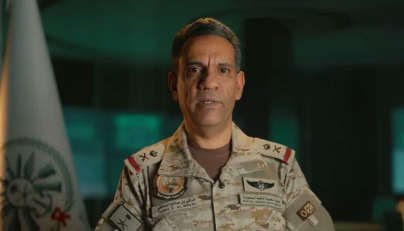 Coalition forces intercept, destroy drone in Saudi eastern province
Riyadh: The Coalition to Restore Legitimacy in Yemen announced on Thursday that air defense forces intercepted and destroyed a drone in the Eastern Province of the Kingdom of Saudi Arabia. Official Spokesperson for the Coalition, Major General Turki Al Malki...
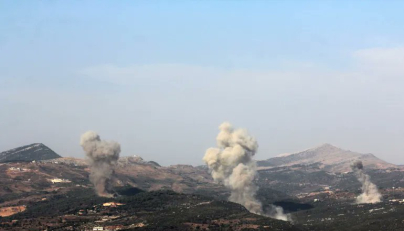 Israeli occupation steps up attacks in southern Lebanon, Lebanese media reports
Beirut: Israeli forces have continued their attacks on several villages and towns in southern Lebanon, according to the Lebanese National News Agency. The agency reported that an Israeli patrol advanced towards the outskirts of Kfar Kila, near Deir Mimas, and...
 China launches trade probes into EU chemical, fibre imports
Beijing: Beijing launched dual trade probes against goods imported from the European Union on Friday, less than a month after it agreed with Brussels to stabilise economic relations. China's Ministry of Commerce said it had initiated an anti-dumping investigation into...
Two People Killed as Small Plane Crashed in Northeast of Germany
Berlin: Two people were killed on Friday when a small German plane crashed onto a highway northeast of the city of Magdeburg. In a statement, police indicated that preliminary investigations show the aircraft did not collide with any vehicles on...
Over 15 million Sudanese need urgent aid: UN
Khartoum: The United Nations has warned that about 15.4 million people in Sudan urgently need emergency shelter and essential household items, including millions who have chosen to return to their areas of origin. In a joint statement, the UN Refugee...