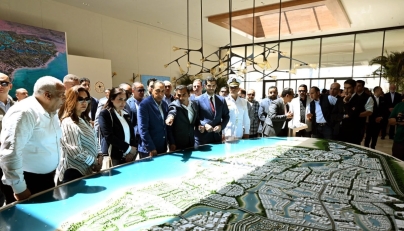
Doha, Qatar: Qatari Diar has officially announced the launch of the first phase of its landmark Alam Al Roum development on Egypt’s North Coast, marking the beginning of one of the Mediterranean’s most ambitious mixed-use urban and tourism destinations. The project represents a total investment of $29.7bn, including $3.5bn in direct cash investments, with handover of the first phase scheduled to begin in 2030. The first phase is expected to generate thousands of direct and indirect employment opportunities as part of the project’s overall target of creating more than 250,000 jobs upon completion. It will also open significant opportunities for Egyptian and international contractors to participate in the construction works, strengthening the competitiveness of the local construction sector and reinforcing Qatari Diar’s commitment to maximising local value creation. The announcement was made during a site visit by Prime Minister H E Dr. Mostafa Madbouly, accompanied by the Minister of Housing, Utilities and Urban Communities, H E Randa El Menshawy, as part of his tour to review major development and investment projects and monitor implementation progress across Egypt’s North Coast. Upon arrival, the Prime Minister was welcomed by Qatari Diar CEO, Sheikh Hamad bin Talal Al-Thani, along with the company’s senior executives, who presented the implementation roadmap and timeline for Phase One ahead of construction. During the visit, the Prime Minister and the accompanying delegation reviewed the project’s masterplan. The development is one of Qatari Diar’s largest integrated urban and tourism projects worldwide and its biggest investment in Egypt. Spanning 20.58 million square meters, the project boasts 7.2 kilometers of Mediterranean waterfront and is envisioned as a fully integrated coastal city combining residential, hospitality, commercial, cultural, entertainment, educational, and healthcare components within a modern urban framework designed to create a sustainable community for future generations. Commenting on the launch, Qatari Diar CEO, Sheikh Hamad bin Talal Al-Thani, said: “We are delighted to officially launch the first phase of Alam Al Roum in the presence of His Excellency the Prime Minister and the accompanying delegation. This milestone reflects the scale of our commitment to Alam Al Roum, with total investments of $29.7bn across the project, including $3.5bn in direct cash investments. We remain committed to start delivering this phase by 2030, supported by Egypt’s stable investment environment and long-term partnership opportunities.” He added: “Phase One embodies our vision of creating a world-class coastal city that introduces a new lifestyle on the Mediterranean, guided by the highest international standards of urban planning and sustainability. From the earliest stages, we have partnered with leading global experts in master planning, marina design, hospitality consulting, landscape architecture, and infrastructure engineering to ensure the project meets international best practices.” He continued: “We are implementing Phase One according to a carefully structured timeline targeting starting delivery in 2030. The project will help attract further investment, strengthen Egypt’s tourism sector, and capitalise on the exceptional advantages of the North Coast. We are confident that this milestone will make a significant contribution to the Mediterranean’s investment, tourism, and urban development landscape.”
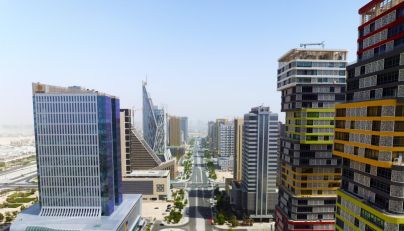
Doha, Qatar: Qatar’s commercial office sector demonstrated a growing divide between prime and secondary assets during the second quarter of 2026, noted ValuStrat in its latest real estate report. While high-end developments in Lusail continued to record rent growth, secondary properties faced ongoing price reductions as corporate tenants prioritised space efficiency and cost control. Lusail led overall growth with a 4.5 percent year-on-year gain, while established clusters like Al Sadd and Bin Mahmoud experienced a 1.7 percent annual drop. The data highlighted that approximately 4,650 square metres of gross leasable area (GLA) was delivered during Q2 2026, bringing the country’s total office inventory to approximately 7.6 million square metres GLA. New completions were strictly restricted to Grade B and C office units located within industrial complexes in Birkat Al Awamer. Grade A office supply remained entirely unchanged during the quarter, with Doha municipality representing 57.9% of prime stock and Lusail accounting for the remaining 42.1 percent. The ValuStrat Office Rental Index slipped to 96.2 points in Q2 2026 (relative to its Q1 2024 baseline of 100), reflecting general softness in commercial leasing. However, asset quality determined performance outcomes across submarkets as prime office properties recorded a 1.6 percent annual increase in rental rates. Anum Hasan, Head of Research at ValuStrat Qatar, said, “Office rents remained broadly stable, with Grade A rates unchanged and Grade B rents declining by 2.1 percent QoQ.” Read Also Ministry of Transport urges public to renew small craft licences via Darb app Food Safety Department intensifies monitoring Housing rents hold firm as mortgage activity surges The report noted that the sharpest quarterly drops occurred in Al Sadd and Bin Mahmoud (-5.6 percent) and along C-Ring Road (-4.3 percent), while Salwa Road and Industrial Area Road clusters declined 4.6 percent annually. With limited inbound corporate expansion, commercial lease absorption relied heavily on domestic companies and semi-government bodies upgrading their premises. Notably, semi-government occupiers shifted away from legacy business districts into modern developments such as The Pearl Qatar, freeing up additional inventory in traditional hubs. An estimated 80,628 square metres GLA is slated for delivery through the remainder of 2026. However, market analysts warn that shipping bottlenecks, rising project costs, and cautious leasing interest could delay completions or lead developers to reassess near-term capital deployment. “Market participants reported that workforce reductions, delayed expansion plans, and workplace reviews had begun to affect occupancy, although the impact remained limited,” Hasan said. She further added, “Demand continued to be supported by relocations to higher-quality offices by semi-government entities, although this largely represented existing occupiers upgrading rather than new demand.”
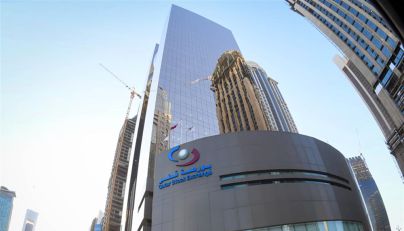
Doha: The Qatar Stock Exchange (QSE) index closed Sunday's trading session lower by 12.14 points, or 0.12 percent, reaching 10,100.11 points. A total of 146,777,210 shares were traded during the session, with a total value of QAR 304,902,482.906 through 19,398 transactions across all sectors. The shares of 20 companies advanced, while those of 27 other companies declined, with the shares of five companies remaining unchanged. Market capitalization at the close of trading stood at QAR 607,413,382,477.832 compared to QAR 608,244,312,146.536 in the previous session.
Qatari Diar launches phase one of ‘Alam Al Roum’ development
Doha, Qatar: Qatari Diar has officially announced the launch of the first phase of its landmark Alam Al Roum development on Egypt’s North Coast, marking the beginning of one of the Mediterranean’s most ambitious mixed-use urban and tourism destinations. The...
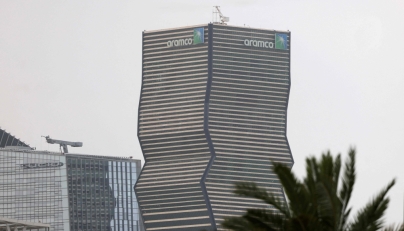 Oil giant Aramco's profits soar 44 pct as war boosts prices
Riyadh, Saudi Arabia: Oil giant Saudi Aramco reported a 44 percent surge in net profits on Tuesday after the Middle East war sent energy prices soaring. Aramco, the world's biggest oil exporter and engine of the Saudi economy, is the...
 Strong labour market underpins US economic resilience: QNB
Doha, Qatar: Qatar National Bank (QNB) said the US economy continues to demonstrate resilience in the face of current domestic and external pressures, despite a moderation in the labour market and increased economic uncertainty. In its weekly commentary, the bank...
 US stock indexes close higher, S&P 500 hits record high
New York: Major US stock indexes closed higher on Friday, with the S&P 500 reaching a record high as investors responded to weaker-than-expected US jobs data that reduced expectations of a Federal Reserve interest rate hike in September. The S&P...