Doha, Qatar: As Qatar Foundation marks its 30th anniversary, it has launched The QF Generation, an immersive storytelling initiative that brings together 30 individuals whose lives have been shaped by QF. Through personal reflections, they share their journeys and highlight how they are now contributing meaningfully to their professions and communities.
Over the past three decades, Qatar Foundation has cultivated a diverse local, regional, and global community grounded in strong identity, global openness, and leadership for positive social change. For many, their journey began in QF classrooms, while others connected with QF later through opportunities that transformed their direction. Collectively, they represent a generation that reflects the founding purpose and vision of QF.
The QF Generation is presented through a limited-edition commemorative coffee table book and an interactive digital platform featuring 30 stories that illustrate QF’s lasting impact on lives. The collection showcases students, educators, researchers, innovators, and changemakers who discovered their purpose through QF and are now making a difference across sectors, disciplines, and borders.
Visitors are invited to explore deeply personal narratives spanning early education, university experiences, research achievements, entrepreneurial journeys, and unexpected moments of inspiration. While each story is unique, all reveal how QF has shaped individual growth—and how these individuals are, in turn, shaping the world around them.
Among those featured is Dr. Aisha Yousuf. From being one of just 16 students in the first class of Weill Cornell Medicine–Qatar, to becoming the first Qatari woman to perform robotic gynecological surgery, Dr. Aisha Yousuf has built a career defined by “firsts” – all driven by her mission to serve women.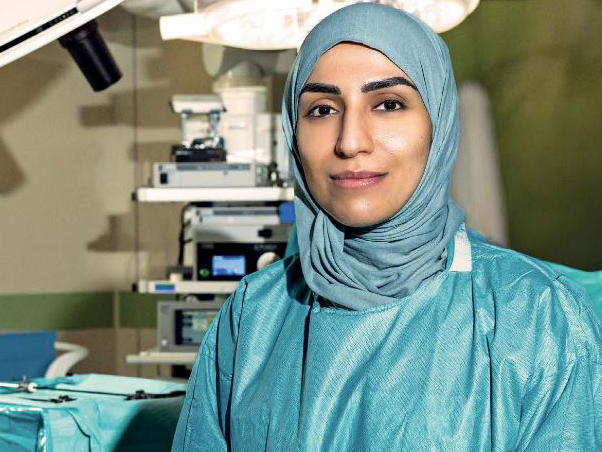 Dr. Aisha Yousuf
When Dr. Aisha graduated from Weill Cornell Medicine–Qatar in 2008, she was already accustomed to breaking new ground—being a member of the QF partner university’s inaugural class meant she was part of a pioneering moment for medical education in Qatar.
“Medical school is never easy,” she recalls. “But QF gave us the environment and the support to push through. It believed in us before we even believed in ourselves.”
Her conviction to pursue medicine was shaped by a teenage inspiration: Doctors Without Borders. “Medicine felt like a passport to help others,” she reflects. “It is the one profession where all barriers—language, culture, background—cease to exist.”
She chose obstetrics and gynecology with a clear purpose. “Many women feel more comfortable being treated by another woman. I felt obliged to be one of the women surgeons they could turn to.”
After advanced training in the US and Canada, Dr. Aisha returned to Qatar to join QF’s Sidra Medicine as its Medical Director of Gynecology. There, she established minimally invasive and robotic gynecology services, performing Qatar’s first robotic hysterectomy by a local surgeon. Today, she specializes in offering women minimally invasive alternatives to open surgery.
Yet, for Dr. Aisha, technology is only a tool. “It’s not just about performing a surgery,” she says. “It’s about improving a woman’s quality of life, helping her heal faster, and giving her back her time.”
Ousman Camara from a Gambian teenager finding his way in Qatar to an educator changing lives in Sierra Leone. Camara turned the lessons of Qatar Foundation into action – empowering orphaned youth through education and hope.
In a remote village in Sierra Leone, Lamin and Kadie Bah Academy faced a challenge. Ninety percent of its students were orphans who had lost parents to Ebola. The school dreamed of sending them to university, but the students lacked the skills and confidence to get there.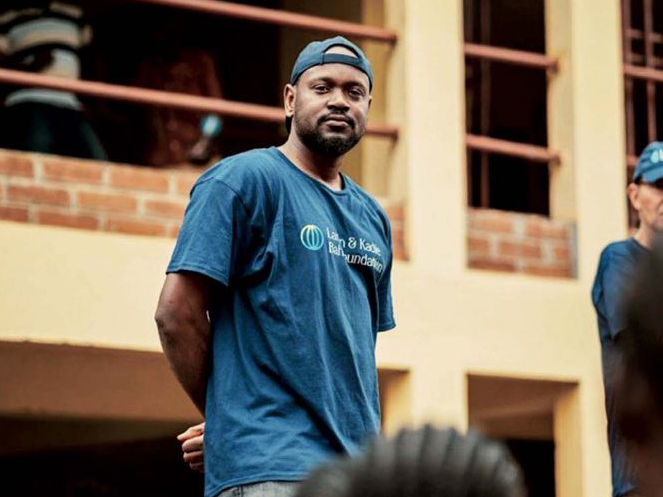 Ousman Camara
When Camara heard their story, he saw himself. Years earlier, as a Gambian teenager new to Qatar, he too had felt unprepared. At Qatar Foundation’s Academic Bridge Program, he caught up academically, found his voice, and learned to take risks.
It wasn’t easy. He once couldn’t afford the IELTS exam he needed for university admission until a kind teacher paid the fee. When asked how he would survive in Qatar without financial support, he simply said, “Food is not important. I will manage if I get accepted.”
His determination earned him a full scholarship to Georgetown University in Qatar.
Shaped by Georgetown’s Jesuit values of service, he launched a small campaign to rebuild his childhood Qur’an school. To update donors, he started an Instagram account, which eventually evolved into Educate a Generation, a nonprofit supporting education and mental health in West Africa.
Through Educate a Generation, Ousman created a bridge program for the students in Makeni, Sierra Leone. They studied critical thinking, time management, public speaking, research, and basic computer skills—for many, it was the first time they’d touched a laptop.
In its first year, 15 out of 32 students earned full scholarships to universities in the country. “QF built a bridge for me,” Ousman says. “I just built another.”
From reluctant student to award-winning filmmaker, Shakeeb Asrar’s journey shows how the most transformative paths often begin where we least expect them – and how Qatar Foundation helped turn doubt into purpose.
When Shakeeb applied to Northwestern University in Qatar in 2012, his plan was simple: spend six months in Doha, then transfer to the university’s main campus in Illinois. He hadn’t heard of Education City and didn’t expect to stay.
But one semester changed everything.
What kept him at QF wasn’t just the academic rigor—it was the intellectual diversity. “In Qatar’s classrooms, we had students who grew up in Syria or Yemen,” he says. “These weren’t case studies. They were lived experiences.”
That exposure to new perspectives sparked a mission: to challenge Western-dominated narratives about the Global South through storytelling.
QF’s merit scholarship made his education possible, and global opportunities expanded his worldview. Through the WISE Learners program, he worked with Syrian refugees in Greece, helping create educational pathways for displaced families.
During his master’s at Columbia University, Shakeeb created a documentary about Afghan refugees abandoned after supporting US forces. The film won the Robert F. Kennedy Journalism Award in 2023 and screened across the globe.
In 2025, he served as associate producer on Bodyguard of Lies, a Paramount documentary on the Afghanistan war, which premiered at the Tribeca Film Festival. “I didn’t imagine I’d tell this story for an organisation like Paramount,” he says.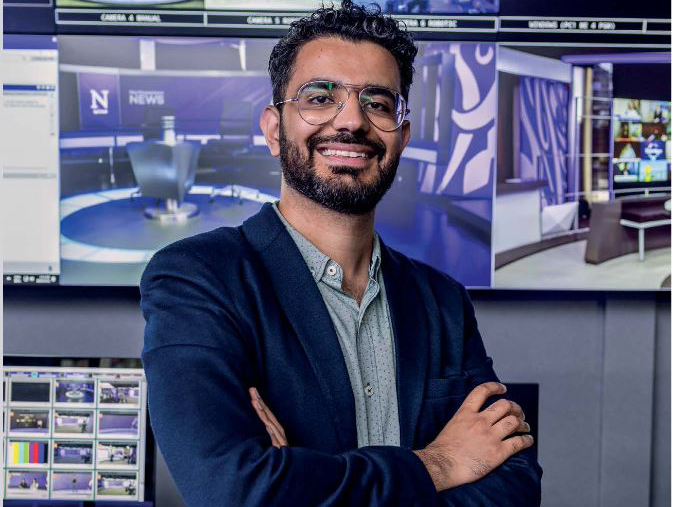 Shakeeb Asrar
Now, Shakeeb has returned to Northwestern Qatar as an Assistant Professor, teaching in the very classrooms where his transformation began. And he says, “I want my students to understand they don’t just have a role—they have a responsibility to challenge bias in media.”
When he entered the world, Youssif Heath wasn’t expected to survive his first night. Today, he swims Olympic-length pools, plays football, and dreams of becoming an AI engineer – proof that with the right support, every ability can thrive.
But this is a life that began with uncertainty. Born three months premature and weighing just 800 grams, he spent his first three months in intensive care. “Every day was a prayer,” says his father, Brent. “Just one more breath. One more day.”
Diagnosed with cerebral palsy and, later, high-functioning autism, Youssif’s early years were focused on survival rather than dreams. But Qatar Foundation changed this. 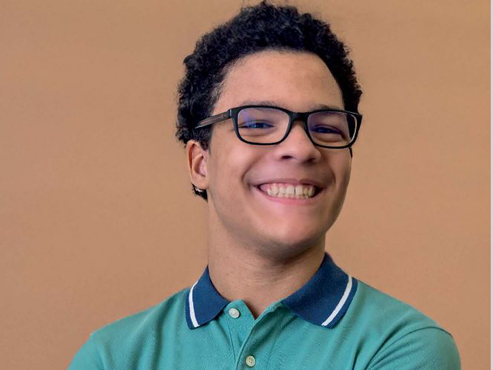 Youssif Heath
His connection to QF began with Sidra Medicine, where expert care gave his family hope. At age nine, he joined the Ability Friendly Program—a QF initiative offering inclusive sports and development opportunities. What started as a way of staying active became a journey of transformation.
At first, Youssif struggled to swim. But his coach, Jojo, believed in him. Week after week, he kept going. Eight years later, he swam the full length of an Olympic-sized pool—twice.
“That swim wasn’t just about sport,” Brent says. “It was about breaking boundaries—his own, and those the world had placed on him.”
Today, through the program, Youssif swims twice a week and plays football once a week. He also attends camps at Carnegie Mellon University in Qatar, exploring coding, game design, and cybersecurity. He walks the halls like any other student and even says that’s where he might one day pursue a university degree.
“When we talk about inclusion, this is it,” Brent says. “Not separation, but dignity. Giving everyone the space to belong.”
From growing up near Ras Laffan Industrial City to becoming Qatar’s first female PhD holder in chemical engineering, Dr. Dhabia Al-Mohannadi is redefining sustainability – tackling the hard questions of how to decarbonize gas and building a legacy through teaching and research.
When much of the world was focused on wind and solar energy, Dr. Dhabia sought answers to a harder question: how do we decarbonize gas? For her, it was both urgent and personal.
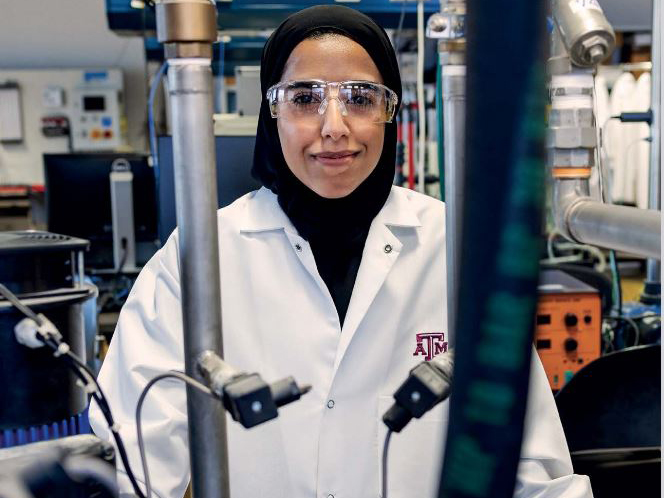 Dr. Dhabia Al-Mohannadi
Growing up in Al-Thakira, she remembers the yellow-green smog that drifted over her neighborhood from nearby Ras Laffan. “I didn’t know what emissions were,” she recollects, “but I knew something wasn’t right.”
That early awareness sparked a journey that began at Qatar Foundation’s Academic Bridge Program and Texas A&M University at Qatar, where she followed a path that, at the time, very few women chose: chemical engineering. With support from QF’s research programs, she went on to earn her master’s and, in 2018, her PhD—the first Qatari woman to do so in this field.
Her research has developed new modeling tools to make Qatar’s energy, water, and industrial systems more efficient and resilient. From integrating carbon in industrial zones to producing hydrogen from wastewater, her work is helping Qatar navigate its energy transition. Recognized globally—including MIT Technology Review’s 35 Innovators Under 35 list—she is also now shaping the next generation as an associate professor at Hamad Bin Khalifa University.
For Dr. Dhabia, the real legacy is her students. “You might forget some of them,” she says, “but they’ll never forget you.”
By choosing academia over industry, she has built not only new pathways for sustainability but also new role models for women in science and engineering.
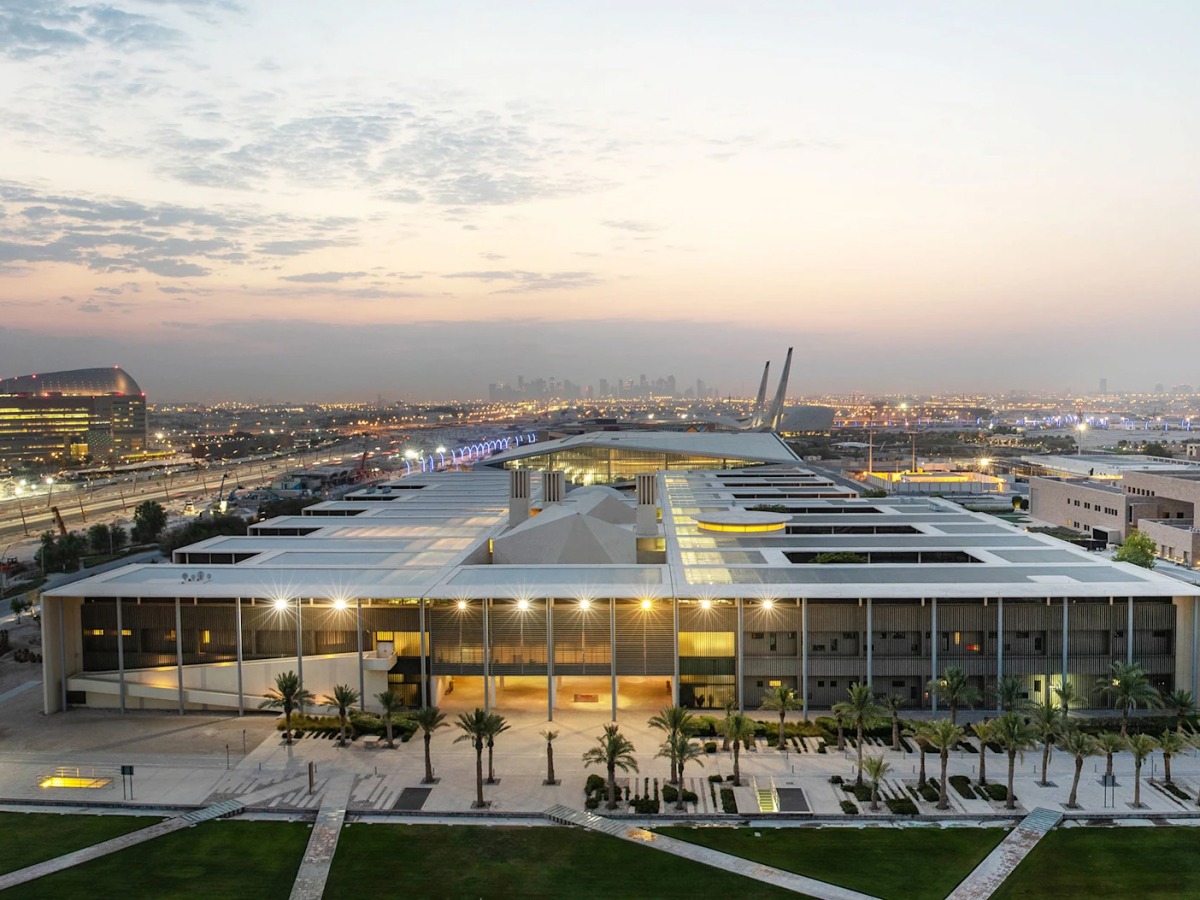
Qatar Foundation established in 1995 and has marked 30 years of impact from 1995 to 2025, shaping education, research, and community development in Qatar and beyond. Today, its ecosystem spans a 12-square-kilometer campus and includes 8 universities, 13 schools, 4 research centers, 25+ community facilities, and more than 50 centers and entities. Through this integrated network, Qatar Foundation has supported the development of human capital, with over 19,000 graduates and the launch of more than 100 startups.