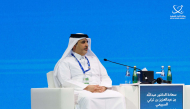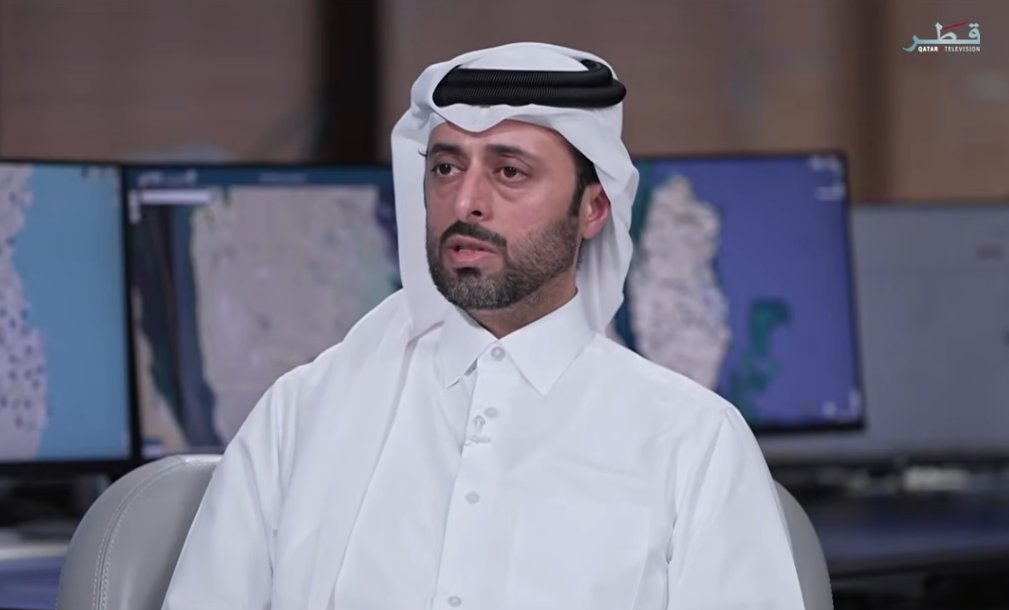
Minister of Municipality and Chairman of Committee for Follow-up on the Implementation of Food Security Policies H E Sheikh Abdullah bin Hamad bin Abdullah Al Attiyah
Doha, Qatar: Minister of Municipality and Chairman of Committee for Follow-up on the Implementation of Food Security Policies H E Sheikh Abdullah bin Hamad bin Abdullah Al Attiyah, has affirmed that Qatar’s food security remains “highly stable and excellent,” underscoring the country’s preparedness to handle various scenarios and ensure uninterrupted services.
In an interview with Qatar TV, the Minister stated that the Ministry of Municipality operates within an integrated system that guarantees continuity of services under all circumstances, both on the ground and through digital channels.
He noted that pre-activated emergency and business continuity plans have enabled the ministry to maintain essential services such as public cleanliness, health, and food safety inspections efficiently and around the clock without disruption.
He added that field teams across all municipalities continue their regulatory and inspection duties, emphasizing that the achievements are the result of coordinated efforts among various state entities. The ministry, he said, is continuously enhancing its readiness to respond to any emerging developments.
On food security, Al Attiyah highlighted that Qatar’s National Food Security Strategy, developed proactively for 2024-2030, accounts for multiple potential scenarios, including disruptions such as the closure of the Strait of Hormuz.
He stressed that the country’s current resilience is the outcome of sustained efforts and lessons learned from past challenges, leading to the establishment of a flexible and integrated food security system that has positioned Qatar among top regional and Arab performers in global food security indicators.
The Minister outlined three key pillars of the national food security strategy. “The first focuses on local production and self-sufficiency, noting that Qatar has achieved significant progress, including 100% self-sufficiency in certain seasonal vegetables, with surplus production even being exported.
“The country has also reached approximately 99% self-sufficiency in poultry, dairy products, and their derivatives,” said Al Attiyah.
He affirmed continued support for local farms, breeders, and companies to further strengthen domestic production. The Minister said that the second pillar centers on strategic reserves, managed in coordination with the Ministry of Commerce and Industry.
He explained that precise systems are in place to ensure the sustainability and regular replenishment of these reserves, supported by early warning mechanisms that detect potential shortages and enable immediate response.
Notably, the Minister confirmed that the strategic stockpile has not been utilized during the current period; instead, it is being reinforced with substantial shipments of essential commodities such as rice and wheat.
“The third pillar involves trade and strategic investments, particularly through Hassad Food, a subsidiary of the Qatar Investment Authority, which works to diversify import sources and expand global investments in the food sector,” said Al Attiyah.
This approach, he said, provides Qatar with high flexibility in securing supplies when needed.
Al Attiyah emphasized that Qatar’s food security system is built on strong foundations that integrate local production, strategic reserves, and global investments, enhancing its adaptability to changing conditions.
He also highlighted ongoing inspection tours conducted to assess farms and private sector companies, confirming the availability of production inputs and overall market stability. Most farms and companies, he noted, maintain sufficient reserves of production inputs for extended periods.
Additionally, the Minister visited the Abu Samra land border crossing to ensure the smooth flow of supply chains and shipments.
He praised the efforts of the General Authority of Customs and the Abu Samra Border Committee for streamlining procedures and maintaining operational capacity under current conditions.
He extended special appreciation to the private sector, including dairy companies, poultry producers, and vegetable farms, for their significant role in supporting food security and meeting local market needs, particularly during the initial phase of the crisis.
On digital transformation, Al Attiyah described it as a key pillar for ensuring service continuity.
“The Ministry has introduced more than 250 electronic services through its official website and the “Oun” application, enabling users to complete transactions remotely with ease. This has significantly improved efficiency, saved time and effort, and ensured uninterrupted operations,” said Al Attiyah.
During the recent period, he said, the Ministry processed over 77,000 electronic requests and received around 23,000 calls through its contact center, in addition to hundreds of applications for construction permits and urban planning approvals, figures consistent with normal operating periods.
This, he said, reflects the robustness and efficiency of the digital system in adapting to global fluctuations.
Concluding his remarks, the Minister reassured citizens and residents, urging them to remain confident and at ease under Qatar’s leadership, which prioritises security and stability while closely monitoring all developments.