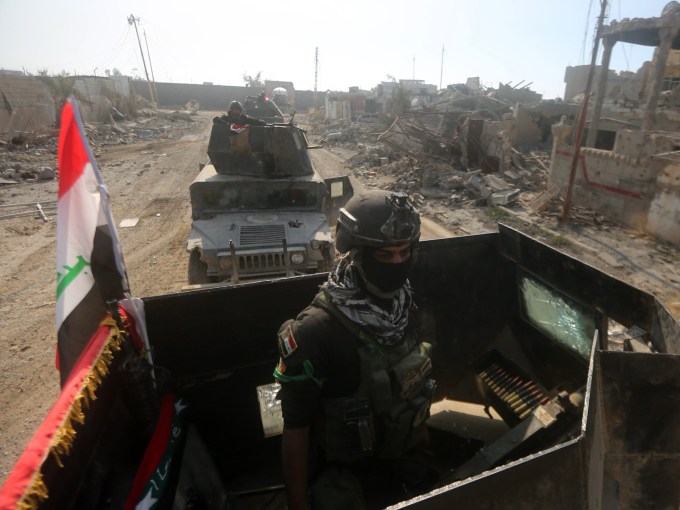
Baghdad: Tribal fighters deployed in Ramadi Tuesday, a step towards providing the reconquered Iraqi city with a force both capable of preventing the jihadists' return and palatable to the local population.
Hundreds of fighters from local Sunni tribes, with the assistance of the army, took over security duties from elite counter-terrorism forces.
"Five hundred members of the tribes from the Hashed arrived in northern Ramadi to participate in operations there and hold the liberated areas," said Major General Ismail Mahalawi, who heads Anbar operations command.
The Hashed al-Shaabi (Popular Mobilisation) is an umbrella group dominated by Tehran-backed Shiite militias that have played a key role in retaking land from IS.
However, Sunni fighters from Anbar tribes opposed to the jihadists also officially belong to the group, which is nominally under Prime Minister Haider al-Abadi's command.
"Five units of tribal forces arrived today and hold the areas of Jaraishi, Zawiyah and Albu Faraj north of Ramadi," said their leader, Tareq Yusef al-Asal.
They have been trained on Habbaniyah base, east of Ramadi, and armed by the defence ministry, he added. The US-led coalition supported that process.
The premier visited the Anbar capital Tuesday, a day after the elite counter-terrorism service raised the Iraqi flag above the city's large government complex.
The provincial headquarters had been the epicentre of the fighting since Iraqi forces punched through IS defences a week ago to cap a months-long operation to retake Ramadi.
Abadi congratulated the security forces, who were still sweeping streets and buildings for roadside bombs, booby traps and holed up jihadists.
AFP