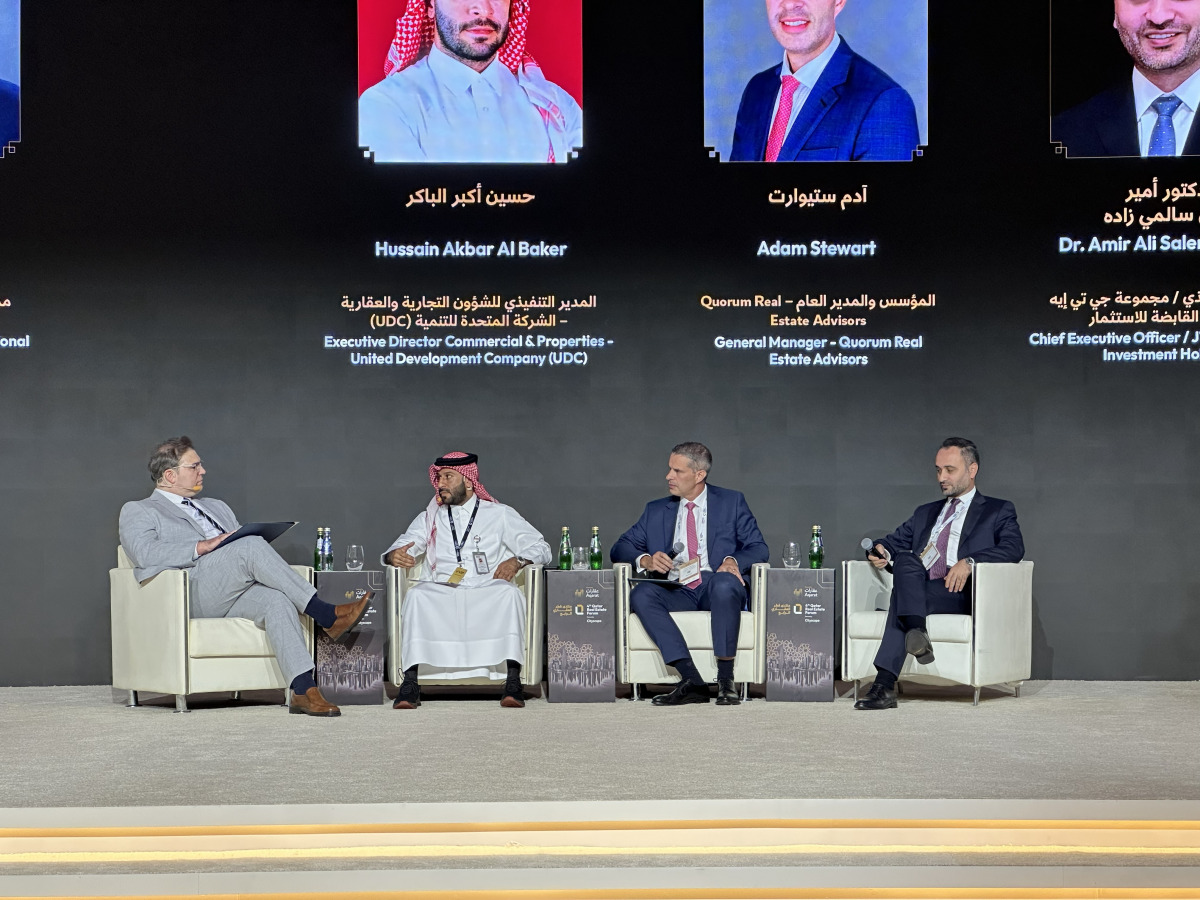
Panelists during a session at the Cityscape Qatar 2026.
DOHA: Realty investors in Qatar are increasingly focusing on portfolio diversification, income performance and changing tenant preferences, with commercial offices, hospitality and mixed-use developments emerging as important considerations alongside traditional residential assets.
Industry executives speaking during a panel session on ‘Portfolio Diversification: Residential, Commercial and Mixed-Use’ at Cityscape yesterday highlighted the importance of aligning property investments with market demand, generating multiple income streams and building developments that integrate residential, retail and commercial facilities.
Executive Director, Commercial & Properties at United Development Company (UDC), Hussain Akbar Al-Baker, said diversification was essential to strengthening portfolio resilience, with complementary property uses helping create sustainable demand and long-term value.
He cited Medina Central, located in the heart of The Pearl Island, as an example of how residential, retail, services and office spaces can support one another and create a comprehensive ecosystem for residents, visitors and businesses.
“When you have an office in proximity, the staff of the offices also add value to the area that they’re surrounded by,” Al Baker said. He explained that the combination of offices, retail outlets, restaurants and essential services encourages residents to remain in the area while attracting visitors and supporting commercial activity.
Each component of a mixed-use development should complement the others, creating an environment that meets different needs throughout the day and sustains activity across the year, he added.
Al Baker also pointed to changing consumer behaviour as a key factor influencing retail strategies, noting a shift away from large retail formats towards smaller outlets and more compact dining concepts as online shopping continues to reshape the market.
He also noted that retail preferences had shifted towards smaller cafés and casual dining establishments, with spaces of around 80 to 150 square metres increasingly matching market demand compared with larger dining formats.
Essential services, including pharmacies and other facilities catering to residents’ everyday needs, also contribute to sustaining demand for retail outlets, he said.
General Manager at Quarum Real Estate Advisors, Adam Stewart, said Qatar’s property market had traditionally been dominated by residential investments, with families commonly building wealth through homes, plots of land and residential buildings.
However, investors are increasingly looking beyond property valuations to examine income generation and the relative performance of assets within their portfolios.
Stewart cited figures indicating that Qatar recorded around QR17bn in real estate transactions in 2026, with commercial assets accounting for approximately 36 percent, while residential property remained the dominant segment.
He said the growing sophistication of investor requirements was changing the way portfolios were assessed, with clients increasingly interested in how properties generate income and perform against other holdings.
He outlined several roles that different property types could play in a diversified portfolio, including residential assets as a core source of income, high-quality offices as defensive investments, and hospitality and other growth-oriented assets to capture emerging opportunities.
He further added that investors should assess the purpose of each acquisition rather than simply adding properties to an existing portfolio, balancing income, stability, growth and liquidity according to their objectives.
Chief Executive Officer at JTA International Investment Holding, Dr Amir Ali Salemi Zadeh, emphasised that the company was exploring potential investments in land development and landmark tower projects, reflecting expectations that Qatar will continue to strengthen its position as a regional business hub and attract international companies.
The panellists’ remarks underscored how Qatar’s real estate investment landscape is evolving, with investors increasingly considering the relationship between asset classes, the quality of income streams and the needs of end users.