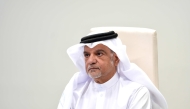
Doha, Qatar: Qatar’s proposed legislation regulating real estate tokenisation and the trading of real estate tokens could open new avenues for property investment, improve market flexibility and attract a wider range of investors, according to Abdulrahman Al Najjar, CEO of Kate Real Estate.
Commenting on the initiative, he welcomed the Council of Ministers’ approval of a draft law prepared by the Ministry of Justice to regulate real estate tokenisation and the trading of real estate tokens, describing the move as an important step towards modernising Qatar’s real estate investment environment.
The Ministry of Justice defines real estate tokenisation as the conversion of ownership of, or rights to, real estate into programmable digital tokens that can be created, registered and traded through an electronic registry based on distributed ledger technology. The system is designed to operate in synchronisation with the real estate registration system at the Ministry of Justice.
Al Najjar said the proposed framework could provide a more structured and transparent mechanism for fractional real estate investment, particularly by enabling investors to participate in properties without having to purchase an entire asset.
“For example, a property worth QR1 million could be divided into a number of digital tokens, allowing investors to acquire a share according to the applicable regulations,” he explained.
He said this could significantly broaden access to the property market. While conventional real estate investment often requires substantial capital, tokenisation could potentially allow investors with smaller amounts of money to acquire interests in high-value properties.
An investor who cannot afford to purchase a property worth QR50 million or QR100 million, for instance, could potentially acquire a fractional interest in the asset through the regulated tokenisation mechanism.
Al Najjar identified liquidity and flexibility as among the most important potential advantages of real estate tokenisation. Traditional property transactions can require significant capital and may take time to complete. A regulated digital system for trading tokenised real estate interests could, subject to the final legislation and regulatory requirements, make entering and exiting investments easier.
“This gives investors greater flexibility in buying, selling and trading their interests,” he said. He believes such flexibility could also contribute to stimulating parts of Qatar’s real estate market that have experienced slower activity, while supporting continued growth in stronger segments.
Al Najjar stressed that investor protection would depend heavily on linking digital ownership interests to the official real estate registration system. He described the property title deed as the fundamental basis of ownership, emphasising the importance of the Ministry of Justice and its real estate registration infrastructure in ensuring that tokenised interests are properly connected to the underlying property.
The proposed model, he said, could provide greater confidence by ensuring that digital tokens representing real estate rights are connected to officially registered property rather than being traded through informal arrangements. This is particularly significant given previous challenges associated with informal or unregulated transactions involving fractional interests in property, which can creat e uncertainty for investors.
Al Najjar said the high value of many properties has traditionally made direct investment difficult for smaller investors. Tokenisation could potentially lower this entry barrier by allowing investors to acquire smaller interests in larger assets.