.jpg)
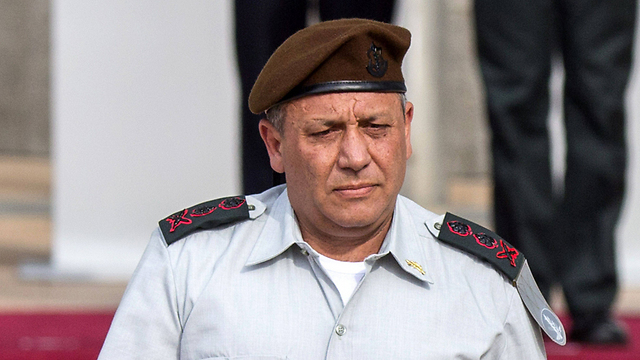
Jerusalem: Israeli army chief of staff Gadi Eisenkot sent a letter Wednesday warning troops to use appropriate force, after a soldier was caught on video shooting dead a wounded Palestinian assailant.
The soldier -- who last week shot the Palestinian in the head while he was lying prone on the ground -- has been arrested and strongly condemned by top military officials.
But far-right politicians and protesters have rallied to his cause, criticised the military's response and demonstrated for his release.
Following the soldier's arrest, posters were distributed calling for Eisenkot's resignation.
The chief of staff, seen by some Israelis as a voice of moderation amid a wave of violence that erupted in October, said in the letter that soldiers must always behave professionally.
"In all situations, we must act in a professional manner, using force in a measured and considered way in order to remain faithful to our values," Eisenkot said.
"We will not hesitate to hold accountable soldiers and officers who do not respect operational and moral criteria that guide us in our actions."
The 19-year-old soldier who shot the Palestinian appeared in a military court on Tuesday as several hundred of his supporters protested outside.
Prosecutors were seeking to extend his remand in the case, which has gripped the country and sparked political tensions, and the judge decided that he be kept in custody until Thursday.
The soldier's identity has remained secret under a gag order, granted at the request of his lawyers. He holds both Israeli and French nationality.
Video of Thursday's killing in the flashpoint West Bank city of Hebron spread widely online and threatened to further inflame Israeli-Palestinian tensions.
It showed a 21-year-old Palestinian, who along with another man had allegedly stabbed a soldier minutes earlier, lying on the ground, apparently after being shot.
The soldier then shoots him again, in the head, without any apparent provocation.
- Political tensions -
A poll released by Israel's Channel 2 television showed 57 percent of Israeli Jews were opposed to the soldier being prosecuted.
Rights activists have labelled it a summary execution, while Palestinian leaders have called on the United Nations to investigate alleged Israeli "extrajudicial killings".
The activist who shot the video of the incident has said he and his family have since received threats.
The soldier's arrest reportedly sparked a heated debate at Sunday's weekly Israeli government cabinet meeting.
Education Minister Naftali Bennett has defended the soldier, saying he "is not a murderer".
"Have we lost our minds? We are at war, a war against brutal terrorism," he said.
He and the soldier's lawyers have said he may have thought the Palestinian had explosives, though he had reportedly been checked for a suicide belt prior to the shooting.
Defence Minister Moshe Yaalon has hit back, criticising those conducting an "unprecedented incitement campaign against the army, chief of staff, and senior commanders."
Prime Minister Benjamin Netanyahu joined condemnations of the soldier's behaviour last week but appeared to backpedal slightly Sunday as political pressure mounted.
In remarks before Sunday's cabinet meeting, Netanyahu said the investigation must take "into account all conditions."
Netanyahu leads one of the most rightwing governments in Israeli history but holds only a one-seat majority in parliament.
It is not the first time Eisenkot has been criticised by the far right.
Some objected to a speech he made in February in which he warned against excessive force.
Eisenkot said that "when there's a 13-year-old girl holding scissors or a knife and there is some distance between her and the soldiers, I don't want to see a soldier open fire and empty his magazine at a girl like that."
Violence since October has left 200 Palestinians and 28 Israelis dead.
Most of the Palestinians killed were carrying out knife, gun or car-ramming attacks, according to Israeli authorities.
But Israeli forces have also been accused of using excessive force in some cases, charges which they have firmly denied.
AFP