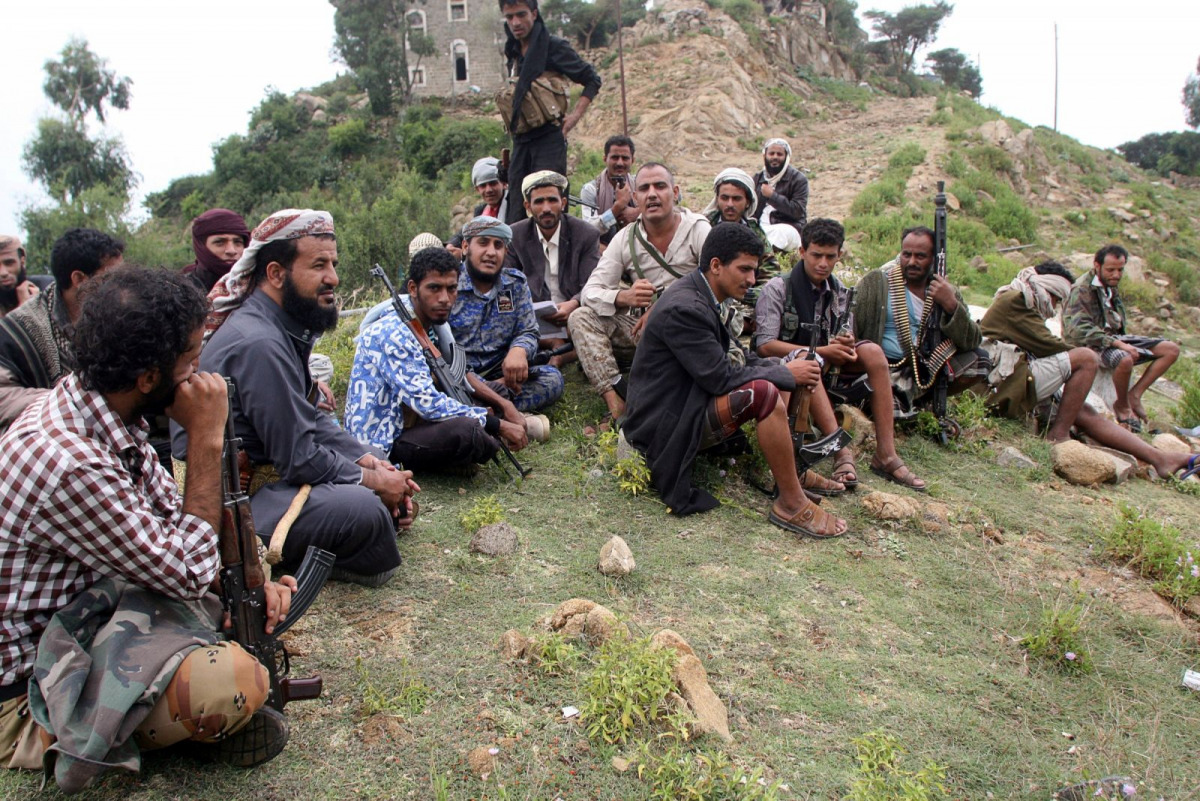
Aden: Shiite rebels and their allies Thursday formed a 10-member "supreme council" to run Yemen, in what the government condemned as a blow to already stalled UN-brokered peace talks.
UN special envoy Ismail Ould Cheikh Ahmed said the move "contravenes" the rebels' commitment to the peace process and "represents a grave violation" of the UN Security Council Resolution 2216.
The Shiite Huthi rebels and the General People's Congress of former president Ali Abdullah Saleh have agreed to "form a supreme political council of 10 members", according to a statement carried by a rebel-run news agency.
It did not name the council's members.
"The aim is to unify efforts to confront the aggression by Saudi Arabia and its allies," the statement said in reference to the Riyadh-led Arab coalition that launched a military campaign against the rebels in March last year in support of President Abedrabbo Mansour Hadi.
The job of the council will be to "manage state affairs politically, militarily, economically, administratively, socially and in security".
Ould Cheikh Ahmed who has been brokering 100 days of talks aimed at a peaceful settlement said the move endangered the negotiations being held in Kuwait.
"This is a clear violation of the Yemeni constitution" as well as Resolution 2216, he said in a statement released in Kuwait.
The resolution calls on the Huthis to withdraw from territories they occupied in 2014, to hand over their arms and return state institutions to the legitimate government.
Ould Cheikh Ahmed, however, did not say if the rebels' move would result in the suspension of the peace talks.
Yemen's Foreign Minister Abdulmalek al-Mikhlafi said it amounted to a "new coup" and accused the rebels of "missing an opportunity for peace".
The rebels have "missed an opportunity for peace which the Yemeni people needed... and insisted on foiling the negotiations", Mikhlafi said on his Twitter account.
"We call on the international community to condemn the new coup against the constitutional legitimacy and hold the Huthi-Saleh alliance responsible for foiling the talks," he said.
The rebels overran Sanaa in September 2014 and expanded their control to other parts of Yemen.
In February last year, they had set up a "Supreme Revolutionary Council" to run the country after they announced the dissolution of the government and parliament.
UN-sponsored talks between the rebels and representatives of Hadi's government, which began on April 21, have failed to make headway.
The negotiations were launched after the United Nations secured an agreement on a ceasefire in the war-torn country.
- Government main stumbling block -
The main stumbling block at the talks in Kuwait was the form of the government in Sanaa.
The Hadi government backed by Saudi Arabia say that he is the legitimate head of state and should preside over a transitional period in the country.
But the rebels insist on forming a national unity government to oversee the transition.
More than 6,400 people have been killed in Yemen since the Saudi-led coalition intervened in support of Hadi's government.
Another 2.8 million people have been displaced and more than 80 percent of the population urgently needs humanitarian aid, according to UN figures.
AFP