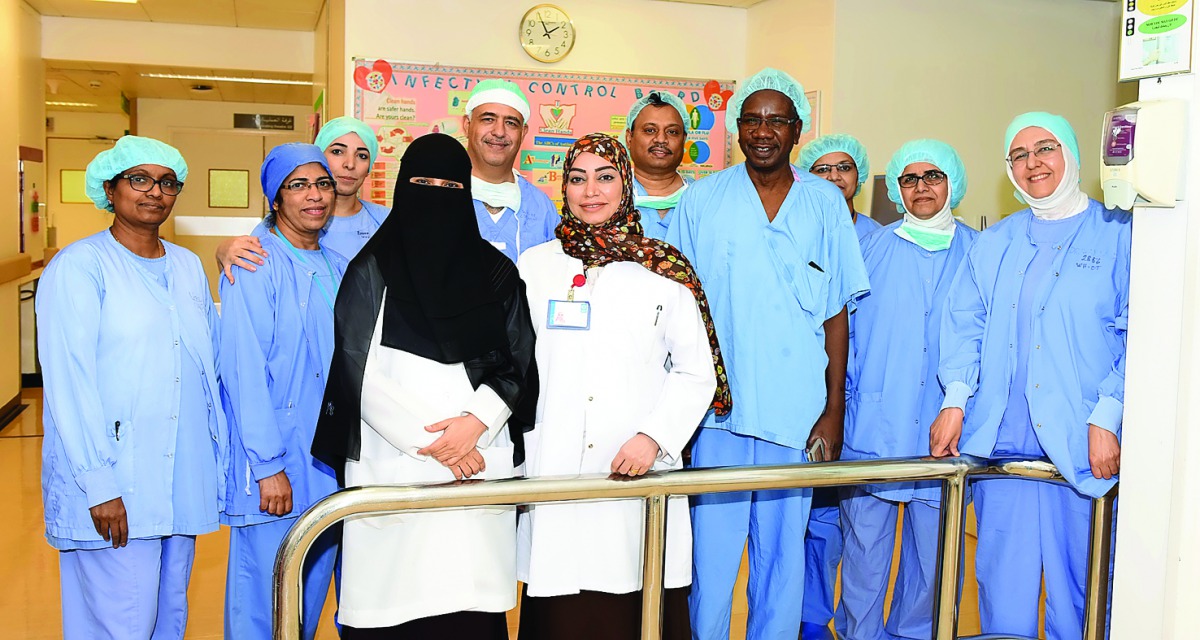
Dr Arabo Ibrahim Bayo, Senior Consultant Obstetrician and Gynecologist at the Women’s Hospital, and his team.
Women’s Hospital has boosted the confidence of some women and even given some the ability to have children again, by performing more than 30 uterus reconstruction surgeries during the past several years.
The first uterus reconstruction surgery performed by Dr Arabo Ibrahim Bayo, Senior Consultant Obstetrician and Gynecologist at Women’s Hospital, took place in 2009. It was the first time the procedure was performed anywhere in the world
Since then, Dr Bayo and his team have successfully performed more than 30 surgeries.
According to Dr Bayo, removal of the uterus may be required if a patient has placenta accrete, a life-threatening condition which causes the blood vessels and other parts of the placenta to grow into the walls of the uterus. The condition commonly occurs in connection with placenta previa where a woman’s cervix is blocked by the placenta. It can result in severe bleeding before or during delivery and even result in maternal death.
He says the number of patients experiencing placenta accrete is on the rise due to the increase in deliveries by C-section and other uterine surgeries and women having multiple pregnancies is also a factor.
“In most cases, if a woman is diagnosed with a placenta accrete, a physician may recommend removing the entire uterus with a hysterectomy several weeks in advance of her due date. This is called a planned pre-term cesarean hysterectomy. It involves leaving the placenta in place and taking it out together with the uterus in order to help minimize a woman’s risk of severe bleeding and other complications.
“While this solution may work for some women, it may not work for all. The reconstructive surgery has given some of my patients the ability to maintain a regular menstruation cycle, which can be very important to a woman’s self-esteem. It can even allow her to conceive again,” he added.
In one of Dr Bayo’s most rewarding cases, a patient who had two babies with a permanent disability due to congenital anomaly was able to get pregnant again and deliver a healthy baby after the reconstructive surgery.
The patient had placenta accrete. Instead of removing her uterus, the surgical team, led by Dr Bayo, removed the placenta and reconstructed the uterus.
At present, Women’s Hospital is one of the only hospitals worldwide that is able to perform the surgery. In 2013, Dr Bayo and his team were invited to the World Congress of the Royal College of Obstetricians and Gynecologists in Liverpool to present their techniques and data from a number of successful operations performed at Women’s Hospital.