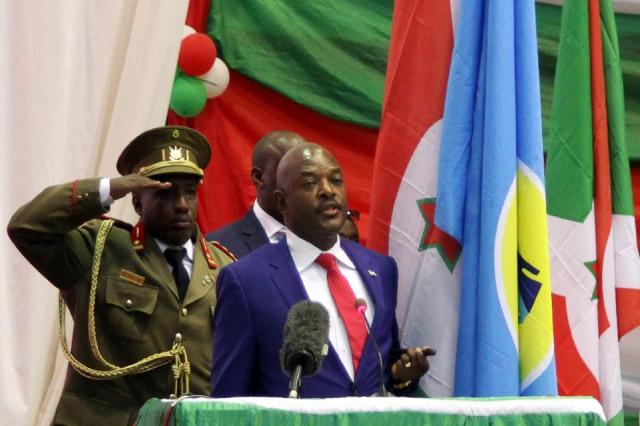

Kampala: Rival Burundi factions met in Uganda on Monday, resuming long-stalled negotiations aimed at ending months of violence that has raised fears of a return to civil war.
Burundi's unrest began in April when President Pierre Nkurunziza announced his intention to run for a controversial third term, which he went on to win in July.
The talks in Uganda's presidential palace in Entebbe, just outside the capital Kampala, are being chaired by President Yoweri Museveni, who is acting as regional mediator in the crisis.
"I really appeal to you, the two sides, to sit down and have a political solution so that you save the people from the suffering," Museveni said as the talks opened, according to the Daily Monitor newspaper.
The 54-member African Union has said it will send in a 5,000-strong force to halt the violence, despite Burundi's government calling the proposed peacekeeping mission an "invasion force".
Burundi's Foreign Minister Alain-Aime Nyamitwe is leading the government delegation, while opposition delegates include members of CNARED, a coalition grouping headed by its president Leonard Nyangoma.
Burundi's government however has so far refused to hold direct talks with CNARED, calling it a "terrorist organisation" and accusing it of being behind a failed coup in May as well as ongoing attacks on security forces.
For its part, CNARED maintains it is upholding the 2006 Arusha peace agreement that ended more than a decade of civil war, and which Nkurunziza's third term is said to undermine.
"CNARED requires above all an immediate end to the massacres, because we cannot negotiate while people are about to be killed," CNARED spokesman Pancrace Cimpaye said, calling for the "immediate deployment" of the proposed AU force.
Civil society members of the tiny central African nation, including exiled human rights activist Pierre-Claver Mbonimpa, as well as religious leaders are also taking part.
Hundreds of people have been killed in months of street protests in Burundi, which have devolved into frequent armed attacks with gunfire disrupting the nights and dead bodies appearing on city streets almost every day.
The violence -- which included an abortive coup, regular ambushes on security forces, street battles and even failed mortar bombings on the presidential palace -- already echo attacks carried out during the civil war.
"What we want to achieve as Uganda is to see that all forms of killings going on in Burundi -- on either the opposition or government side -- are stopped immediately," Uganda's deputy foreign minister Henry Oryem Okello told the government-run New Vision newspaper.
AU Commission chief Nkosazana Dlamini-Zuma last week said she welcomed "the resumption of the inter-Burundian dialogue in Entebbe", and said she had written to Nkurunziza "to seek the consent of the Burundian government for the early deployment" of peacekeepers.
AFP