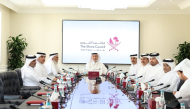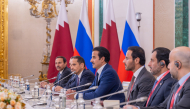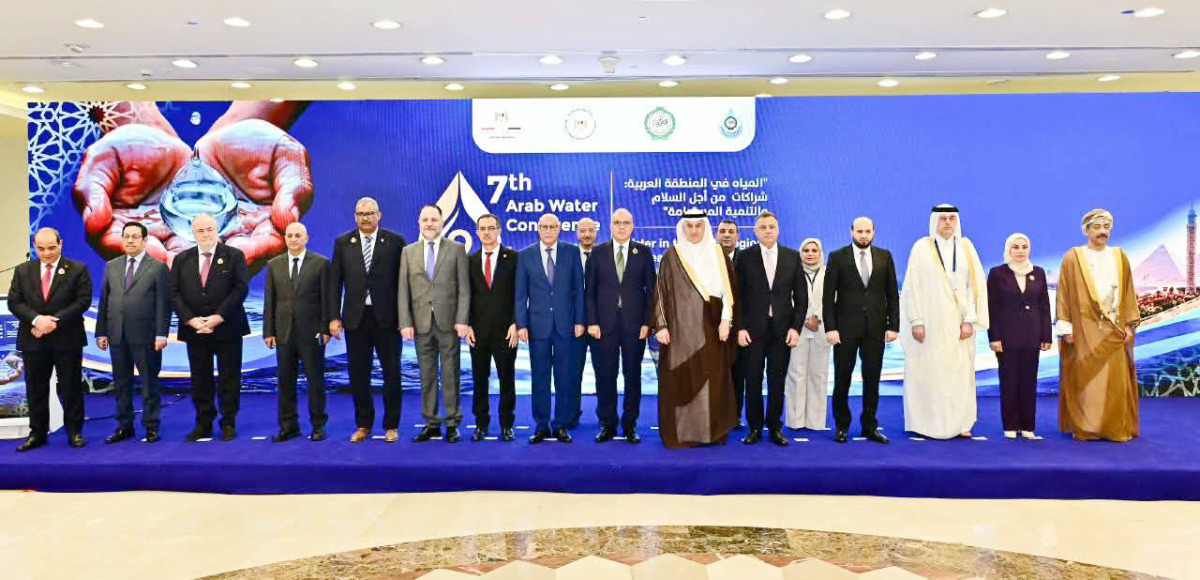
President of Kahramaa Eng Abdullah bin Ali Al Thiyab with other officials during the event.
Doha, Qatar: President of the Qatar General Electricity and Water Corporation (Kahramaa) Eng Abdullah bin Ali Al Thiyab led Qatar’s delegation to the 17th session of the Arab Ministerial Water Council in Cairo, as Arab countries discuss ways to strengthen water security, improve resource management and address regional water challenges.
The meeting was held on October 26, 2026, alongside the ninth Cairo Water Week. Al Thiyab also attended the opening ceremony of the seventh Arab Water Conference, which brought together ministers, officials, experts and representatives of regional and international organisations involved in the water sector.
Qatar’s participation reflects its commitment to strengthening joint Arab efforts, enhancing coordination and exchanging expertise among Arab countries to address water-related challenges and support sustainable development.
The council’s agenda covers several priority issues, including monitoring the implementation of the Arab Water Security Strategy and its executive plan, as well as progress towards achieving water-related Sustainable Development Goals.
Participants are also discussing ways to strengthen Arab coordination at regional and international forums concerned with water resources and improve cooperation on shared water challenges.
A key focus is the interconnection between water, energy, food and climate, alongside measures to improve water-use efficiency and expand the use of non-conventional water resources. The agenda also includes water treatment and reuse, as well as the application of modern technologies, digital transformation and artificial intelligence in water resource management.
The meeting is further addressing cooperation in managing shared water resources, safeguarding Arab water rights and developing water diplomacy. Discussions also cover the water situation in Palestine and support for Iraq’s water rights in the Tigris and Euphrates river basins.
Participants are expected to explore ways to strengthen partnerships with relevant institutions, international organisations, financing bodies and the private sector to support priority water projects. Knowledge exchange, capacity building and the development of sustainable solutions to regional water challenges are also among the issues under consideration. Al Thiyab emphasised the importance of continued coordination and cooperation among Arab countries, the exchange of expertise and the adoption of modern technologies to improve water resource management.