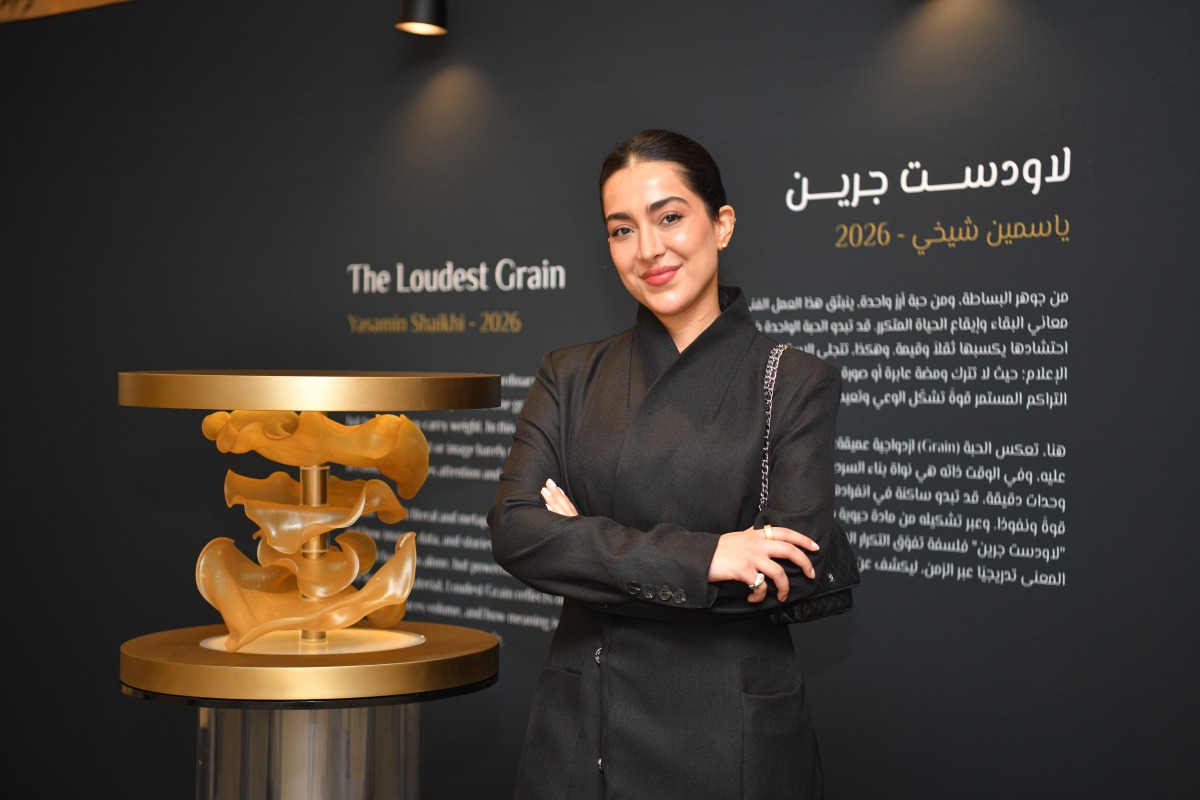
Doha, Qatar: When Yasamin Shaikhi graduated with a Bachelor of Fine Arts in Interior Design from VCUarts Qatar in 2019, she stepped straight into the world of large-scale projects, collaborating with leading designers including Ibrahim Jaidah.
Yet something was missing. Years later, as she completes her Master of Fine Arts in Design at the same institution, the Qatari artist has traded blueprints for biomaterials, turning everyday rice waste into sculptural art that commands attention on the international stage.
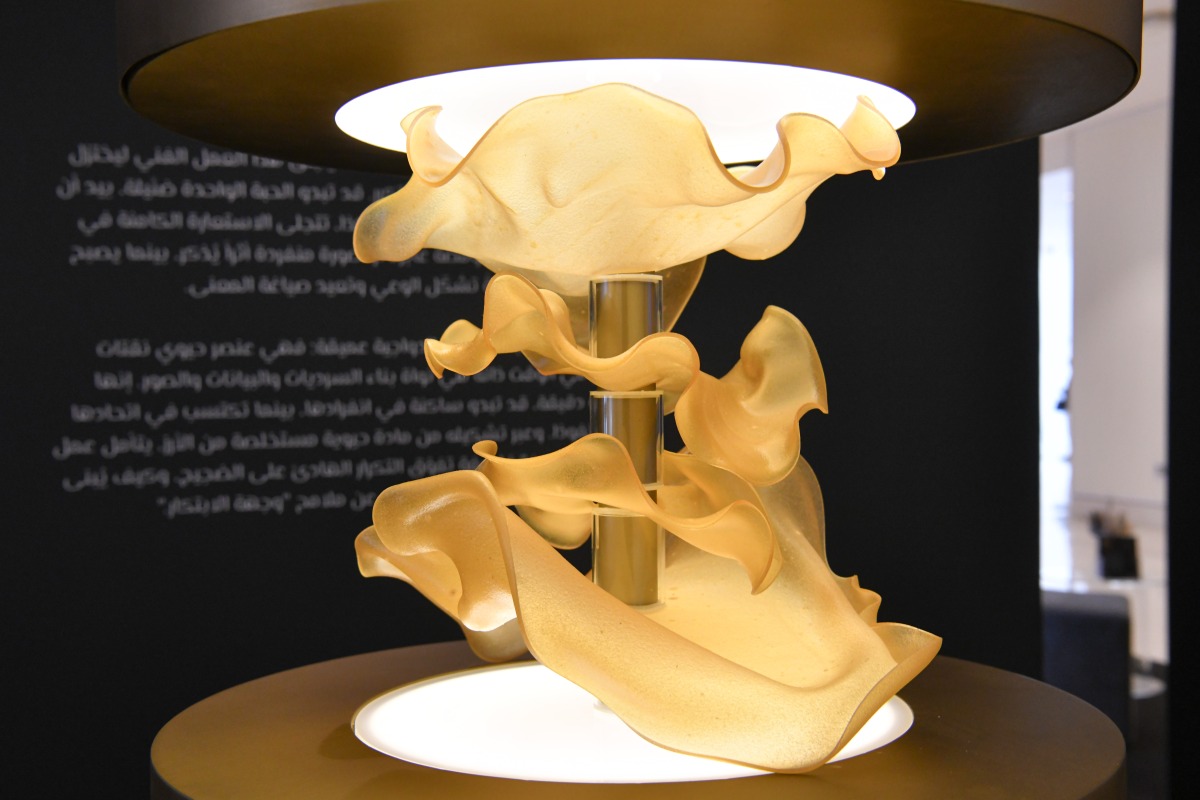
Her winning piece, The Loudest Grain, was unveiled at the inaugural Art Basel Qatar as part of Media City Qatar’s three-year “Next in Arts” initiative. The rice-based biomaterial sculpture responds directly to the fair’s theme “Where Art Meets Media” and has already drawn praise from Her Highness Sheikha Moza bint Nasser, Her Excellency Sheikha Al Mayassa bint Hamad bin Khalifa Al Thani, Angelina Jolie and thousands of visitors.
In an interview with The Peninsula, Shaikhi explained how the work grew out of her MFA research into food waste. “Over the past year of working specifically with rice waste, I noticed a compelling parallel between rice and media,” she said. “Both are ubiquitous; they are things we consume daily, always within reach, and deeply embedded across cultures.” The sculpture uses the humble grain to give physical form to invisible sound waves, frequencies and digital signals that surround us yet remain unseen. “By using a humble grain of rice to embody these signals, I wanted to make the invisible tangible, revealing the energy and ‘loudness’ behind something we typically take for granted,” she added.
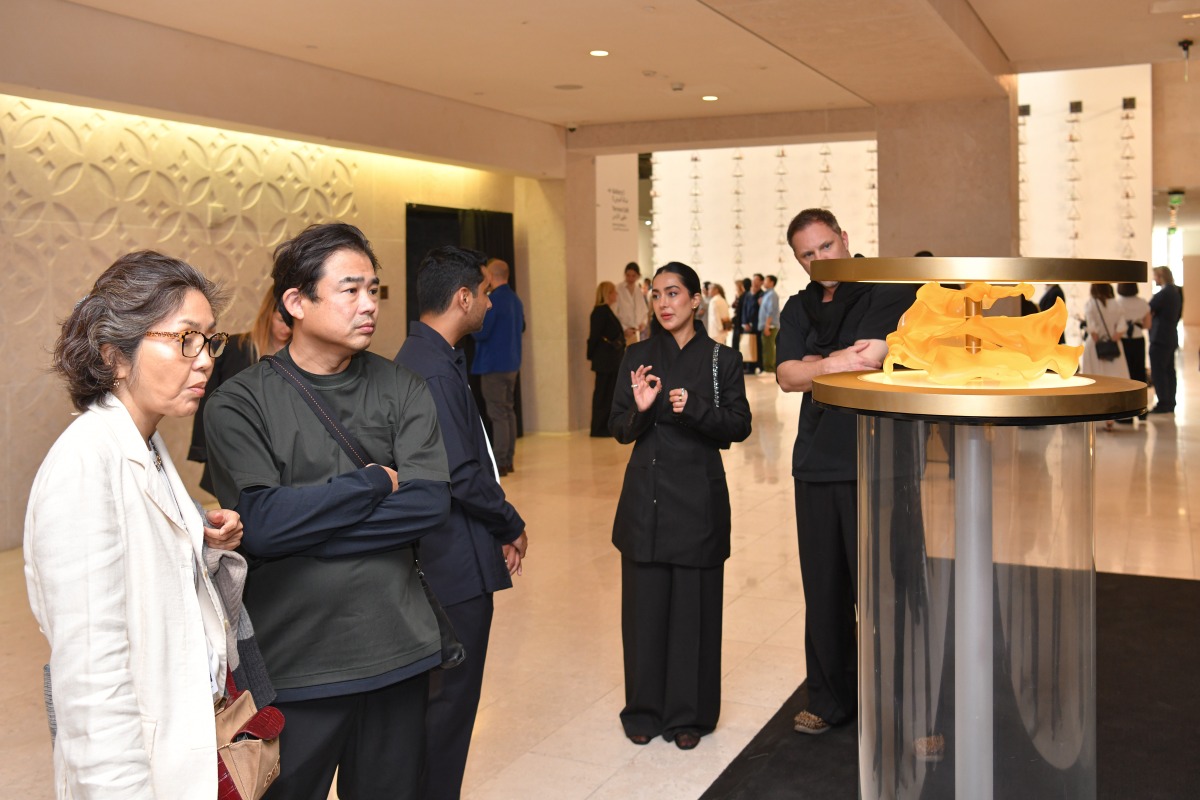 Yasamin Shaikhi explaining her work “The Loudest Grain” to the visitors.
The shift from interior design to interdisciplinary practice was deliberate. Shaikhi described how the macro focus of commercial projects left her longing for the tactile side of making. “I found myself increasingly drawn to the smaller details within those spaces, the everyday objects, the materials, and the physical process behind how things are made,” she recalled. Her design background still informs her approach to space and structure, but now serves a research-driven practice that treats materials as collaborators rather than tools.
Mixed-media techniques were essential to realising the vision. Rather than presenting media through screens, Shaikhi created a sculptural digital wave that audiences can engage with physically. “I wanted to move away from how we typically think about media, which is often reduced to something experienced through a flat screen,” she noted. “That is where mixed-media became essential. It allowed me to transform something intangible into a physical, sculptural form.”
The experience of exhibiting at Art Basel Qatar has been transformative. “You grow up seeing major international fairs like Art Basel as events that happen elsewhere,” Shaikhi said. “To witness an event of that scale taking place here in Doha, and then to be participating in it as an emerging artist, was incredibly meaningful.” She described the moment as a milestone both for her practice and for Qatar’s creative community, especially with high-profile attendance underscoring the country’s rising cultural profile.
Shaikhi credits local institutions with creating genuine pathways for talent. Media City Qatar’s “Next in Arts” programme, developed in partnership with Art Basel Qatar, provided the critical bridge from education to global platform. VCUarts Qatar’s ongoing alumni support and initiatives from Qatar Museums, including Design Doha 2024, have further strengthened the ecosystem.
From Media City Qatar’s perspective, such programmes form part of a deliberate “structured cultural infrastructure.” The organisation notes that creative industries already contribute around 3 percent of Qatar’s GDP, generating approximately QR20 billion at the start of the decade. “Creative work is often fragile in its early stages,” a Media City Qatar statement explained. “It needs lower friction, stronger networks, and clearer routes to scale.” By offering licensing support, facilities and direct access to international stages, the city enables emerging creatives and SMEs to turn talent into sustainable industry.
These efforts align closely with Qatar National Vision 2030. The Third National Development Strategy identifies media and creative clusters as key drivers of human, social, economic and environmental progress. “When we support talent, that is human development. When we strengthen cultural participation and identity, that is social development. When we help creative companies grow, that is economic diversification,” Media City Qatar emphasised. The recent Web Summit Qatar 2026, which generated 244 leads in four days, further demonstrates growing international interest.
Shaikhi’s broader body of work, including Food Waste Renaissance, consistently explores sustainability and material transformation. “My thought process always comes back to one question: What else can you be?” she said. Whether examining marble or avocado peels, she challenges conventional perceptions of everyday materials, seeking new forms and functions through direct dialogue with the substance itself.
Looking ahead, the recognition has reinforced her direction. “It has shown me that there is genuine appetite for work that combines material experimentation, sustainability, and conceptual depth,” Shaikhi stated. She plans to refine rice-based biomaterials to prove sustainable design can be refined, sculptural and luxurious rather than overtly “recycled.” Her vision remains rooted in Qatar’s supportive environment: “Being based in Qatar makes that vision feel especially achievable. The level of support and resources available to local artists here creates an environment where we are not only encouraged to dream, but actively given the tools to build those ideas into reality.”
As Art Basel Qatar signals a new chapter for the regional art scene, Shaikhi’s The Loudest Grain stands as both artistic achievement and national success story, quietly yet powerfully amplifying Qatar’s voice in the global creative conversation.