Doha, Qatar: The Qatar Civil Aviation Authority (QCAA) has announced significant progress in maintaining and restoring air traffic operations despite recent regional disruptions, underscoring the resilience of the country’s aviation sector.
In a statement shared on X yesterday, the authority detailed how Qatar navigated a temporary closure of its airspace on February 28, 2026.
The closure, prompted by ongoing regional challenges, was followed by a partial reopening on March 7 through an emergency air corridor.
According to QCAA, this measured and phased response ensured that aviation safety was not compromised while gradually restoring essential connectivity.
The authority emphasised that the approach was carefully calibrated to balance operational continuity with strict adherence to international safety and security standards.
“Qatar has adopted a measured approach to maintaining continuity of air traffic,” QCAA noted, adding that even under constrained conditions, the highest levels of aviation safety were upheld.
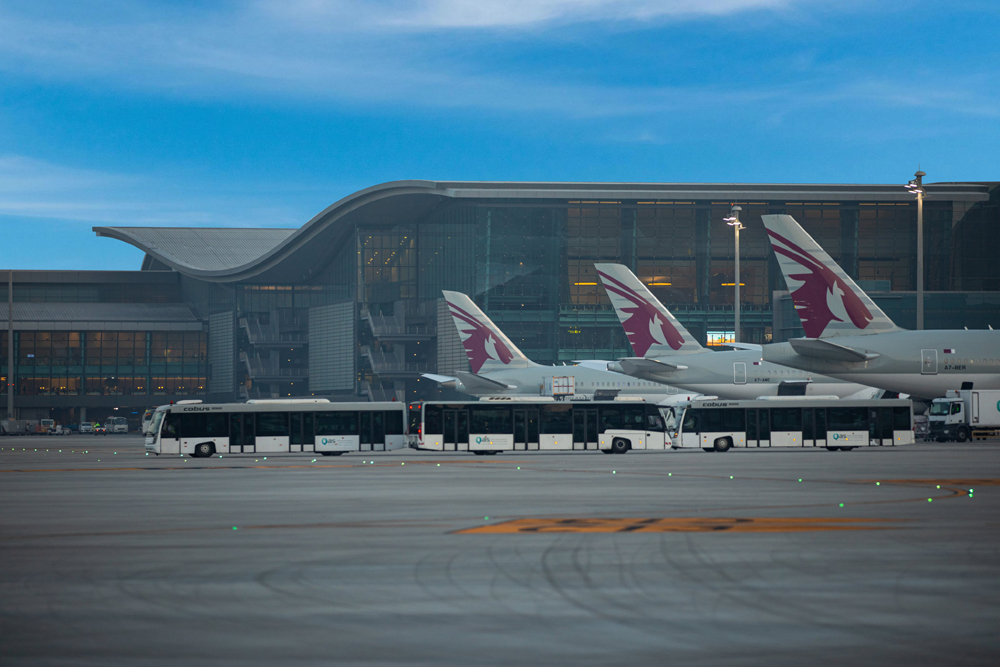
Signs of recovery are already visible at Hamad International Airport, the country’s primary aviation hub. The airport is currently experiencing a gradual rebound in activity across several key areas.
Passenger flights have resumed in increasing numbers, while cargo operations critical to regional and global supply chains continue to operate steadily.
Qatar Airways has announced the resumption of flight operations between Doha and key destinations worldwide, building on its mid-April announcement confirming the expansion of its flight schedule to over 150 destinations across six continents.
Recently, the airline also announced the resumption of their daily services to India’s Kozhikode and other Middle Eastern countries, including Bahrain, the United Arab Emirates, and Syria.
In addition, transit traffic is being reintroduced under specific operational controls, reflecting a cautious but deliberate reopening strategy.
Foreign airlines have also begun resuming their operations, reconnecting Doha with major international destinations.
The outlook for Qatar’s aviation sector appears optimistic as the country’s flight operations signal confidence in the pace of recovery and the broader stability of international travel demand.
The QCAA reaffirmed its commitment to strengthening Qatar’s role as a strategic aviation hub.
Among its priorities are enhancing operational efficiency, closely monitoring regional developments, and ensuring that safety and security remain paramount.
The authority also highlighted its adoption of a gradual and cautious approach to restoring full operational capacity, avoiding abrupt changes that could disrupt the system.
Officials underscore that Qatar’s response reflects a broader trend among aviation regulators seeking to build resilience in the face of geopolitical uncertainty.
By prioritising safety while enabling a steady return to normal operations, the country is positioning itself to maintain its competitive edge in global aviation.
As recovery continues, the QCAA’s strategy demonstrates how a balance of caution, coordination, and forward planning can help sustain critical infrastructure even during periods of instability.
With key indicators trending upward, Qatar’s aviation sector appears on track to regain its full momentum in the months ahead.