New York: Qatar expressed its pride in providing financial support for Global Counter-Terrorism Coordination Compact Committee (CT Compact) secretariat and seed funding for projects implemented through its working groups as well as its Coordination Platform launched in 2020 as a digital gateway for fostering efficient and inclusive partnerships and collaboration its entities and member states.
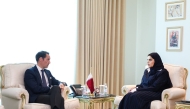
This was stated in Qatar’s speech delivered by Permanent Representative of Qatar to the United Nations H E Sheikha Alya Ahmed bin Saif Al Thani, at the 10th meeting of the Global Counter-Terrorism Coordination Committee, in the presence of HE Secretary-General of the United Nations Antonio Guterres, and Under-Secretary-General of the United Nations Office of Counter-Terrorism (UNOCT) Vladimir Voronkov, at the United Nations headquarters in New York.
She emphasised the timely focus of this year’s meeting, given the increasing importance of Africa in the global scene of terrorism and counter-terrorism. She stressed the need for the coordination agreement to focus on the unique challenges and opportunities on the continent.
She highlighted the importance of identifying emerging challenges and vulnerabilities in responding to them and the possible areas of action. She stated that based on this, governments, regional organizations, civil society, and the UN system must take concrete and coordinated measures to address these challenges.
The Permanent Representative of Qatar to the United Nations, clarified that the UNOCT has taken significant steps to support African countries in enhancing their counter-terrorism capabilities by establishing offices and programs in Kenya and Morocco. She added that the global programmes, activities, and projects implemented by the UNOCT and its partners in the Global Counter-Terrorism Coordination Compact, a significant portion of which is funded by Qatar, play a crucial role in African countries.
She pointed out Qatar’s participation in hosting the launch of the Joint Appeal for Counterterrorism in Africa during the Counterterrorism Week in June last year, which aims to support multi-stakeholder initiatives to provide comprehensive and innovative responses to complex priority challenges across Africa.
In this regard, she added that Qatar’s support includes technical assistance in various African countries, as well as initiatives aimed at addressing the root causes of violent extremism through opportunities in education, employment, and training programs implemented by Qatari institutions such as ‘Silatech’ and ‘Education Above All’.
She emphasised that Qatar will participate later this year, in collaboration with Morocco, in organising the second annual forum for beneficiaries of technical assistance, which aims to assess the effectiveness of technical assistance and capacity-building provided by the UNOCT and counter-terrorism entities.
She added that the forum will focus extensively on Africa and the progress made by Joint Appeal initiatives.