Guatemala City: Yolanda Tobar is sitting on a plastic chair in a Guatemalan hospital waiting for a pre-natal check-up that should have been routine but has turned frightening because of Zika.
Tobar, who is 19 years old and eight months pregnant with her first child, waits alongside dozens of other pregnant Guatemalans facing the same fears over an outbreak of the tropical virus, which is blamed for causing a surge in brain-damaged babies in Latin America.
Zika, a mosquito-borne virus that originated in Africa and arrived in Latin America last year, causes relatively mild, flu-like symptoms.
But for expecting couples, the threat is harrowing: health officials in the region say the outbreak is linked to a surge in babies born with microcephaly, or abnormally small heads, a birth defect that can cause brain damage or death.
"The truth is that, yes, it worries me to know that the baby could be deformed," said Tobar, who, like many of the women waiting at this public hospital in Guatemala City, admitted she knew little about the disease, its symptoms and the possible complications for newborns.
Guatemala had registered 68 cases of Zika at the end of last month.
But there are fears that number could increase dramatically.
Neighboring El Salvador has detected 5,397 cases of Zika, and has urged women to avoid getting pregnant for the next two years.
Guatemala's geography makes it highly vulnerable, say health officials.
Its humid lowlands are prime breeding grounds for the mosquito species that carries Zika, Aedes aegypti.
The mosquito's habitat spans most of the Americas. The World Health Organization (WHO) has warned that every country in the hemisphere is at risk except Canada and Chile.
Currently, the virus has been reported in around 20 Latin American and Caribbean countries.
The WHO cautions that Zika has not been conclusively proven to cause microcephaly. But WHO chief Margaret Chan called the possibility "extremely worrisome."
Zika has hit hardest in Brazil. Cases of microcephaly in the giant South American country surged from 163 per year on average to 3,893 after the Zika outbreak began last year.
Forty-nine of those babies have died.
There is no vaccine or specific treatment for Zika. Most patients simply treat the symptoms with painkillers and other medication.
Wait and hope
Guatemalan officials have gone on the offensive, preparing for the worst.
At the public hospital AFP visited, epidemiologist Karen Giron said any patient diagnosed with Zika would be isolated for five days to prevent transmission.
Any pregnant woman running a fever will be considered a suspected Zika case, and all women at pre-natal clinics will undergo extra testing for birth defects in their babies.
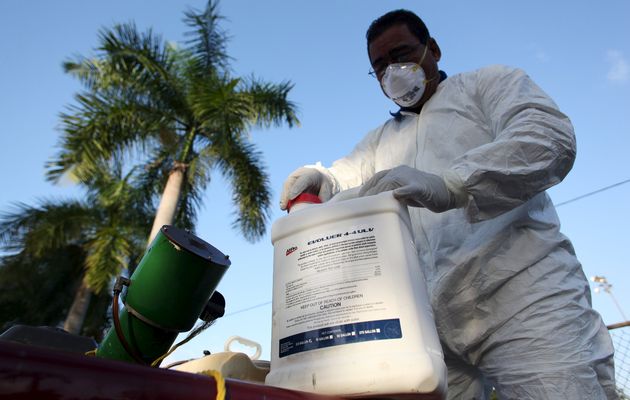
Authorities are also stepping up measures to fight the mosquito population and warning people to take extreme precaution to avoid bites.
"If we comply with preventive strategies and measures, the virus will be controlled," said Rene Marroquin, the head of obstetrics and gynecology clinics for national health service IGSS.
Still, there was no information on Zika posted on the walls of the Guatemala City hospital, despite a national alert to pre-natal clinics issued by health authorities.
Some women said they had not even heard of Zika.
"I haven't heard anything about that. I don't know what it is," said one.
Even for women who know about the risk, there is little to do but avoid mosquito bites, go in for regular check-ups and hope for the best.
"It's worrying to know that the baby could be affected," said Cindy Contreras, 30, who is seven months pregnant with her first child and was slowly advancing through the long line at the hospital.
AFP