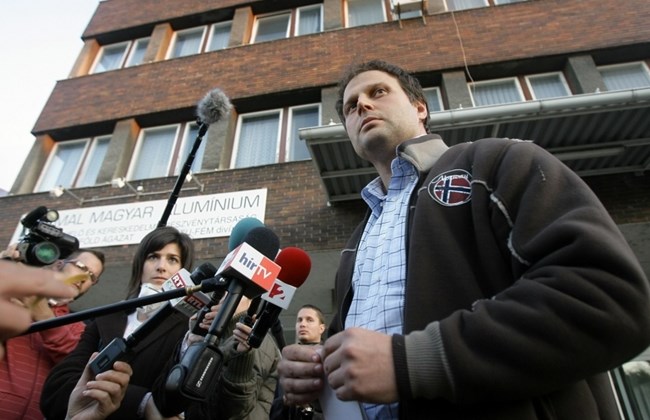

Veszprém, Hungary: A Hungarian court on Thursday acquitted the boss of an alumina plant that caused a massive toxic spill in western Hungary in 2010, killing 10 people and injuring 150.
Zoltan Bakonyi, the former director of the MAL alumina plant in Ajka, and 14 other employees were cleared of criminal charges of negligence, waste management violations and damage to the environment.
Prosecutors had demanded prison sentences for all those on trial.
The catastrophe unfolded on October 4, 2010, when the holding reservoir at the MAL plant suddenly burst its walls, releasing 1.1 million cubic metres (38.8 million cubic feet) of poisonous, red sludge.
Huge waves of the mud -- a caustic byproduct of aluminium extraction -- cascaded into the villages of Kolontar, Devecser and Somlovasarhely, toppling cars and submerging entire buildings.
Many of the survivors suffered horrendous chemical burns, and hundreds were left homeless.
The sludge also wiped out almost all water life in nearby rivers and even spread to the Danube.
In total, the devastation spread across an area of 40 square kilometres (over 15 square miles).
In response to the disaster, the Hungarian government declared a state of emergency and evacuated some 8,000 people from the stricken region.
MAL was ordered in 2011 to pay 135 billion forints (453 million euros, $611 million) to the regional environmental authorities.
Authorities also moved to nationalise the plant.
Despite millions of euros spent on depolluting the area, hundreds of hectares remain sealed off and cannot be used for cultivation.
AFP