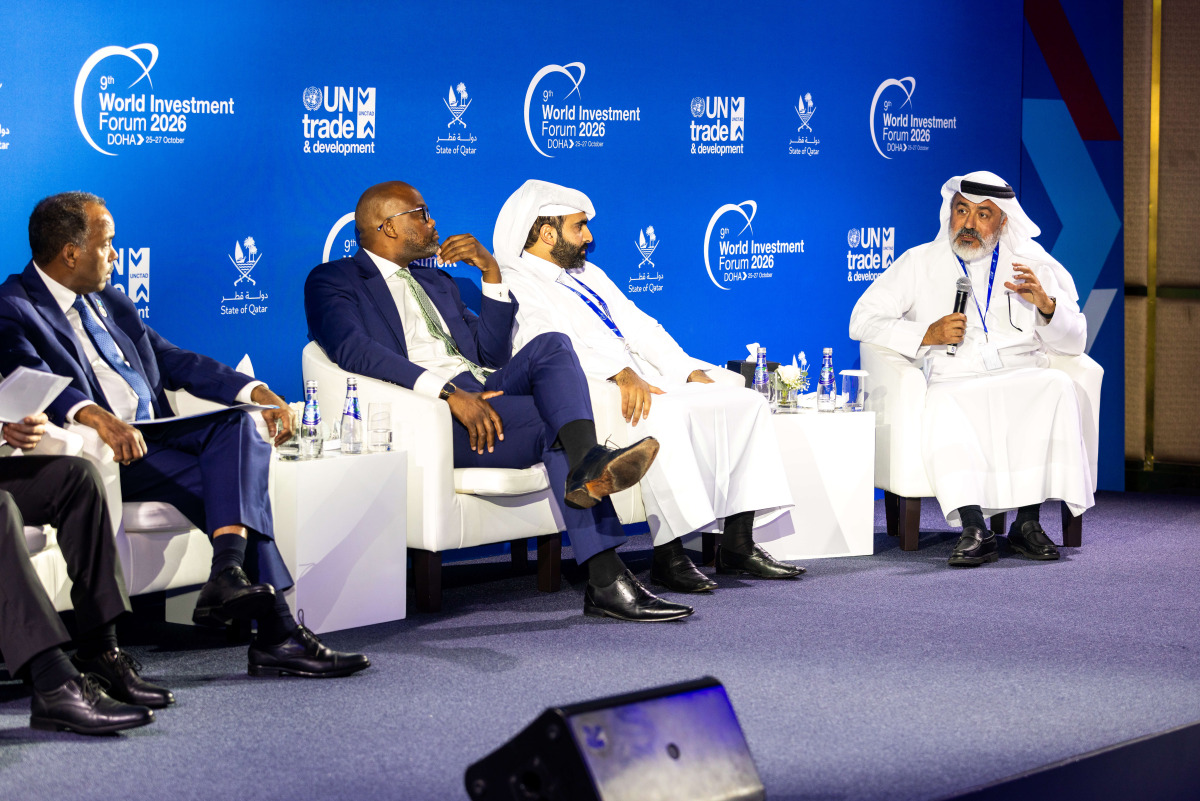
Doha, Qatar: The Qatari Businessmen Association (QBA) participated in the session “The Role of the Private Sector in Financing Development in Developing Countries,” held as part of the World Investment Forum 2026 in Doha, with the participation of H E Dr. Mariam bint Ali bin Nasser Al-Misnad, Minister of State for International Cooperation, in Qatar, Minister of Investment and Foreign Trade of Egypt, State Minister for Foreign Affairs of Somalia, CEO of Qatar Development Bank and Secretary-General of the African Continental Free Trade Area (AfCFTA) Secretariat. The session was also attended by QBA members Nabil Abu Issa, Yousuf Ebrahim Al-Mahmoud and Dr. Mohamed Althaf.
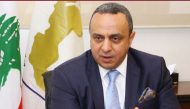
The Association was represented by its member Salah Mohammed Jaidah (pictured), Chairman MENA & Chief Country Officer of Deutsche Bank in Qatar. In his remarks, Jaidah stressed that mobilizing private capital to finance development should not be limited to funding infrastructure and major development projects, but its benefits should also extend to the small and medium-sized enterprises (SMEs) that contribute directly to implementing these projects.
He also pointed out that one of the key challenges is ensuring that SMEs benefit from major investments, whether by providing opportunities to participate in carrying out the work or by securing the financing needed to sustain their operations and growth.
In this context, Jaidah called on governments to consider adopting contractual mechanisms that require main contractors on major projects to allocate a reasonable proportion of eligible work to
local SMEs that meet the technical and commercial requirements.
He explained that major projects are usually awarded to companies with extensive financial and technical capabilities, while these companies rely on a network of subcontractors and small and medium-sized enterprises to provide specialized services, materials and equipment, and to carry out many of the essential works.
He affirmed that enhancing the participation of local companies in these projects would enable them to gain experience, develop their technical and financial capabilities, and expand their business, ensuring that the economic impact of development projects extends to a wider segment of private sector enterprises.
A second proposal he addressed the financing challenges facing SMEs, particularly subcontractors, noting that the problem does not always lie in a lack of business opportunities, but rather in the difficulty of managing cash flows due to delays in collecting receivables.
He explained that payment delays may be manageable for large companies, but they can threaten the continuity of small businesses, which must meet their obligations to employees, suppliers and financiers.
In this regard, he called on commercial banks that finance main contractors to develop financing mechanisms that also include approved subcontractors participating in project implementation, rather than limiting banking facilities to the main contractor.
He also pointed to the possibility of providing working capital financing against approved invoices after the completion of works, in addition to adopting dedicated project accounts and direct payment arrangements, where appropriate, to ensure that receivables reach the implementing companies in a timely manner.
Jaidah affirmed that supporting SMEs is a fundamental element in enhancing the impact of development investments, especially in developing countries, given the role these companies play in creating jobs, diversifying economic activity and achieving sustainable growth.