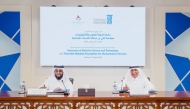
Doha, Qatar: The Ministry of Labour, in cooperation with the International Labour Organisation (ILO), yesterday convened a high-level webinar to mark World Day for Safety and Health at Work 2026, observed annually on April 28.
This year’s theme is “A Healthy Psychosocial Work Environment.”
The event forms part of ongoing efforts to strengthen occupational safety and health frameworks, promote preventive approaches, and advance safe and healthy working environments that prioritise workers’ well-being, including psychosocial and mental health dimensions.
It was attended by H E Sheikha Najwa bint Abdulrahman Al Thani, Undersecretary of the Ministry of Labour; H E Mohammed Hassan Al Obaidly, Director-General of the Executive Office of the GCC Labour Ministers’ Council and Social Affairs Ministers’ Council; Hamad Faraj Dalmouk, Assistant Undersecretary for Migrant Labour Affairs; Kholoud Saif Al Kubaisi, Executive Director of the Workers’ Support and Insurance Fund; Dr Salah Abdullah Al Yafei, Director of the Health Promotion Department at the Ministry of Public Health; and Francesco D’Ovidio, Director of the International Labour Organisation (ILO) Office in Qatar, alongside senior government officials, social partners, and representatives of workers and employers.
This year’s observance focuses on the growing importance of workplace mental health as a structural component of productivity, resilience, and institutional sustainability, amid rapid changes in labour markets and evolving occupational risks. Participants underscored the need for integrated policy approaches linking physical safety, psychosocial well-being, and organisational resilience.
In her opening remarks, H E Sheikha Najwa bint Abdulrahman Al Thani said occupational safety and health must extend beyond traditional physical safeguards to encompass psychosocial dimensions as an essential element of modern labour policy.
She emphasised that safeguarding workers’ health is both a moral and institutional responsibility, noting that psychosocially supportive workplaces contribute to improved productivity, greater job stability, and reduced occupational risk.
She added that these outcomes align with the objectives of Qatar National Vision 2030 and broader efforts to enhance labour market sustainability.
Mohammed Hassan Al Obaidly commended Qatar’s efforts in advancing workplace mental health, noting that national policies and initiatives have contributed to the development of more supportive work environments and positioned the country as a regional reference point in this field.
Francesco D’Ovidio said a healthy work environment extends beyond the prevention of physical harm to enabling workers to perform their duties with dignity, balance, and purpose.
He added that psychosocial well-being is not an additional consideration but a core requirement for safe, productive, and sustainable labour markets.
He called for a shift from awareness to implementation, from individual coping mechanisms to organisational redesign, and from fragmented interventions to integrated occupational safety and health systems.
A leadership session highlighted Qatar’s strategic direction in embedding psychosocial well-being within occupational safety frameworks.
Hamad Faraj Dalmouk said worker psychological well-being is now a core pillar of national policy rather than a supplementary consideration.
He outlined three strategic priorities: integrating psychosocial risk factors into occupational risk assessments, strengthening legislative frameworks addressing workplace stress, and leveraging artificial intelligence to monitor and assess workplace well-being indicators.
Kholoud Saif Al Kubaisi said worker protection extends beyond physical safety to include psychological stability, financial security, and dignity at work.
She added that investing in worker well-being directly supports labour market stability and productivity, while reinforcing Qatar’s position as a leader in worker protection.