Doha: Undersecretary of the Ministry of Justice and Chairman of the National Committee for International Humanitarian Law (NCIHL)
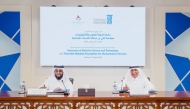
H E Saeed bin Abdullah Al Suwaidi outlined the State of Qatar’s most prominent efforts in promoting international humanitarian law and the challenges associated with its implementation.
Delivering a lecture at the Joaan Bin Jassim Academy for Defence Studies, His Excellency discussed the historical development of international humanitarian law, addressing its concepts in old civilizations and Islamic law, and its reflections in international instruments, including the four Geneva Conventions and their Additional Protocols and the Hague Conventions. He also highlighted the fundamental principles upon which this law is based.
He explained that the establishment of the National Committee for International Humanitarian Law in the State of Qatar was in line with the State’s international obligations and its commitment to strengthening the rule of law, and in response to the need for a national body concerned with coordinating efforts related to the application and dissemination of this law. He outlined the Committee’s objectives, contributions, and most prominent achievements at the local, regional, and international levels.
He noted the committee’s efforts to expand its membership to include representatives from new government entities and bodies, thereby strengthening institutional integration, particularly regarding the establishment of emergency committees and joint action plans during armed conflicts.
He also explained the NCIHL’s role in awareness and training, through organizing lectures and introductory seminars for university and school students, in addition to specialized programs targeting diplomats in cooperation with the Diplomatic Institute at the Ministry of Foreign Affairs, military personnel in cooperation with the Ministry of Defence, medical staff in cooperation with the Ministry of Public Health, as well as journalists and legal researchers in cooperation with the Centre for Legal and Judicial Studies at the Ministry of Justice.
He commended the inclusion of international humanitarian law concepts in the country’s educational curricula, in cooperation with the Ministry of Education and Higher Education, as part of efforts to instil a culture of this law and promote adherence to its principles.