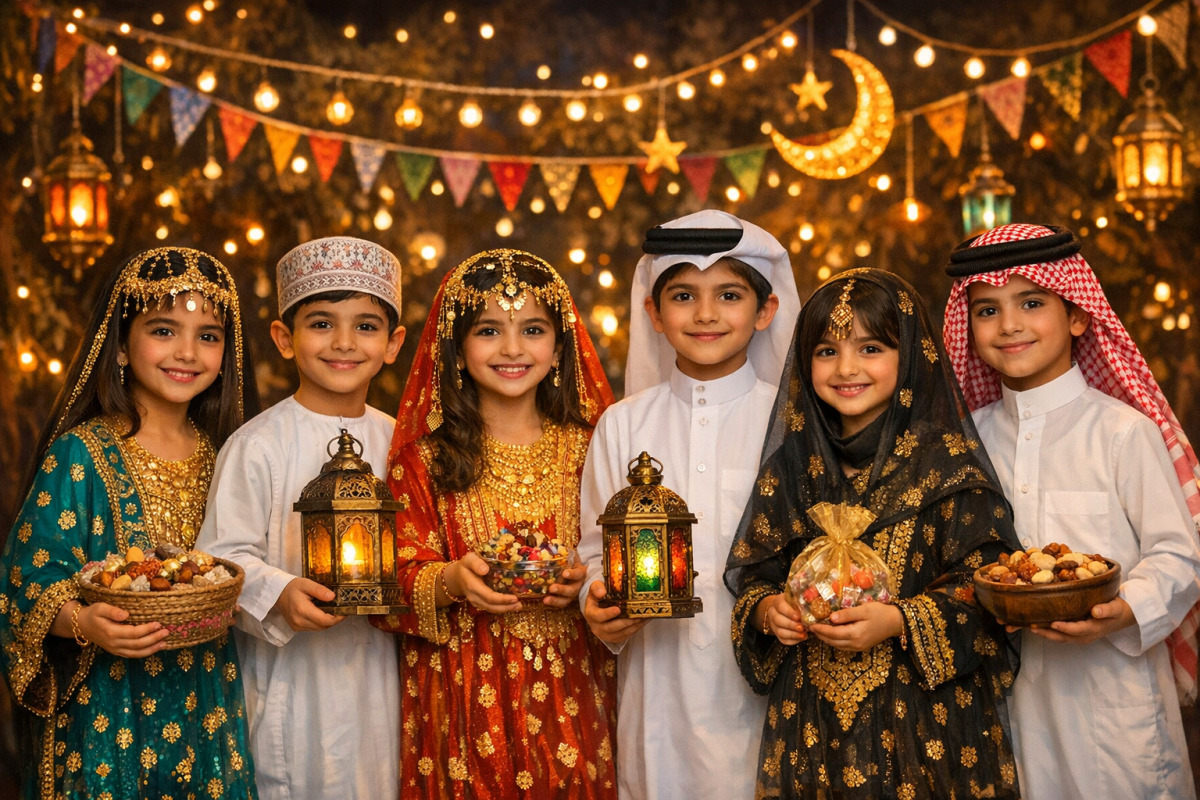
AI-generated photo by Mahmoud Elmazaty / The Peninsula
Doha, Qatar: Garangao, known across the Gulf by names such as Gargee’an, Qarqa‘oon and Haq Al Laila, remains one of the region’s most cherished Ramadan heritage traditions.
Rooted in community life and oral folklore, the celebration centers on children, who dress in traditional attire, sing folk chants, and go door-to-door collecting sweets and nuts.
Although the core spirit of the event is shared across Gulf societies, rewarding children for fasting, strengthening social bonds, and preserving cultural identity, each country has developed its own local variations in naming, timing, songs and customs.
In this article, The Peninsula has done an overview of how the tradition is celebrated across Gulf countries and neighboring Iraq.
Qatar
Naming: Garangao
Timing: Evening of the 14th night of Ramadan
Traditional clothing: Embroidered folk attire; girls often wear the bukhnaq
Chants: Traditional Garangao songs celebrating generosity and hospitality
In Qatar, Garangao is one of the most anticipated nights of Ramadan.
Children walk through neighborhood streets, traditionally known as the fereej, carrying decorated cloth bags to collect sweets and nuts from neighbors and relatives while singing traditional chants.
The celebration historically served to encourage children to continue fasting after completing half of Ramadan.
Today, it remains a vibrant community event blending entertainment with heritage preservation, reinforcing values of generosity, affection and social cohesion.
Saudi Arabia
Naming: Gargee’an (especially in the Eastern Province)
Timing: Nights of the 13th–15th of Ramadan
Traditional clothing: Girls wear the bukhnaq; boys wear the thobe and sudairi
Chants: “Qarqa‘ Qarqa‘ Qarqee’an… A‘touna Allah Ya‘teekum…”
In Saudi Arabia, Gargee’an is most strongly preserved in the Eastern Province, including Al-Ahsa and Qatif, where families continue to observe the tradition with enthusiasm.
Children move between homes singing folk songs while receiving sweets and nuts from residents.
While modern celebrations often include organized community events, the essence of the tradition remains centered on joy, fasting, encouragement, and neighborhood solidarity.
Kuwait
Naming: Gargee’an
Timing: Nights of the 13th–15th of Ramadan
Traditional clothing: Girls wear a daraa; boys wear a dishdasha
Chants: Folk songs such as “Gargee’an wa Gargee’an…”
In Kuwait, Gargee’an continues to play a strong social role during Ramadan.
Children dressed in traditional attire visit homes while singing heritage songs, receiving treats in return. Schools and shopping centers frequently organize cultural events to introduce younger generations to the tradition, ensuring its continuity in modern urban life.
United Arab Emirates
Naming: Haq Al Laila
Timing: 15th night of Sha’ban
Traditional clothing: Bukhnaq for girls; kandura for boys
Chants: Songs including “A‘touna Haq Al Laila”
In the UAE, the celebration takes place before Ramadan rather than during it, distinguishing it from other Gulf traditions.
Known as Haq Al Laila, the event marks a spiritual preparation for the holy month, emphasizing generosity and community connection.
Children visit homes in traditional clothing, sing folk chants, and collect sweets, while cultural institutions and schools often organize heritage-themed events to preserve Emirati identity.
Bahrain
Naming: Qarqa‘oon or Al Nasfa
Timing: Mid-Ramadan (13th–15th nights)
Traditional clothing: Traditional attire,e including the bukhnaq
Chants: “Qarqa‘oon ‘Adat ‘Alaykum Ya Al-Siyam”
In Bahrain, Qarqa‘oon blends traditional neighborhood celebrations with modern public events. Children walk through communities singing folk songs while collecting sweets, reflecting strong social ties and a shared cultural memory that continues to unite generations.
Oman
Naming: Garangao / Qaranqasho (regional variations)
Timing: Mid-Ramadan, typically around the 14th or 15th night
Traditional clothing: Girls wear colorful embroidered dresses; boys wear the dishdasha and kuma cap
Chants: Local folk songs requesting sweets and blessings
In Oman, the celebration survives through local variations shaped by regional dialects and customs.
Children move between homes singing traditional chants while receiving sweets and small gifts. Community initiatives and cultural institutions increasingly support the revival of these practices to maintain Omani folk heritage among younger generations.
Iraq (Regional comparison, not a GCC country)
Naming: Majina or Gargee’an
Timing: Mid-Ramadan evenings
Traditional elements: Lanterns, decorated bags, and neighborhood visits
Chants: “Majina Ya Majina”
In Iraq, a similar mid-Ramadan tradition known as Majina reflects shared cultural roots across the wider Gulf region.
Children gather at night, carrying lanterns and bags, singing traditional songs as they collect sweets and small gifts from neighbors.
Though the custom has declined in some modern areas, it remains active in parts of Baghdad and Basra.
Despite differences in names and timing, the essence of the celebration remains remarkably consistent across the region: children at the center, communities coming together, and heritage passed from one generation to the next. Whether called Garangao, Gargee’an, Qarqa‘oo,n or Haq Al Laila, the tradition continues to serve as a living reminder of the Gulf’s shared cultural identity.