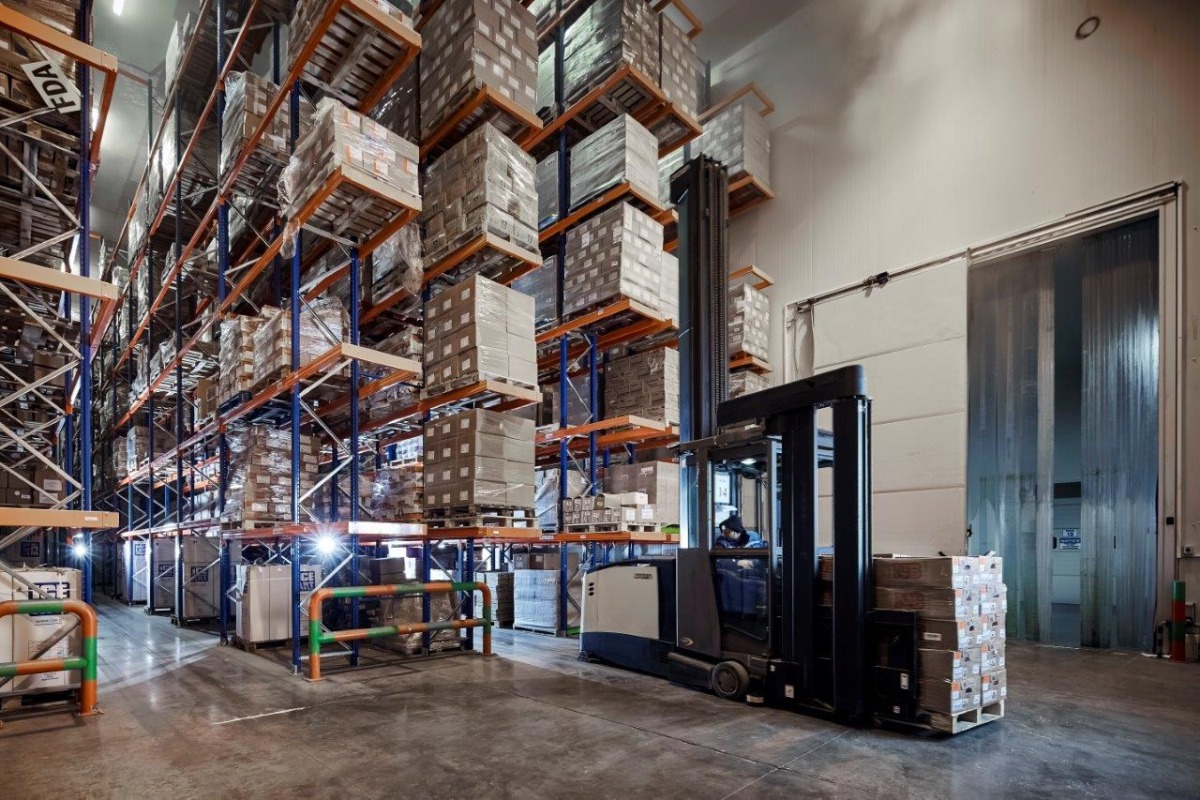
File photo of the warehouse of a logistics company in Doha, Qatar used for representation.
Doha, Qatar: Industry leaders have noted that Qatar’s logistics sector is emerging as a key pillar of economic growth, supported by rising trade volumes, expanding transshipment activity and world-class port infrastructure, with Hamad Port increasingly positioning the country as a leading regional logistics hub.
According to the 2024 Container Port Performance Index (CPPI), published by the World Bank and S&P Global, Hamad Port ranks among the highest-performing ports globally, underpinned by advanced infrastructure and the highest operational efficiency in the Gulf.
The port has become Qatar’s main gateway to world trade, supporting supply chain resilience and non-hydrocarbon economic diversification.
Recent figures highlight the scale of this growing momentum. In a recent post on social media, Mwani Qatar said that rapid growth in transshipment now accounts for nearly 50 percent of total volumes handled between January and November 2025, underscoring Hamad Port’s expanding role as a regional redistribution centre.
“With rapid growth in transshipment — accounting for nearly half of total volumes — the port is solidifying Qatar’s status as a vital regional hub for trade and logistics, in line with the Ministry of Transport’s strategic plan,” Mwani Qatar posted on its X platform.
Logistics and trade experts said the port’s performance is having a direct impact on the wider economy. “Hamad Port has shifted from being primarily a national gateway to a regional logistics platform,” said Uwais Rahman, a logistics analyst. “Its efficiency, connectivity and capacity allow Qatar to capture higher-value activities such as transshipment, re-exports and integrated logistics services.”
The growth of transshipment volumes reflects Qatar’s strategic location along major east-west trade routes, as well as investments in automation, digital systems and seamless customs procedures.
These factors have helped shipping lines optimise turnaround times and reduce operating costs, making Doha an increasingly attractive hub for regional and international carriers.
“Ports with strong CPPI rankings tend to attract more shipping services, which creates a positive feedback loop for trade, investment and job creation,” he said.
Rahman added, “For Qatar, this strengthens non-energy exports, supports industrial zones and enhances the country’s role in global supply chains.”
The logistics sector’s expansion is also aligned with broader national objectives to diversify the economy beyond hydrocarbons. Improved port performance supports manufacturing, food security, construction and e-commerce, while reinforcing Qatar’s resilience against external supply disruptions.
With transshipment volumes rising and Hamad Port continuing to rank among the world’s top-performing container ports, experts expect logistics to play an even larger role in driving economic growth, trade competitiveness and regional integration in the coming years.