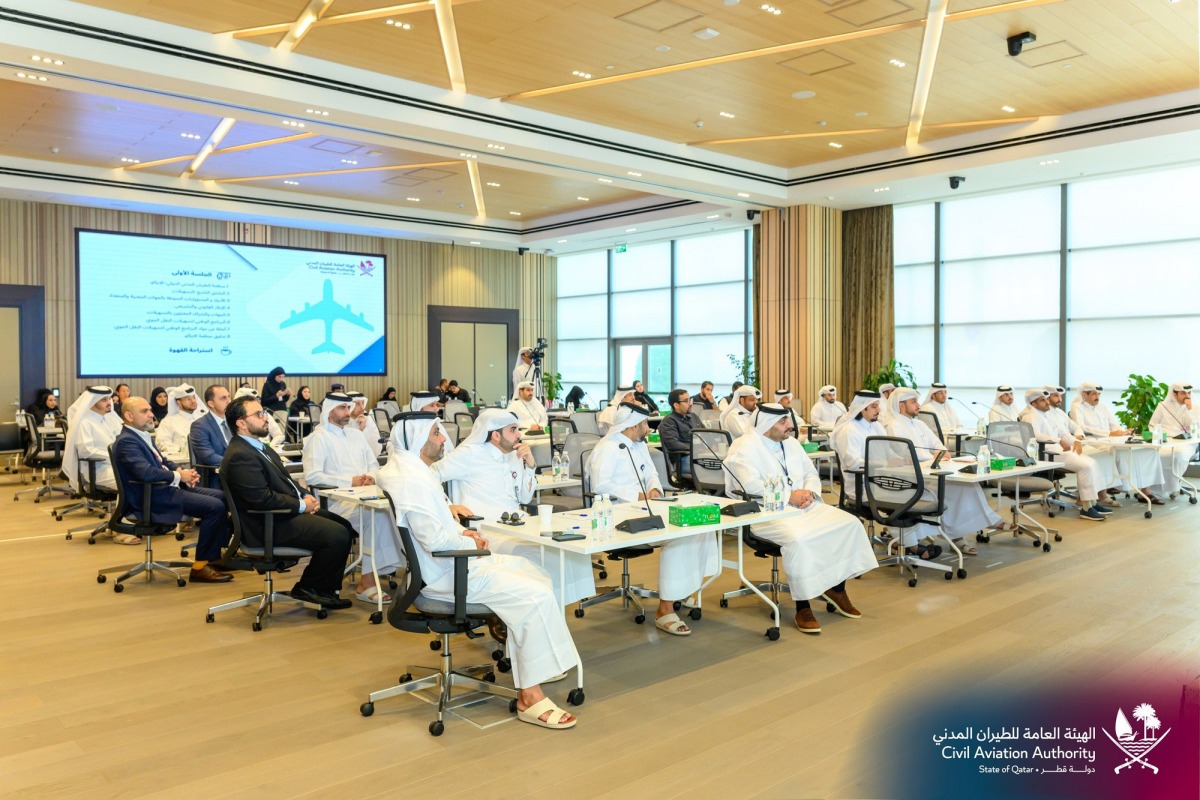
Doha, Qatar: Qatar is moving towards the implementation phase of its national strategy for streamlined civil aviation operations, seeking to enhance operational integration, uphold global compliance standards, and drive seamless air travel efficiency across its aviation infrastructure.
As part of this effort, the Qatar Civil Aviation Authority (QCAA) held a specialised workshop yesterday at the Qatar Air Traffic Control Centre, gathering key representatives from multiple stakeholder entities across the country’s transport, security, and administrative sectors.
QCAA stated, “Several key topics were addressed, most notably a review of the approved final version of the 2026 National Air Transport Facilitation Programme and the roles and responsibilities assigned to the relevant entities involved in its implementation, as well as mechanisms for coordination and integration among them.”
The session focused on embedding international regulatory standards, specifically Annex 9 to the Chicago Convention, which sets global benchmarks for civil aviation facilitation, into Qatar’s domestic aviation operations.
Annex 9 focuses on optimising border-crossing procedures, easing passenger and cargo clearance, and minimising delays for flight crews, aircraft, and baggage while strictly maintaining necessary security measures.
During the event, attendees also evaluated the legal and regulatory structures underpinning the programme, alongside core performance indicators and strategic implementation plans designed to track progress and maintain inter-agency readiness.
With clear coordination mechanisms, the QCAA aims to strengthen inter-entity collaboration to keep pace with international best practices as passenger volumes and cargo movements continue to expand.
The implementation of the updated facilitation programme underscores the aviation authority’s commitment to strengthening inter-agency cooperation and refining the national air transport framework in alignment with the standards set by the International Civil Aviation Organization (ICAO).
Industry leaders emphasise that this expansion builds on the strategic momentum, highlighting long-term economic alignment, global positioning, and operational outcomes.
The strategic transition into this implementation phase marks a critical milestone in Qatar’s ongoing efforts to reinforce its position as a global aviation hub. By establishing a modern, highly integrated facilitation framework, the nation is proactively aligning its regulatory environment with the rapid growth of its air transport sector.
Experts note that this systematic alignment with ICAO guidelines not only elevates operational standards across state agencies, but also ensures that national security protocols, customs workflows, and border controls operate with synchronised precision.
Beyond immediate operational improvements, the execution of the 2026 National Air Transport Facilitation Programme directly supports Qatar’s broader economic objectives, including its long-term tourism, trade, and logistics ambitions.
As air traffic volumes continue to scale up, minimising processing delays at key entry points becomes vital for preserving high service quality for both passengers and commercial cargo.
By fostering seamless coordination among civil aviation authorities, security institutions, and border management entities, Qatar is building an agile, future-proof infrastructure capable of meeting expanding demands while maintaining safety, efficiency, and international compliance.