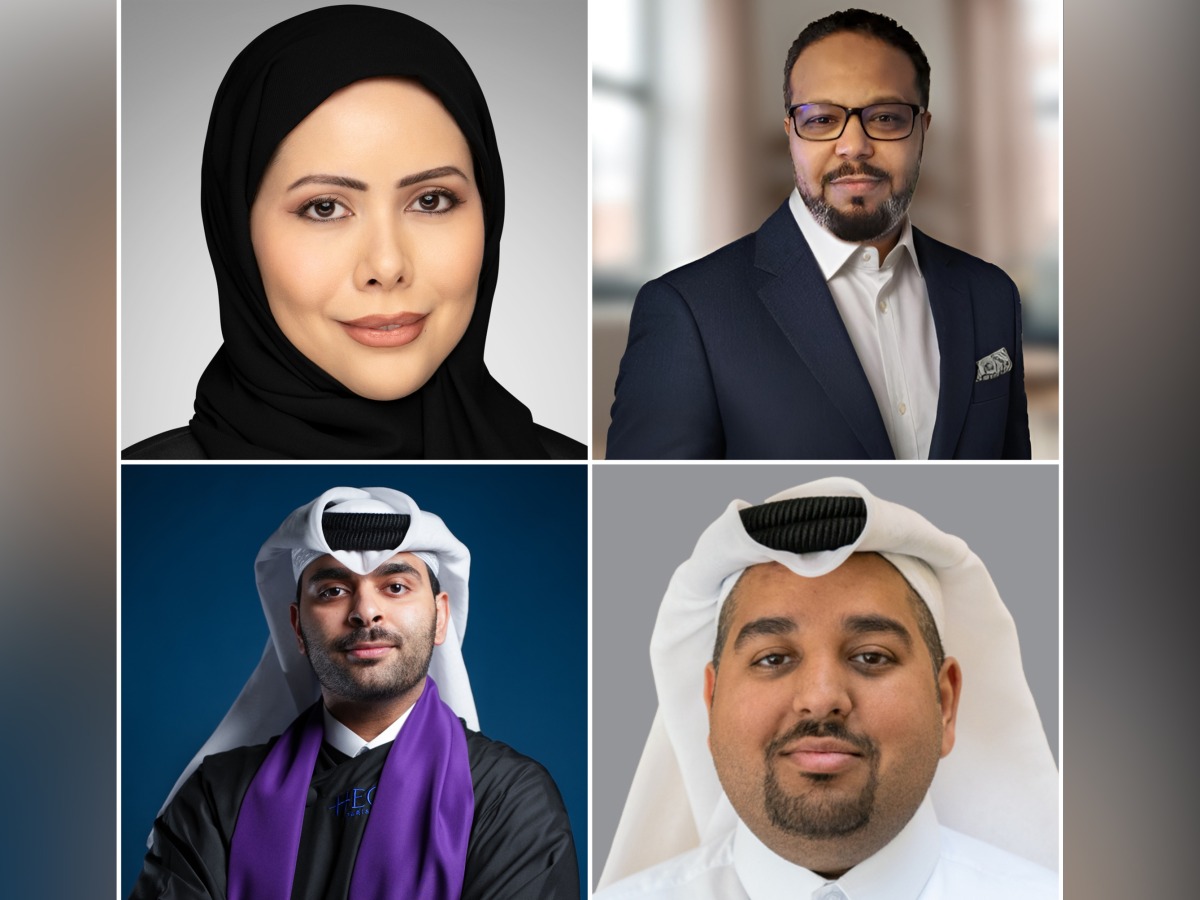
FROM TOP LEFT: Mashael Al Sulaiti, Ali Hassan, Nasser Khalifa Alsayed, and Hamad Ibrahim AlMeghaiseeb
Doha, Qatar: As Qatar continues advancing its knowledge-based economy ambitions under Qatar National Vision 2030, graduates of the Executive MBA programme at HEC Paris, Doha, say their programme experience has reshaped not only their professional outlook, but also their understanding of leadership, innovation, and impact.
Several members of this year’s graduating cohort reflected on how the programme has influenced their careers and perspectives.
“Leadership starts with understanding people.” For Nasser Khalifa Al Sayed, the EMBA journey was about moving beyond technical execution into broader strategic thinking. “With my background in engineering and project environments, I wanted to strengthen my ability to contribute at a leadership level,” he said. “The programme helped me better understand how people think, what motivates them, and how trust and alignment ultimately drive results.”
Nasser added that studying alongside professionals from different industries in Qatar created an environment that constantly challenged perspectives and encouraged new ways of thinking.
Reflecting on Qatar’s future, he noted that programmes, such as the EMBA, help professionals identify how they can contribute more meaningfully to national development. “It pushes individuals to think beyond their immediate role and focus on long-term impact,” he said.
Founder and Managing Partner of Mashael Al Sulaiti Law Firm, Mashael Al Sulaiti described the programme as an opportunity to expand beyond the legal field into business strategy and governance. “After more than a decade leading my own firm, I wanted to understand the financial and strategic dimensions behind major decisions,” she explained.
“The EMBA gave me exposure to disciplines I had never formally studied before.”
Al Sulaiti described the cohort’s multi-disciplinary diversity as one of the program’s strongest aspects. “Being surrounded by executives from different sectors challenged my thinking in ways that would never happen within the boundaries of a single profession,” she said.
Looking ahead, Al Sulaiti hopes to continue working at the intersection of governance, technology, and policy, particularly in areas such as AI, infrastructure, and energy.
For Hamad Ibrahim AlMeghaiseeb, HEC Paris, Doha offered the right balance between academic depth and practical relevance. “The program strengthened my ability to approach challenges with a more strategic and holistic mindset,” he said. “It broadened my perspective and improved the way I approach decision-making.” Hamad added that being able to immediately apply classroom insights within Qatar’s evolving business environment made the experience particularly valuable and he believe the EMBA program plays a key role in developing local leadership capabilities and supporting sustainable national growth. “The experience changed how I think,” he asserts.
Meanwhile, Ali Hassan, who has spent nearly two decades leading major digital transformation initiatives , said the programme marked a turning point in his professional journey. “There comes a stage where you begin questioning not only what you’ve achieved, but how you think and what comes next,” he said.