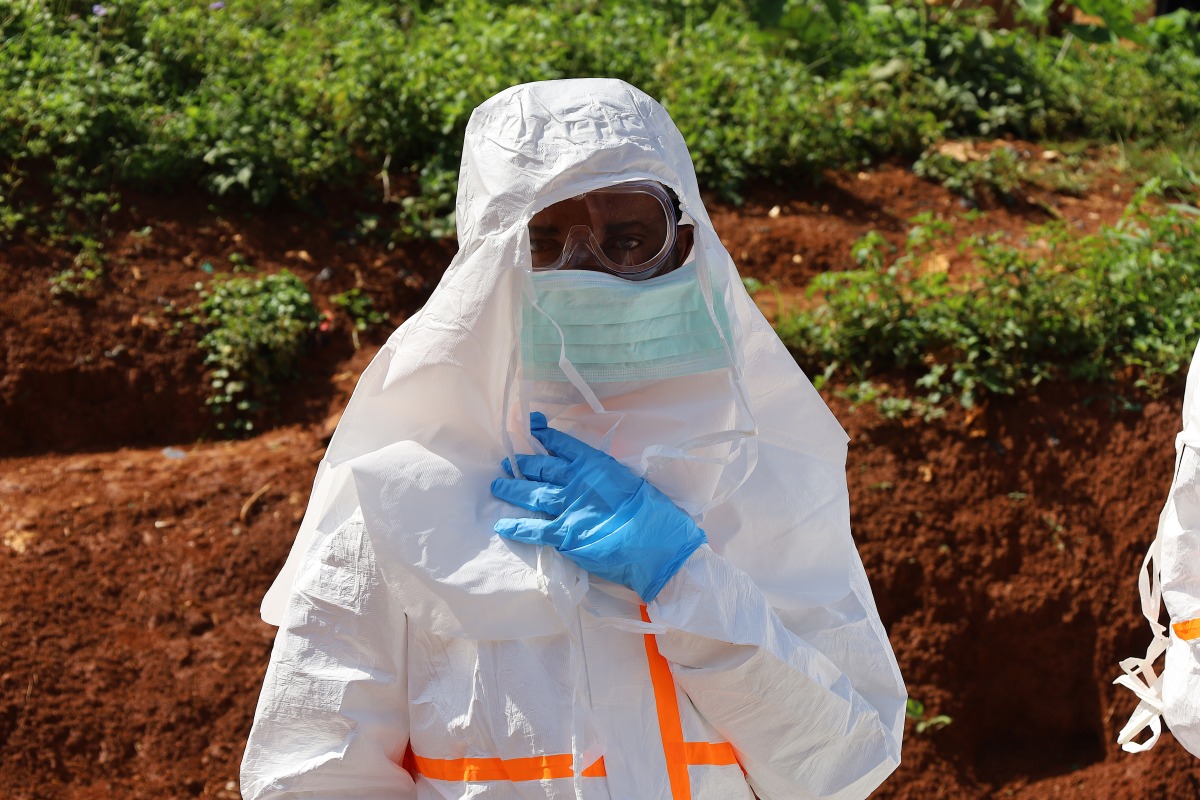
A medical worker puts on protective suits before the burial of an Ebola victim in Mongbwalu, Ituri province, eastern Democratic Republic of the Congo (DRC), May 24, 2026. Photo for representational purposes only. (Str/Xinhua)
Addis Ababa: The Ethiopian Ministry of Health has announced that coordinated preparedness and inspection measures are being implemented to prevent a potential Ebola outbreak in the country.
Noting that the Ebola virus disease is a highly contagious and fatal disease that is easily transmitted from person to person through contact, the minister said in a statement on Monday that no suspected or confirmed case of the disease has been detected in the East African country so far.
The ministry said, although Ethiopia does not have direct border connections with the two affected countries, it has introduced coordinated measures after "recognizing the seriousness of the disease."
These efforts, implemented in collaboration with the Ethiopian Public Health Institute and other relevant stakeholders, include strengthening inspection and screening activities at all international land entry and exit points, conducting intensive surveillance at international airports, as well as enhancing the readiness of health facilities and increasing the country's laboratory capacity.
The ministry said it is also carrying out intensive preparatory works on the provision of necessary medical resources.
The announcement came as the Africa Centers for Disease Control and Prevention (Africa CDC) and the World Health Organization (WHO) warned that the Ebola outbreak in the DRC and Uganda is spreading rapidly, with more than 900 suspected cases and over 200 suspected deaths.
According to the Africa CDC, in addition to the two affected countries of the Democratic Republic of the Congo (DRC) and Uganda, Ethiopia and 10 other countries across the continent are now at high risk, namely South Sudan, Rwanda, Kenya, Zambia, the Central African Republic, Tanzania, Angola, the Republic of the Congo, Burundi, and Somalia.
The Ebola virus is highly contagious and can cause symptoms including fever, vomiting, diarrhea, generalized pain or malaise, and in severe cases, internal and external bleeding. According to the WHO, Ebola fatality rates vary depending on the viral subtype.