Razan Al-Mousawi
Doha, Qatar: As Qatar Foundation (QF) prepares for its annual Convocation, an event that will celebrate the academic excellence of more than 1,000 graduating students this year, each graduate brings a distinct journey shaped by achievement, service, and discovery.
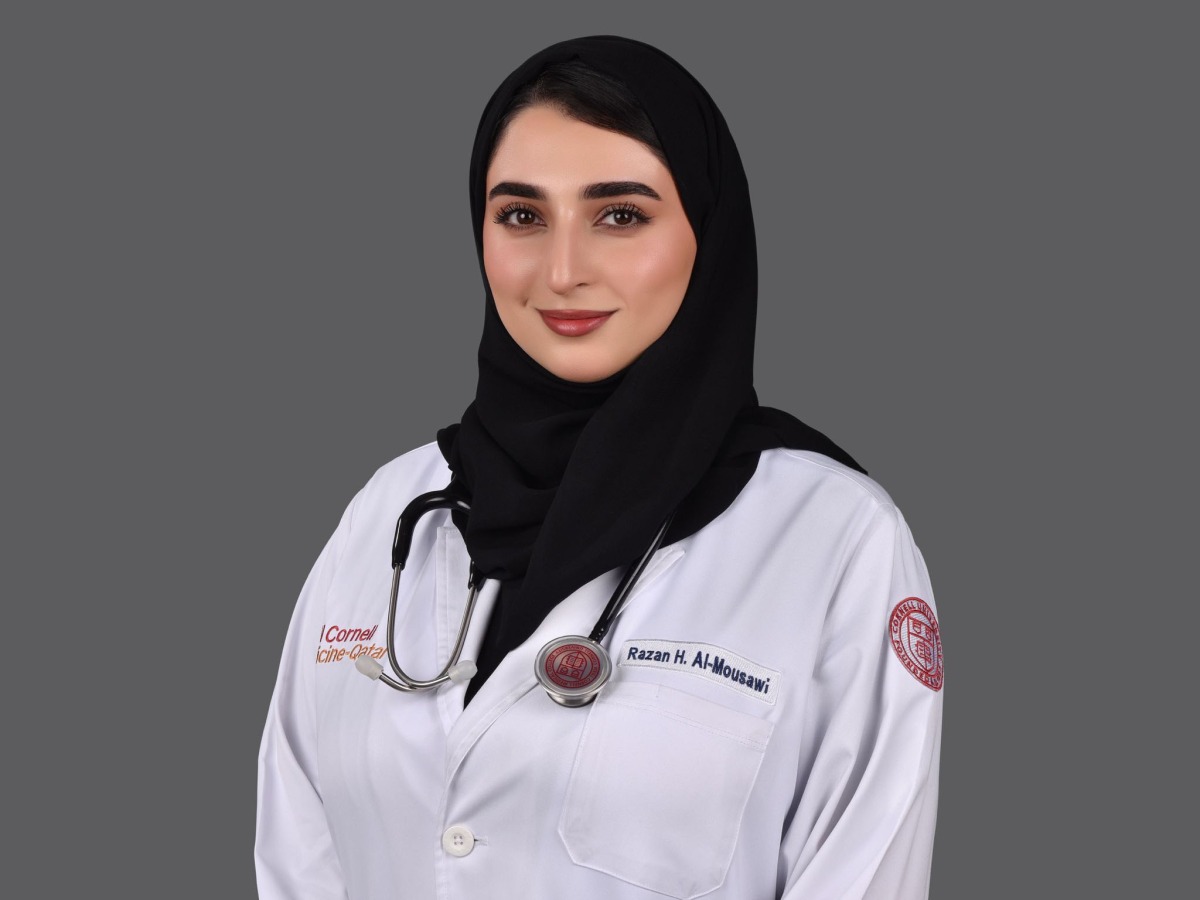
Among them is Razan Al-Mousawi, an outstanding Qatari student graduating as part of the 52 new doctors from Weill Cornell Medicine–Qatar (WCM-Q) one of QF’s branch campuses. She is set to pursue emergency medicine, following a medical school journey marked by academic distinction, leadership, and community engagement.
For Razan, the decision to pursue medicine was deeply connected to both her upbringing in Qatar and her sense of purpose.
“Growing up in Qatar, I saw how quickly the healthcare system was developing and how much emphasis was placed on building a strong local medical workforce,” she told The Peninsula. “Being at WCM-Q through Qatar Foundation gave me the chance to get a world-class education while staying connected to my community.”
Medicine, she added, was never only about academic pursuit.
“Medicine, for me, was always about being present in moments that really matter. I was drawn to the science, but more than that, to being there for people on some of the hardest days of their lives,” she said. “Being the first doctor in my family also made it feel like something bigger than just a career—it’s something I take seriously and feel a strong sense of responsibility toward.”
Razan describes her years at Qatar Foundation as being shaped just as much outside lecture halls and laboratories as within them. These experiences, she explained, helped her develop a broader understanding of healthcare.
“It made me more comfortable stepping into responsibility early on and shaped how I approach teamwork,” she said. “More than anything, it showed me that good healthcare isn’t just about clinical knowledge; it’s about how you show up for people and the systems you work within.”
For Razan, emergency medicine stood out for its intensity, unpredictability, and human immediacy.
“Emergency medicine stood out to me because of how unpredictable and real it is,” she said. “You walk into a shift not knowing what’s going to come through the door next, and you have to be ready for anything.”
She is particularly drawn to the rapid shift between calm and crisis that defines the specialty. “You might be speaking to a patient or reassuring a family member one moment, and minutes later the situation escalates and everything becomes about rapid decisions and teamwork,” she said. “That contrast, the shift between calm and crisis, is what drew me in.”
In Qatar’s diverse healthcare environment, she also sees communication as a critical part of care.
“In Qatar, you also see patients from very different backgrounds, often with language barriers, which pushes you to communicate better and stay patient-centered under pressure,” she said.
Razan credits Qatar Foundation’s interdisciplinary environment for broadening her perspective on healthcare delivery. Her engagement in volunteer initiatives also played a key role in connecting theory with practice.
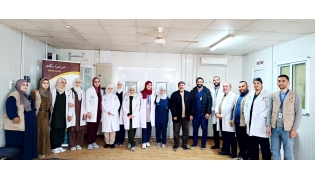
Alongside her clinical training, Razan’s academic journey has been distinguished by multiple achievements, including teaching role in the Summer Enrichment Program (Intro to Anatomy); teaching Assistant in the Cat Dissection Lab; volunteer work with medical camps organized by the Qatar Red Crescent Association and Indian Community Benevolent Forum; honors in Internal Medicine and Psychiatry clerkships; Medical Student Research Award on Fragile X-associated disorders in women; Excellence Award in Cadaver Dissection; co-author of a peer-reviewed publication in Annals of Medicine and Surgery; and author of a humanities piece in Ascensus, Weill Cornell Medicine journal. Following graduation, Razan plans to pursue residency training in emergency medicine, with a long-term vision rooted in both clinical excellence and national contribution.
“I’m planning to pursue residency training in emergency medicine and continue building my skills in fast-paced, high-acuity environments,” she said.
Her ambition extends beyond individual practice. “Long term, I see myself working in Qatar and contributing to the development of emergency care here, not just clinically, but also through teaching and mentorship,” she said. “I want to be part of a system that’s not only advanced, but also adaptable and patient-centered.”