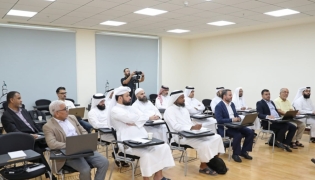
Doha: The State of Qatar participated in the 4th session of the Conference of the States Parties to the Arab Anti-Corruption Convention, which concluded in Riyadh on Wednesday.
The delegation of Qatar to the conference was headed by President of the Administrative Control and Transparency Authority (ACTA) H E Hamad bin Nasser Al Misned.
During his speech, the ACTA President reviewed the experience of Qatar in combating corruption, stressing its success in establishing a distinguished legal and institutional framework in the field of preventing and combating corruption in light of a political will that does not tolerate any manifestation of corruption, and a societal culture that upholds the values of integrity and transparency, which made transparency and integrity rooted in all aspects of public and private work in the country, and this has been translated into Qatar taking the highest ranks in international indicators in this field.
He touched on the efforts of Qatar in combating corruption, in which it has been keen to combine the continued development of national legal and institutional frameworks to enhance integrity with support for relevant international efforts. He discussed what was accomplished in Qatar in the areas of enhancing integrity and transparency, in the period between the 3rd session and right now.
He referred to the adoption of the Code of Conduct and Integrity Charter of Public Officials, the issuance of the Unified Economic Account Law to enhance transparency and financial accountability, and the amendment to the Penal Code to expand the scope of criminalisation of new forms of corruption, including the criminalisation of bribery of international officials, making Qatar one of the first countries to adopt this.
He added that the Code of Criminal Procedure was also amended and included provisions that respond to the development in international cooperation to prevent and combat corruption.
He referred to the launch of the Sheikh Tamim Bin Hamad Al Thani Anti-Corruption Excellence Award in 2016, which is one of the manifestations of the interest of H H the Amir to support efforts to enhance the integrity and combat corruption, as it is awarded annually in coordination with the United Nations Office on Drugs and Crime to individuals and organisations that actively contribute to the fight against corruption, in four areas: achievement, innovation, research, and youth creativity.
He said that the COVID-19 pandemic was not only a health crisis, but an economic crisis and a corruption crisis that requires us to put the fight against corruption at the heart of our priorities in the next stage, and to raise the level of cooperation and participation in our countries and seek to unify efforts between anti-corruption bodies and agencies and the continued development of the mechanisms of our work and benefit from best practices in our countries and societies.
He called for continued efforts to make the Arab agreement an experience a regional model to be followed in the field of preventing and combating corruption so that our Arab societies succeed in eradicating the scourge of corruption, as it is one of the main obstacles to development, stability of societies and the rule of law.
He stressed that the joint Arab action to enhance national efforts to consolidate transparency and integrity is becoming more and more important day by day. The Arab experience in the field of promoting integrity and combating corruption has gained accumulated experiences, and many Arab countries have succeeded in developing and consolidating pioneering institutional and legal experiences in this field.
He expressed his hope that the successive sessions of the Conference of the States Parties to the Arab Anti-Corruption Convention will discuss the promising Arab experiences, in addition to discussing common challenges and ways to overcome them, and ways to enhance the implementation of the Arab Convention.
The Arab Forum for Strengthening International Cooperation in Combating Corruption was accompanied by the 4th session of the Conference of the States Parties to the Arab Anti-Corruption Convention.