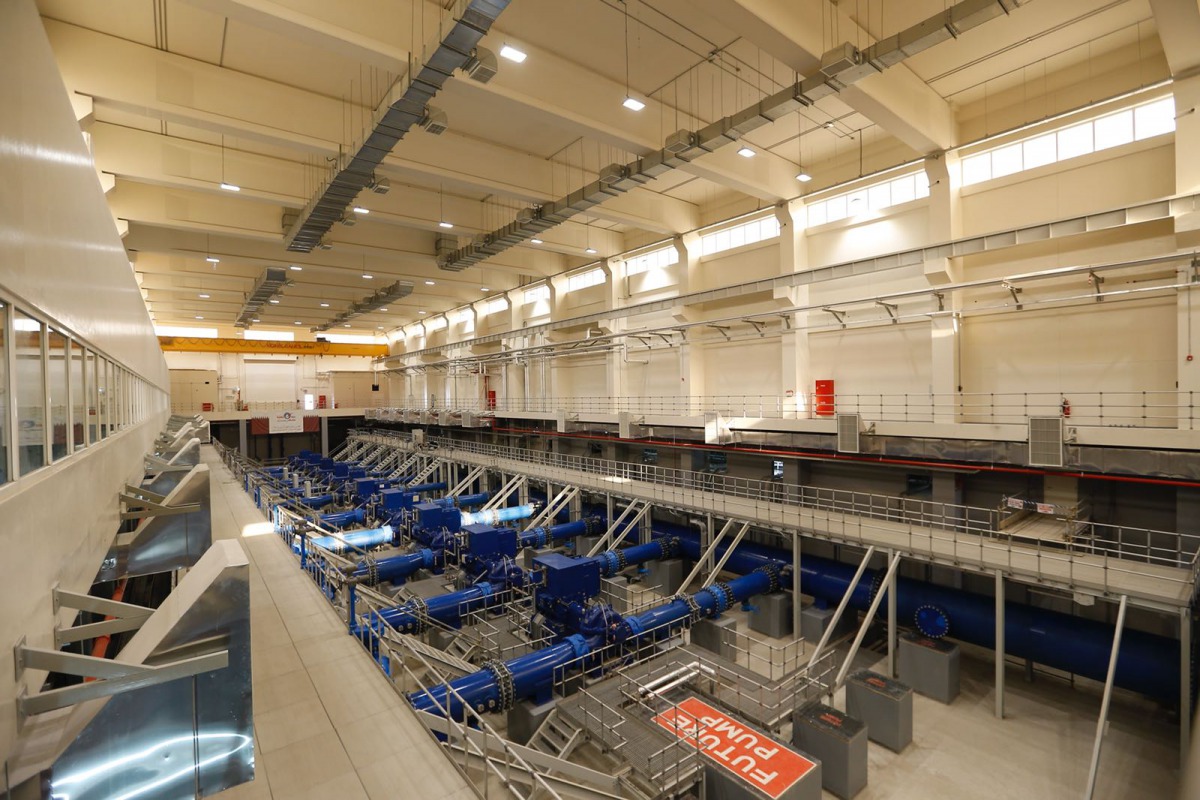
Kahramaa has continued to expand its main and secondary water distribution networks over the years.
Doha, Qatar: Qatar is strengthening its water security through sustained investment in desalination capacity, transmission and distribution networks, and advanced monitoring systems, as the country works to ensure reliable supplies and meet future demand.
The latest efforts by Qatar General Electricity and Water Corporation (Kahramaa) include commissioning 132km of water pipelines, implementing 40km of distribution lines and advancing projects covering a further 116km.
According to the corporation’s latest update on X, the newly commissioned pipelines range in diameter from 100mm to 1,600mm, reflecting continued efforts to expand and improve the national water network.
These developments form part of Qatar’s broader strategy to enhance water supply reliability, improve operational efficiency and strengthen infrastructure resilience in support of the country’s urban growth and economic development.
Kahramaa has continued to expand its main and secondary water distribution networks over the years. According to information published on its official website, the networks grew from approximately 6,300km in 2015 to around 7,900km by the first half of 2025. The corporation plans to extend them to approximately 8,200km by the end of 2028.
The expansion of the distribution network complements the development of the water transmission system, which has grown alongside the commissioning of the country’s mega water reservoirs to strengthen storage capacity and improve the reliability of supplies. Alongside infrastructure expansion, Qatar is increasing its desalinated water production capacity to accommodate future consumption requirements.
According to Kahramaa, the country’s desalinated drinking water production capacity reached approximately 538 million imperial gallons per day in 2024, following the expansion of the Umm Al Houl plant. The capacity is expected to rise to 648 million imperial gallons per day following the commissioning of the new Ras Abu Fontas Facility E in 2028.
The investments in production, storage, transmission and distribution are intended to ensure that water infrastructure keeps pace with rising demand while supporting the long-term sustainability of supplies. Kahramaa maintains the continuous transmission and distribution of water to subscribers around the clock, with water quality standards aligned with international specifications.
Reducing water losses is another priority, with the corporation working to replace ageing pipelines that have exceeded their expected operational lifespan. Replacing old networks and connecting new subscribers are among its strategic priorities to improve the efficiency and reliability of the water supply system. Technology also plays a key role in managing the expanding network. Kahramaa operates a Supervisory Control and Data Acquisition (SCADA) system at its National Water Control Centre to monitor and control network operations.
The system enables the corporation to monitor desalination plants, remotely supervise and control water storage and pumping stations, and track pressure levels across distribution networks. It also supports water-quality monitoring at production and storage facilities, strengthening operational oversight and helping maintain the efficiency of the supply system.
Through continued investment in infrastructure , Qatar is working to strengthen the resilience of its water supply system.