Doha: Gulf Cooperation Council (GCC) officials have laid out initiatives to deepen economic and investment integration among member states, including aligning industrial strategies, expanding joint investments, developing data centers and artificial intelligence (AI), and establishing logistical corridors for exports to shore up intra-GCC trade and open new markets for Gulf businesses.
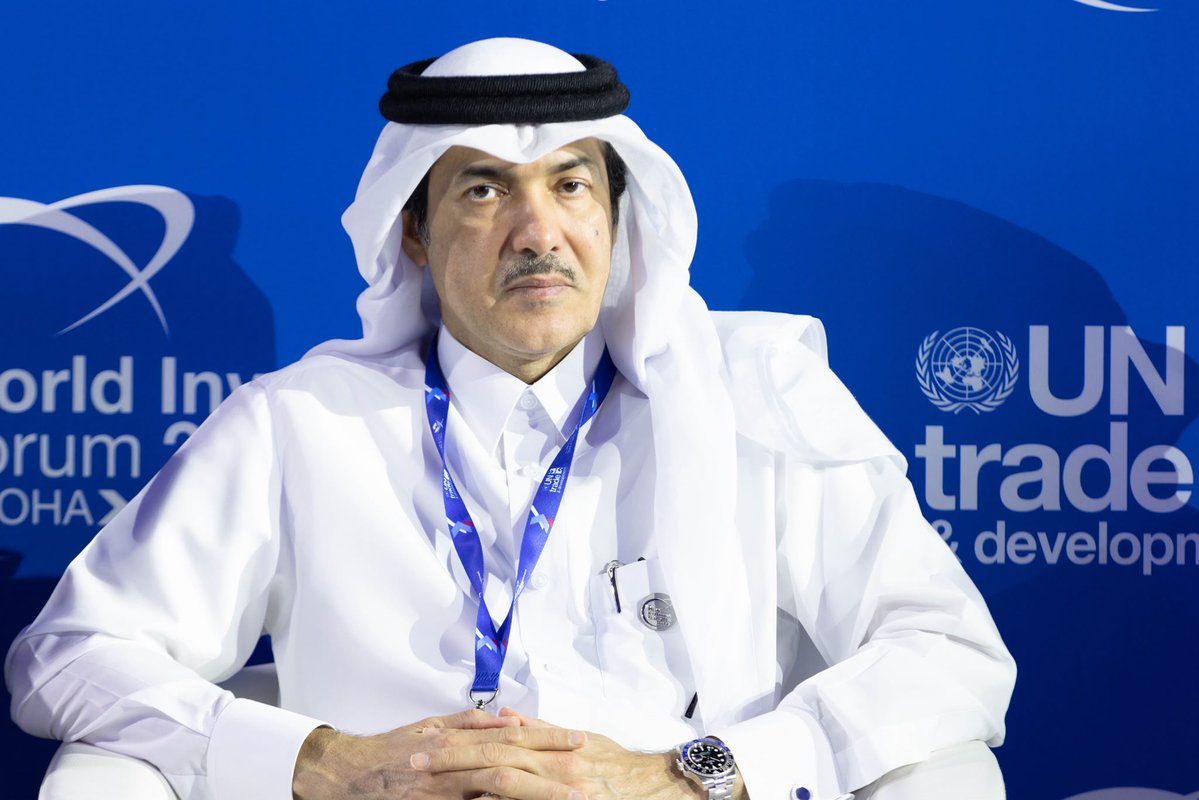
The proposals were propounded during a session titled "The Future of Investment in the Gulf Region" at the ninth World Investment Forum 2026 (WIF), hosted by the State of Qatar in partnership with United Nations Trade and Development (UNCTAD) under the theme "Investing in the Future".
HE Minister of State for Foreign Trade Affairs at the Ministry of Commerce and Industry of the State of Qatar, Dr. Ahmed bin Mohammed Al Sayed, emphasized that fostering economic and industrial integration among GCC nations in tandem with leveraging cutting-edge technologies offers substantial opportunities to advance joint projects and build a more diversified Gulf economy capable of competing globally.
Global crises, including the COVID-19 pandemic, underscored the criticality of countries of the region to pursue an all-hands-on-deck approach to ensure uninterrupted flow of commerce and merchandise and bolstering economic resilience, HE the Minister underlined, assuring that GCC nations abound with natural resources, raw materials, energy supplies, financial capacity, high-end infrastructure and skilled human capital.
HE Al Sayed further highlighted that what matters most is to move beyond traditional supply chains and establish integrated regional value chains by linking Gulf industries and allocating production stages among member states according to their respective competitive advantages. Such integration, he noted, could grow out of existing economic complementarities, bolster intra-GCC trade and increase value added.
HE the Minister of State for Foreign Trade Affairs pointed to the private sector's critical role in advancing joint ventures, particularly in manufacturing, data centers and hyperscale computing. Layering advanced technology and logistical connectivity onto deeper economic integration, he said, could unlock new avenues for growth across emerging sectors.
For his part, HE Kuwait's Minister of State for Economic Affairs and Investment, Abdulaziz Nasser Abdulaziz Al Marzouq, called for developing data centers and hyperscale computing facilities, describing them as a strategic opportunity to strengthen GCC nations' foothold in the global digital economy.
The Gulf's abundant energy resources constitute a competitive advantage that could be leveraged to attract AI and advanced-technology projects. The region, he suggested, could grow into a global digital-infrastructure hub connecting East and West, as well as North and South.
Investment in this sector could attract fresh capital, spur growth in technology-related industries and services, and further consolidate economic diversification across the Gulf, the Kuwaiti minister added.
HE Minister of Industry and Commerce of Bahrain Abdulla bin Adel Fakhro, for his part, stressed that governments must move beyond merely promoting investment and proactively identify and develop opportunities grounded in actual market needs.
Bahrain's approach involves examining imports to identify products that could be manufactured domestically rather than sourced from abroad. HE Fakhro noted that the kingdom has identified 12 targeted industrial sectors to attract investment.
Bahrain is also preparing comprehensive investment-opportunity profiles detailing required capital, potential local partners and suitable project sites. These efforts include exploring participation by local investors and the sovereign wealth fund, as well as securing purchase agreements to establish future demand for the products, HE Fakhro pointed out.
The Bahraini minister called for deepening this model across the GCC through combined efforts to identify products that could be manufactured within the region and launch joint industrial projects.
He further stressed that expanding intra-GCC trade must go hand in hand with greater access to global markets. With GCC countries accounting for less than 1 percent of the world's population, free trade agreements are essential to broaden markets for Gulf products, he said.
HE Fakhro also underscored the importance of aligning industrial strategies among member states, identifying each country's competitive advantages, and building integrated production and supply chains.
For his part, Secretary General of the International Chamber of Commerce John Denton observed that geopolitical tensions, tariffs, and protectionist stances do not necessarily signify an actual decoupling of trade. The private sector continues to maintain connections between economies and is reconfiguring supply chains, albeit through a complex process.
He indicated that the International Chamber of Commerce, which operates in 170 countries, 70 percent of which are in the Global South, facilitates approximately USD 17.5 trillion in global economic activity annually.
He pointed out that a survey covering approximately 135 chambers of commerce revealed that uncertainty is the primary obstacle facing businesses, a costly one at that, with losses in economic activity reaching USD 280 billion last year and projected to climb to about USD 600 billion in 2026.
Denton called for addressing these challenges through digital transformation, including the legal recognition of electronic bills of lading. He noted that the ASEAN Digital Economy Framework Agreement (DEFA) could generate 500,000 jobs in Indonesia through small and medium-sized enterprises (SMEs).
The Secretary-General of the International Chamber of Commerce warned that a narrow interpretation of digital sovereignty, equating it to the restriction of data flows, is not an optimal choice for Africa and Latin America.
In turn, General Petraeus said that over the past fifteen years, the world has shifted from a phase of benign globalization, characterized by the lowering of barriers to trade, investment, capital flows, and technology, to a phase marked by renewed great-power competition, rising trade barriers, and a trend toward regional blocs.
He indicated that supply chains no longer offer the same levels of reliability as before, prompting companies to adopt precautionary logistics strategies, such as maintaining reserve inventories, rather than relying on immediate, "just-in-time" procurement.
He anticipated that the GCC states would invest heavily in strengthening their resilience and defenses, and in developing alternatives to contested corridors, including the Bab Al Mandab Strait.
He added that KKR, where he serves as Chairman of the KKR Global Institute and Head of KKR Middle East, will play a major role in these investments. The firm has been investing in the region for many years and now views it as an attractive investment destination, rather than merely a source of funding.
HE International Trade Representative of China Li Chenggang opened the session by noting that the development of global value chains faces three challenges: the rise of protectionism and unilateralism, the growing risk of marginalizing developing countries, especially the least developed ones, and the fragmentation of international investment rules.
Regarding the second point, His Excellency drew upon the World Investment Report 2026, which, according to him, indicates a further decline in the share of global industrial investment going to low-income countries. He added that the WTO's Investment Facilitation for Development (IFD) Agreement has not yet entered into force.
His Excellency noted that China's outward foreign investment has remained among the top three globally for nine consecutive years. By the end of 2025, Chinese enterprises had established over 50,000 companies across more than 190 countries and regions, contributing over USD 300 billion in taxes to host nations and employing 2.965 million foreign workers.\
Concluding remarks, he called for upholding multilateralism, accelerating the entry into force of the IFD, maintaining openness and open-source approaches in emerging industries such as AI, and orienting value chains toward development in a manner that serves the countries of the Global South.