By Fazeena Saleem
DOHA: Asthma and hearing difficulties are common occupational diseases among the 102 work-related illnesses identified in Qatar, said a senior official at the Supreme Council of Health (SCH) yesterday.
However, the prevalence of occupational diseases is very low as it takes many years for symptoms to appear and diagnose, said Dr Mohammed Ali Alhajjaj, Head, Occupational Health Section, on the sidelines of a workshop on occupational and environmental health services.
An occupational disease is contracted primarily as a result of an exposure to risk factors arising from work activity. World Health Organisation (WHO) has identified over 100 such diseases
“In Qatar, occupational disease cases are not in big numbers. It’s not a phenomenon because it needs 10 years to identify a disease and symptoms. But with the emergence of new industries such as chemical plants, there is a possibility of more such diseases among workers,” he said.
“Some occupational diseases don’t need medication but prevention is more important among workers at risk. Most common here is asthma and the hearing problem among those who work near machines,” he said.
Work-related diseases have multiple causes and factors in the work environment may play a role, with other risks, in the development of diseases.
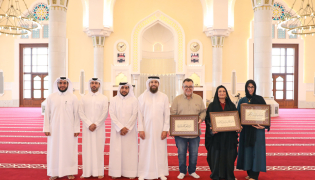
The third module of training for general practitioners and speciality physicians on basic occupational and environmental health services was organised in collaboration with WHO.
Thirty doctors were included in the programme and most work at primary health centres and are the first point of contact for patients and able to diagnose occupational diseases.
“Physicians’ limited training in occupational and environmental medicine, coupled with the expanding need, prompted Institute of Medicine to examine primary care physicians’ role. SCH is looking to build occupational health capacity by training general physicians and other professionals to expand and improve occupational health services to protect, promote and maintain health of the large population of expatriate male labourers, primarily in the construction industry, who have limited access to healthcare services and may operate in hazardous environments,” said Dr Alhajjaj.
He said special clinics for occupational and environment health services at upcoming three hospitals for low-income single foreign workers would help identify work-related health problems and educate patients on workplace risks.
The three-day workshop included presentations by experts from different countries.
Professor Tar Ching Aw, Professor and Director, Institute of Public Health, College of Medicine and Health Sciences, presented spoke on occupational toxicology and said there is need in Qatar and the region to train more occupational and safety health professionals.
“There is a need for competency in occupational and safety heath professionals; countries must try to develop a group of experts as the need is growing,” he said.
The Peninsula