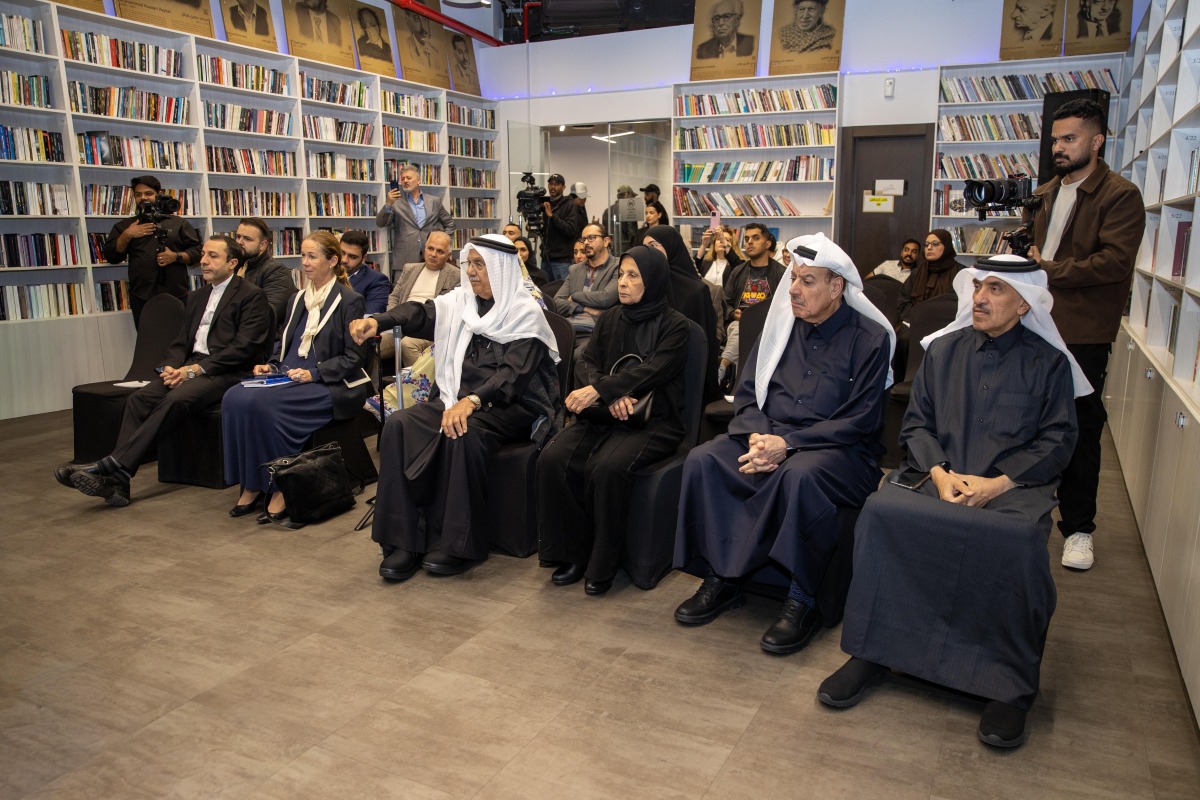
Participants during the seminar at Katara.
Doha: The Katara Cultural Village Foundation, in collaboration with the Business Forum, organised a specialised seminar titled “Artificial Intelligence and Medicine” as part of the 27th Katara Forum.
The seminar, held at the Katara Library for Arabic Fiction and moderated by writer and media person Issa bin Mohammed Al Ishaq, addressed the growing role of artificial intelligence (AI) in transforming healthcare systems, particularly in the areas of medical diagnosis, clinical decision support, improved resource utilisation, and enhanced patient-centred healthcare.
Participants also emphasised the importance of building an integrated digital healthcare system based on partnerships between healthcare providers, academic and research institutions, technology developers, and regulatory bodies, to support a smarter and more sustainable healthcare future.
They emphasised that the future of healthcare is not about replacing doctors, but rather about a smart partnership between doctors and artificial intelligence (AI).
This partnership integrates technical precision with human expertise, ensuring that AI empowers doctors, not replaces them, and guarantees higher quality, safer, and more humane healthcare.
Professor Mustafa Girik, a specialist in otolaryngology (ENT) and head and neck surgery, reviewed the most prominent applications of AI in medical imaging. He explained that deep learning algorithms contribute to the highly accurate analysis of various radiological images, supporting early disease detection and reducing the likelihood of human error, particularly in critical specialities such as oncology, cardiology, neurology, and emergency medicine. He also highlighted the importance of AI-based clinical decision support systems and their role in integrating diverse health data and providing real-time, evidence-based recommendations.
This contributes to enhancing patient safety, standardising the quality of care, and facilitating rapid and effective medical interventions in complex clinical settings.
For her part, Dr. Fawzia Abdullah, a specialist in dentistry, emphasized that doctors cannot be dispensed with, regardless of the advancements in artificial intelligence.
She explained that medicine is not merely about equations or data analysis, but rather a human practice based on understanding, experience, ethical judgment, and direct communication with the patient.
She clarified that while artificial intelligence remains a supportive tool that improves diagnosis, accelerates access to information, and reduces error rates, it lacks the capacity for comprehensive clinical judgment that considers individual differences and the patient’s psychological and social context.
She added that the doctor bears the responsibility for the final decision. The doctor is capable of interpreting the results of artificial intelligence within the complete picture of the patient’s health condition, weighing the benefits and risks, and making the appropriate ethical decision, especially in complex or critical cases.
She noted that the trust built between doctor and patient, the ability to empathize, explain treatment options, and reassure the patient remain elements that digital technologies cannot replace.