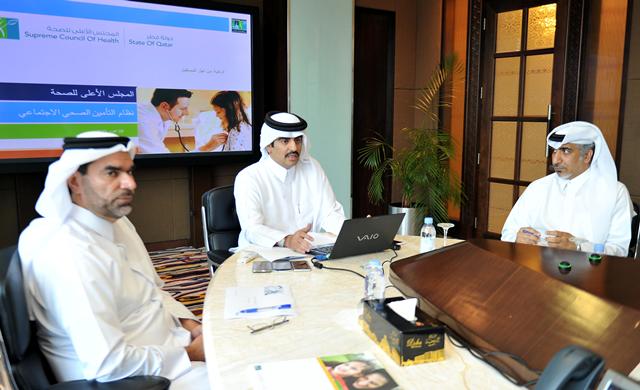

DOHA: The Minister of Public Health HE Abdullah bin Khalid Al Qahtani revealed that the medical bills of Qatari citizens within the Social Medical Insurance scheme (Seha) amounted to QR1.285m, since the begining of the insurance system in July 2013 until October 21, 2015.
In a joint press conference with acting CEO of the National Health Insurance Company Dr. Faleh Hussein on the latest developments of the Seha insurance system, the Minister said that the value of medical bills for the citizens in the private health sector received by the National Health Insurance Company and audited in the first fiscal year (July 2013 to March 2014) and second fiscal year (April 2014 to March 2015) amounted to QR894m, in addition to Qr391m in the period (April 1 to October 21, 2015).
The Minister refuted the recent news that the total of the invoices received by the company from the private sector amounted to QR10bn.
The first phase of the Social Medical Insurance (Seha), launched in July 2013, included Qatari females aged 12 and above. The second phase launched in April 30, 2014 includes all Qatari citizens.
The Minister announced that the implementation of the third and last phase of the insurance system will start in 2016 to include all residents in the state including employees, workers, domestic helpers and visitors, noting that adding workers in the third phase will coincide with the opening of new hospitals next year for single workers.
Speaking about the health insurance for residents, the Minister explained that the employers will have to pay the cost of insurance without deduction from salaries, adding that the insurance packs will vary from one segment to another. The insurance for visitors will only cover emergency services.
The minister revealed that the Health Insurance Company has refused to pay invoices amounted QR317m from the private health sector since the introduction of the insurance system, while the amount of recoverable funds totaled QR103m, pointing out that the National Health Insurance Company apply controls in paying bills such as preventing service providers from unjustified repeated visits and the unnecessary assignment to other disciplines. There is also a detailed and manual audit for all the claims made by the service providers, as well as checking on medical files.
QNA