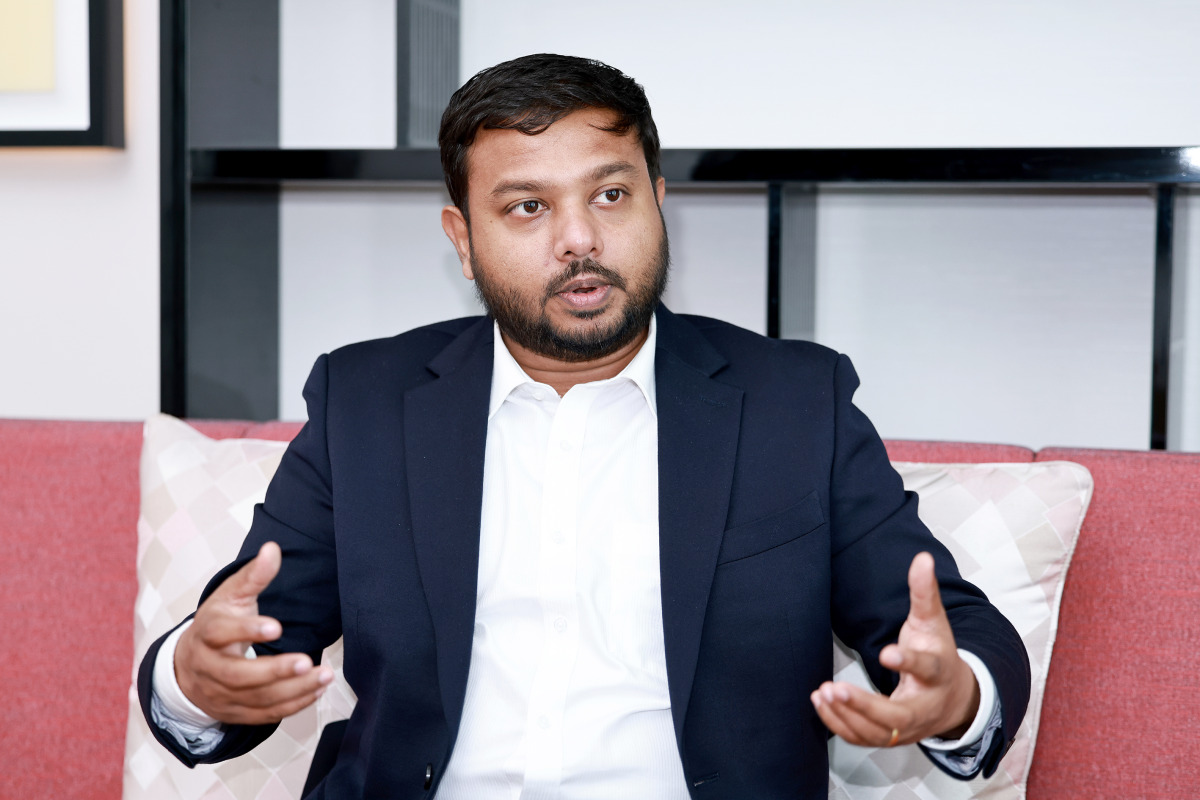
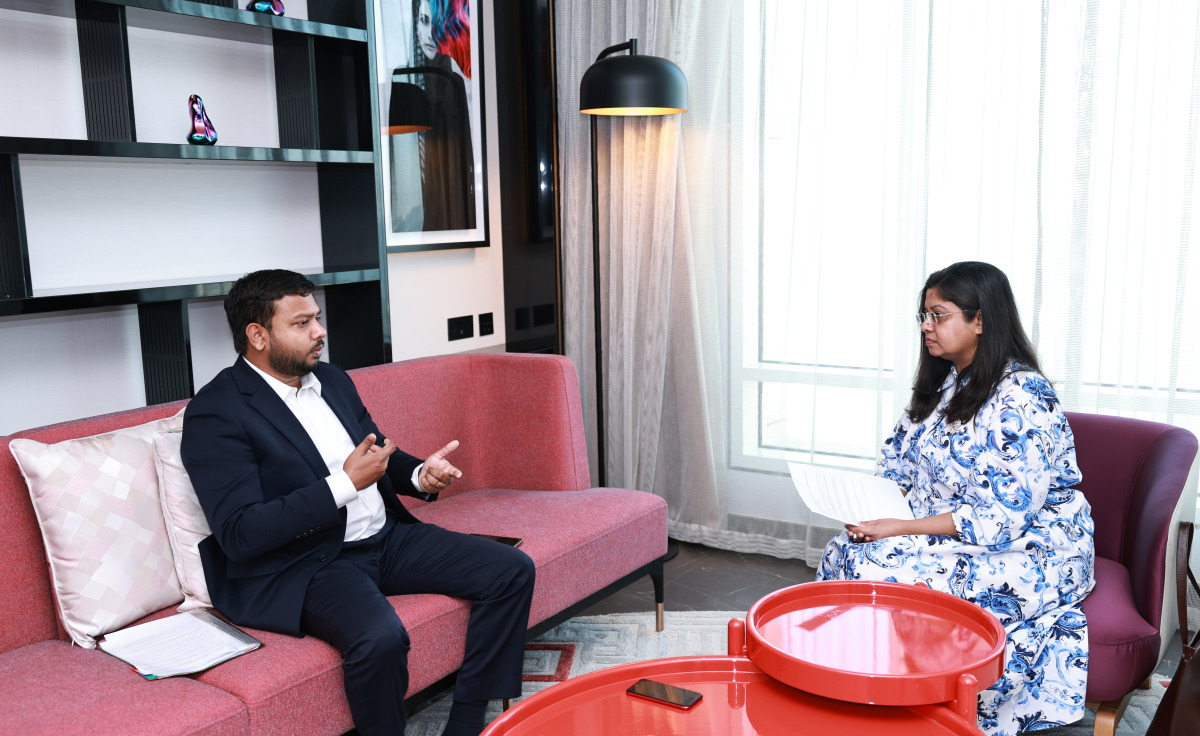
Deputy Minister of Foreign Affairs and Foreign Employment of Sri Lanka H E Arun Hemachandra during an exclusive interview with The Peninsula. Pic: Rajan Vadakkemuriyil/The Peninsula
Doha, Qatar: Sri Lanka and Qatar enjoy a “very smooth” relationship with Colombo keen to take bilateral ties to the next level by expanding cooperation beyond foreign employment into investment, development assistance, maritime and aviation connectivity and energy security, Sri Lanka’s Deputy Minister of Foreign Affairs and Foreign Employment H E Arun Hemachandra has said.
In an exclusive interview with The Peninsula during his official visit to Qatar recently, Hemachandra described his meetings and engagements during the visit as “overall very successful”, highlighting the importance of continued high-level exchanges between the two countries.
“Qatar-Sri Lanka has always had a very smooth relationship. It is well in good shape. And under the government led by President Anura Kumara Dissanayake, we would like to expand this relationship even further,” he said, as the two countries mark 50 years of diplomatic relations.
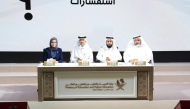
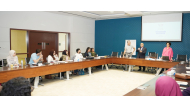
The Deputy Minister met Minister of Labour H E Dr Ali bin Saeed bin Samikh Al Marri and Undersecretary of the Ministry of Labour H E Sheikha Najwa bint Abdulrahman bin Nasser Al Thani, and participated in the Sri Lanka–Qatar Joint Committee Meeting on labour and foreign employment cooperation.
He said discussions focused, among other areas, on the welfare of Sri Lankan workers, existing gaps and ways to further expand employment opportunities, particularly skilled employment, in line with Qatar National Vision 2030.
“We feel that there are some untouched potentials that we have in front of us. We have a lot of homework to do. We will see whether we can make use of those untouched potentials here.”
Hemachandra said that Sri Lanka was prioritising skilled employment, focusing not just on increasing worker numbers but on securing more income-generating jobs through stronger training, testing and recruitment.
“We are running an integrated programme which includes various sectors,” he said.
He added that the integration of foreign affairs and foreign employment under the same ministerial structure had created greater opportunities to address employment-related issues.
Sri Lanka is particularly looking at opportunities in the information technology sector in Qatar, while also developing skilled employment pathways in other countries, including Japan and South Korea.
During his Qatar visit, Hemachandra met Qatar Chamber, Qatar Fund for Development, Qatar Charity and potential investors, encouraging greater investment in Sri Lanka through the country’s Board of Investment.
“Qatar Chamber was also very helpful, and they were also very interested, expressing their feelings and intention to cooperate in Sri Lanka,” he said.
The Deputy Minister said Sri Lanka wanted to see greater Qatari investment, development assistance and other forms of cooperation, alongside the longstanding employment relationship.
He identified foreign employment, maritime connectivity, aviation connectivity and energy security as key areas linking Sri Lanka with the Gulf region.
“When it comes to Sri Lanka, we cannot go forward without having good cooperation with this part of the world. And Qatar has always been a champion in that relationship,” he said.
Hemachandra also met with the representatives of the Sri Lankan community in Qatar to hear their concerns and discuss issues related to employment and welfare.
He said responsibility for protecting migrant workers rests with the home country, host country, employers, employees and recruitment intermediaries. He said the government was determined to close loopholes in the foreign employment sector and strengthen protection for Sri Lankans working overseas.
“The government has a duty to protect its workers, whether they are inside Sri Lanka or outside Sri Lanka. So we have mechanisms, we have structured systems in order to protect them,” he said.
At the same time, he urged prospective migrant workers to carefully examine their employment contracts and offer letters before signing them.
“There are intermediaries, those who try to exploit the situation,” he said, adding that workers should seek assistance from the Sri Lanka Bureau of Foreign Employment if they have concerns.
He also highlighted the introduction of the Lanka Connect mobile application, which allows Sri Lankan workers overseas to register complaints and raise employment-related issues.
The application has been supported by the International Labour Organisation.
Hemachandra said Sri Lanka was also strengthening its labour sections at diplomatic missions by replacing previous political appointments with trained foreign employment personnel.
The Deputy Minister said Sri Lanka was strengthening welfare protection for migrant workers through increased insurance coverage, a new social security scheme combining insurance and contributory benefits, and entrepreneurship, self-employment and reintegration support for returnees.
The government has also introduced housing loans through banks, while exploring social security arrangements with host countries including Qatar.
“We have multiple approaches. One is the social security benefit, and the other one is pension scheme, and on the other hand, the reintegration plan,” he said. Hemachandra said his main message to Sri Lankan migrant workers was the importance of safe, orderly and regular migration.
He urged Sri Lankan workers to comply with the laws and regulations of their host countries and to seek assistance through official channels when problems arise.