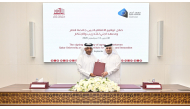
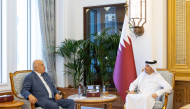
Damascus: Syrian Minister of Finance H E Mohammed Yasser Barnieh affirmed that cooperation with the Qatar Fund for Development (QFFD) in the project to assess the financial and banking sector represents an important strategic step in a qualitative transformation phase that the Syrian economy is witnessing, towards a model based on productivity and attracting investments, after years of stagnation and challenges imposed by the war.
In the context of a pivotal economic phase that Syria is going through, and in light of efforts to restructure the national economy and enhance the investment environment, the Syrian Minister of Finance spoke to Qatar News Agency (QNA) about the features of the economic transformation, the current challenges and prospects for international cooperation.
Barnieh emphasised that cooperation with the Qatar Fund for Development in the project to assess the financial and banking sector represents a very important strategic step, which falls within a qualitative transformation phase witnessed by the Syrian economy, which is moving towards a model based on productivity and attracting investments, after many years of stagnation and challenges imposed by the war.
He explained that the Syrian economy is moving from a rentier model based on central planning to an economy that relies on the leadership of the private sector and attracting investments, indicating that Qatari support constitutes a fundamental lever for economic reform projects, especially in the financial and banking sector, which is the cornerstone for rebuilding the national economy.
Barnieh added that Qatari investments, especially in the energy se ctor, are now directly contributing to supporting projects related to general economic policies, and are also strengthening efforts to reform the financial sector, enabling Syria to regain its ability to achieve economic recovery.
The minister addressed the structural challenges facing the financial sector, explaining that they include a shortage of capital and its erosion as a result of the decline in the value of the currency and the shrinking size of the economy, which has led to an almost complete disconnection from international financial markets, in addition to the decline in reinsurance relationships and the decrease in the number of correspondent banks to the lowest levels.
He pointed to a clear gap in communication with foreign capital and international investors, resulting from the absence of effective channels and mechanisms to attract and direct financing towards productive sectors, in addition to the weakness of the legislative and regulatory system and the need for a comprehensive update of laws and regulations to keep pace with modern developments in financial work.
The Minister also pointed to the depletion of human resources as a result of the emigration of many specialized experts, which necessitates working to attract them again and qualify local personnel through intensive training programs, in addition to the weakness of the infrastructure and financial technologies, especially in light of the restrictions imposed by the sanctions on access to modern financial technology.
He affirmed that the challenges are not limited to the banking system or financial policies separately, but require a real integration between financial and monetary policies, supported by an effective governance system and anti-corruption measures, in addition to a comprehensive restructuring of the financial and banking sector, which will enhance its ability to restore balance and attract investments.