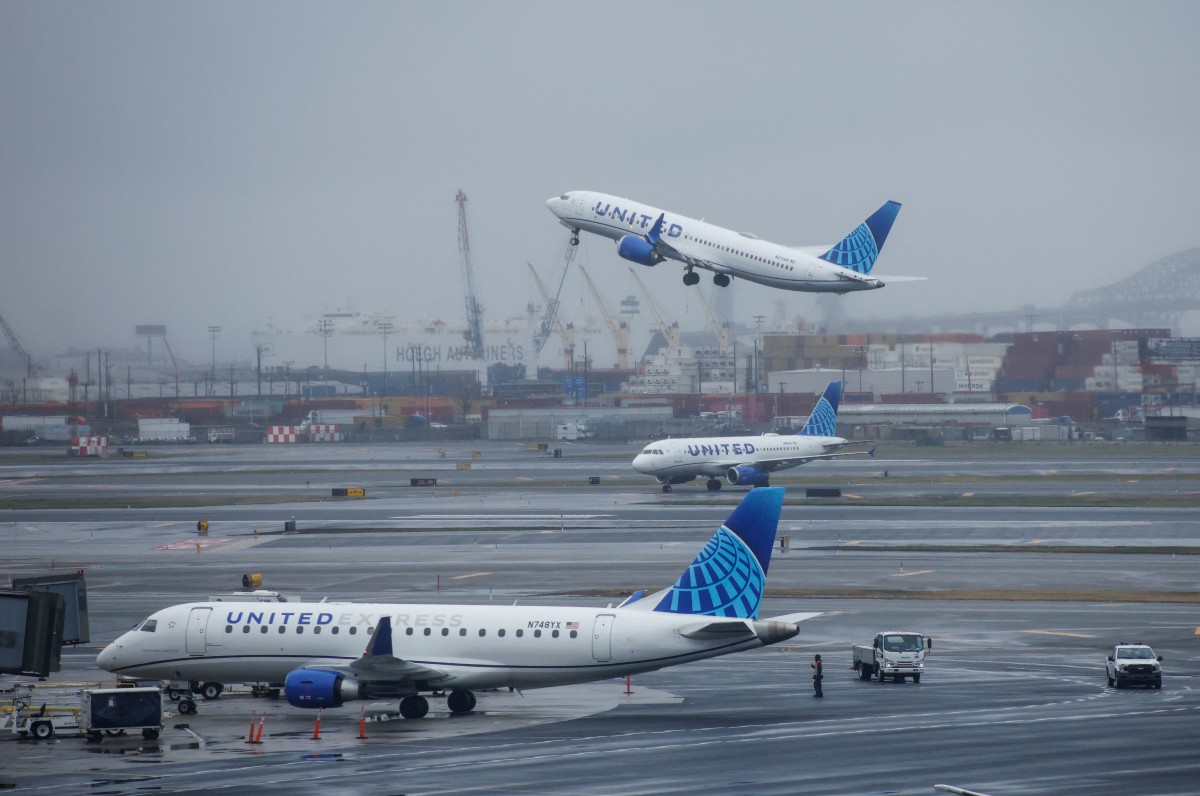
A United Airlines passenger plane takes off at Newark International Airport in Newark, New Jersey, on March 23, 2026. Photo by KENA BETANCUR / AFP
New York: United Airlines said Tuesday it will add more than 250 planes in the next two years as the major US carrier accelerates efforts to upgrade its fleet.
New Airbus, Boeing and Bombardier aircraft ordered by United include features such as lie-flat seats, luggage closets and suite dividers, the company said ahead of a rollout event in Los Angeles.
The aim is to "decommoditize" flying, Chief Executive Scott Kirby said at a briefing with reporters.
"That's been the vision...to really try to win customer loyalty, make an airline that customers love to fly," Kirby said.
The new additions include the Airbus A321 and A321XLR, narrow-body jets that the company is billing as the "Coastliner" -- for service between west coast hubs in San Francisco and Los Angeles and their east coast hub in Newark, New Jersey.
United is also replacing its fleet of Boeing 757 with the CRJ450 from Bombardier, which will be used between hubs in Denver and Chicago and smaller cities.
The carrier will also take 47 of the Boeing 787-9, which will be outfitted for international trips, with lie-flat seats 25 percent larger than standard size, privacy doors and "exclusive meal service with drink pairings and caviar," said a press release.
The announcement comes as airlines contend with a surge in jet fuel prices due to conflict in the Middle East, which is expected to challenge the industry in the months ahead.
On Friday, Kirby warned that the company could see additional fuel costs of $11 billion this year if prices stayed at the current level.
He announced a short-term five percent reduction in capacity, trimming routes that are unprofitable at the current fuel price level, with the intention of restoring them in the fall.
However, he also said customer demand remains strong and United would not be cutting staff or delaying any aircraft deliveries.
At a briefing ahead of Tuesday's event, United Chief Commercial Officer Andrew Nocella similarly described the US economy as "strong."
"We've been able to pass through many of the price increases to cover what is a significantly quick and rapid increase in the price of oil and jet fuel."