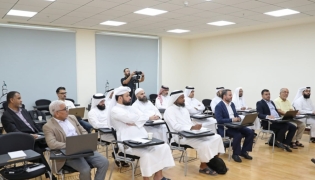
The symptoms and treatment of aspirin overdose were discussed at the latest instalment of Weill Cornell Medicine – Qatar’s Grand Rounds lecture series.
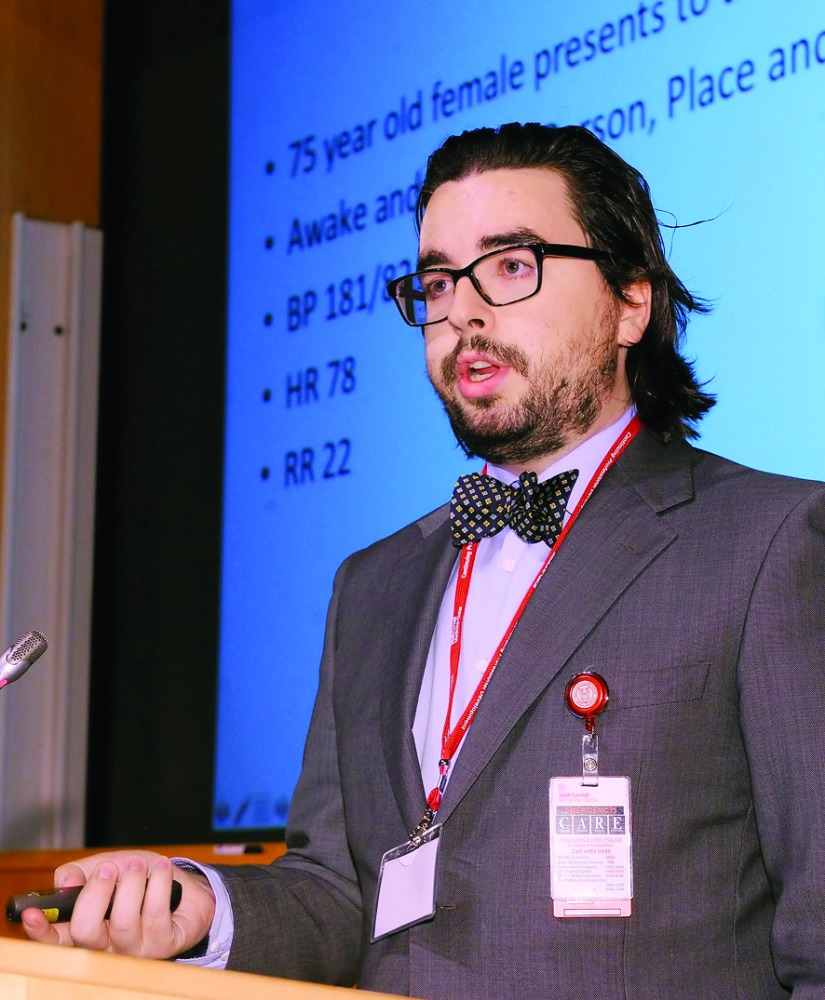
The lecture was given by Dr Grigory Ostrovskiy (pictured), an alumnus of Weill Cornell Medicine – Qatar (WCM-Q) who was privileged to speak in the presence of his former professors.
He has a particular interest in toxicology and chose the topic of salicylate — or aspirin — poisoning. Dr Ostrovskiy said, “From the 1950s to the 1970s, aspirin was a leading cause of overdose death, particularly among children, but then safer packaging was introduced and new painkillers were developed. Today, because it has been off the radar for some time, clinicians are not as familiar with the symptoms of aspirin overdose.”
He added, “Many people accidentally overdose, as they do not realise that drug companies are using aspirin in a range of different medications.
“Patients who have taken too much aspirin may present with a variety of signs and symptoms, including rapid breathing, nausea and vomiting, tinnitus, hyperthermia and lactic acidosis — whereby lactic acid builds up in the body. It may also be difficult to ascertain how much aspirin has been taken because of variations in the absorption rate.”
The audience of health professionals from across Qatar were informed that to treat aspirin poisoning, the patient should be hyperventilated and that fluids should be replaced with a sodium bicarbonate solution. Activated charcoal works to some extent in neutralising the aspirin but is not without drawbacks, not least aspiration.
In serious situations, dialysis should be considered, particularly if the patient fails to improve, the levels of aspirin in the body are not decreasing, there is renal failure, or there is evidence of severe toxicity.
Dr Ostrovskiy, who graduated from WCM-Q in 2011, is assistant professor of emergency medicine at WCM-Q, and is the first alumni to join the college as a faculty member.
The activity was an Accredited Group Learning Activity (Category 1) as defined by the Qatar Council for Healthcare Practitioners-Accreditation Department and was approved for a maximum of one hour.