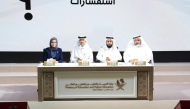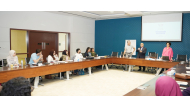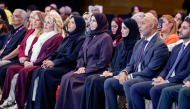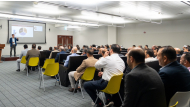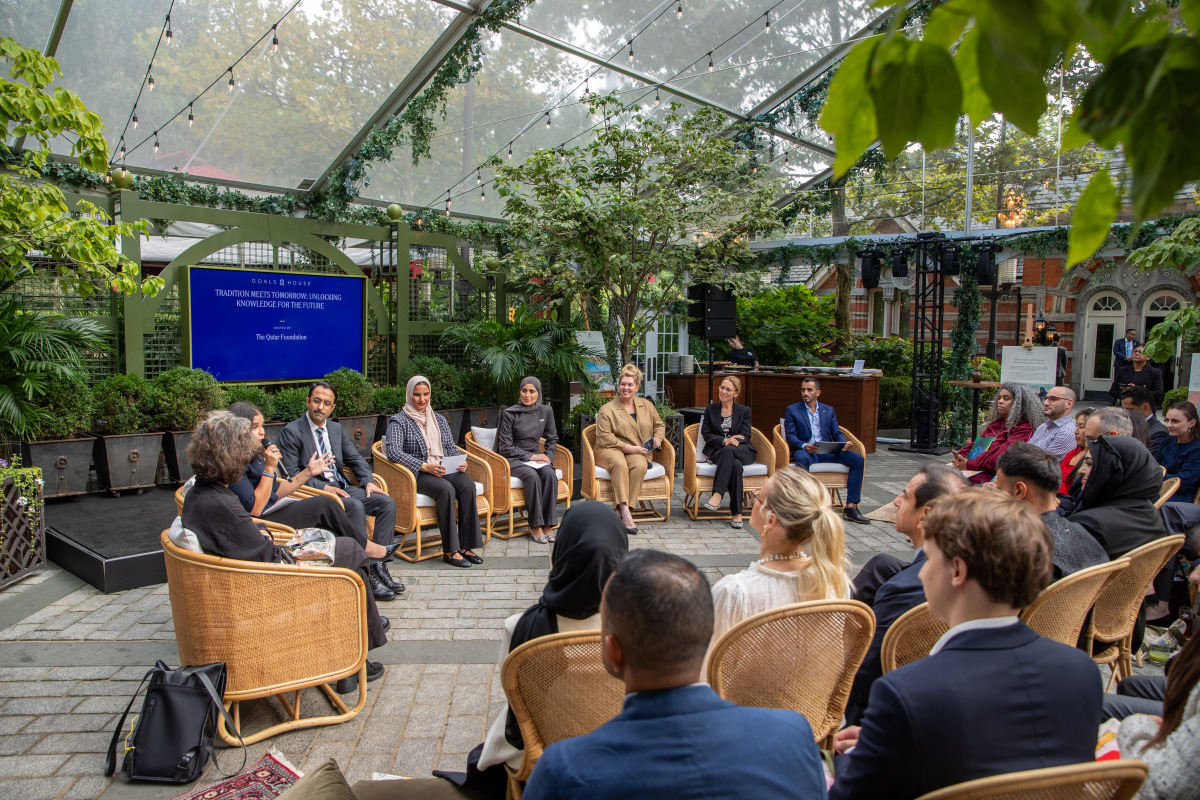
Participants during the event.
Doha, Qatar: As the 81st session of the United Nations General Assembly takes place, Qatar Foundation (QF) has brought together global leaders at Goals House in New York to explore how inherited knowledge, cultural identity and local wisdom can help address pressing global challenges.
Titled ‘Tradition Meets Tomorrow’, the gathering at Tavern on the Green in Central Park brought together representatives from the Jane Goodall Institute of Canada, Aga Khan Foundation, Harvard Business School, Smithsonian Science Education Center and other international institutions. Reflecting the spirit of the traditional Qatari majlis, the event explored how heritage and values can inform innovation and development.
Discussions focused on sustainability, urban development and education, examining how progress can be strengthened through a deeper understanding of culture, values and heritage.
Manager of Strategic Curation at QF, Sheikha Aisha Al Thani said the majlis provides a natural space for exchanging knowledge across generations.
“We often think of progress as something new, something that has never been done before. But I think it can be helpful to see progress as cyclical, drawing on the knowledge and traditions passed down through generations and applying them to today’s challenges,” she said.
The discussion on cities and sustainability featured experts from global and regional organisations, including QF’s Earthna Center for a Sustainable Future. Speakers examined how traditional approaches to living in hot and arid environments could offer lessons for communities adapting to climate change.
Director of Urban Planning and Design at C40 Cities, Hélène Chartier said climate change cannot be the only consideration when shaping cities.
“When we transform a place, we must think not only about sustainability, but also about its social function, mobility, and the everyday needs of people,” she said, stressing the need for a cross-sectoral approach.
Sustainable Urbanism Specialist at Earthna, Dr Samie Kayani said traditional knowledge must be applied according to local needs.
“We work closely with government partners to co-create projects that respond to local needs, because there is no one-size-fits-all solution,” he said.
Education was another major focus, with speakers from QF’s Pre-University Education and value-based schools, alongside international partners, examining how education can remain rooted in culture and identity while preparing young people for a complex future.
Director of Academyati, a QF school, Elizabeth Kennedy said heritage and inherited knowledge should be viewed as foundations for innovation. “Heritage, values and inherited knowledge are not barriers to innovation, but part of the knowledge we innovate from,” she said.
Executive Director of Strategic Initiatives and Partnerships at QF’s Pre-University Education, Maryam Al Hajri said integrating local knowledge and lived experiences into classrooms can help bridge heritage and future aspirations.
The event concluded with an interactive showcase of student-led projects and cultural activations, highlighting how traditional knowledge, craftsmanship, inclusive design and experiential learning can contribute to future skills and solutions.