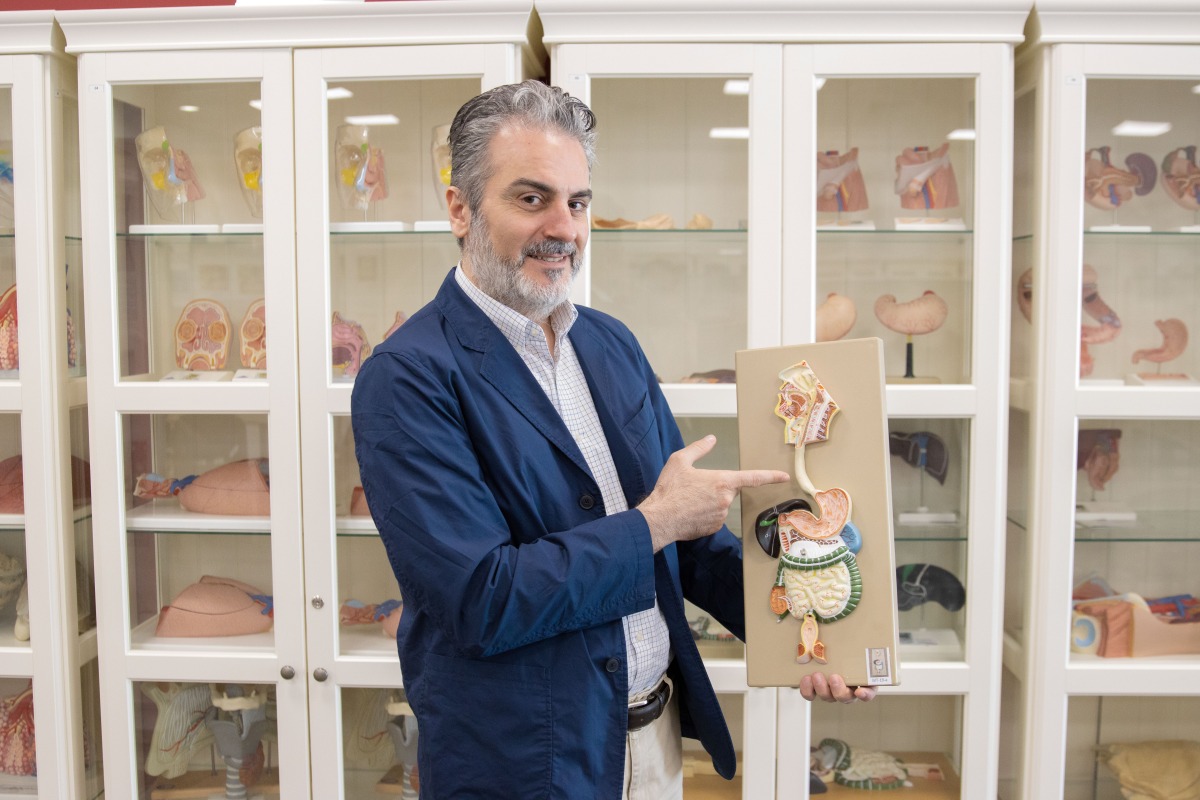
Dr. Ammar Boudaka
Doha, Qatar: A research team led by Dr. Ammar Boudaka, Associate Professor of Physiology at Qatar University’s (QU) College of Medicine, and a collaborative research team led by Prof. Makoto Tominaga and Claire Saito from the National Institute for Physiological Sciences in Japan have uncovered a remarkable breakthrough in understanding the mechanisms behind esophageal wound healing.
This groundbreaking research sheds light on the role of a cell membrane mechanoreceptor, known as TRPV4, in modulating the healing process of the esophagus.
The esophagus, a vital component of the digestive system responsible for transporting food from the pharynx to the stomach, is susceptible to various stimuli and injuries that can lead to erosions and ulcerations. Although the esophageal mucosa possesses specialised epithelium as a barrier against such insults, the molecular mechanisms underlying the wound healing process have remained largely elusive until now.
In their study, the research team focused on transient receptor potential (TRP) channels, a group of non-selective cation channels that facilitate the influx of calcium ions (Ca2+) and other cations into different cell types. These channels are known to be involved in several physiological processes, including cell proliferation, mechanosensation, and blood vessel tone regulation.
Specifically, the team investigated the role of the TRPV4 channel, a protein known to respond to thermal, chemical, and mechanical stimuli, in the context of esophageal wound healing. Through meticulous experimentation and analysis, the researchers discovered that the deletion of TRPV4 in esophageal keratinocytes resulted in enhanced migration and faster wound healing compared to the wild-type cells.
Furthermore, when TRPV4 was reintroduced into the cells via transfection, the gap closure was reduced, and wound healing was slower in the wild-type cells compared to the TRPV4 knockout cells. These findings strongly suggest that TRPV4 plays a modulatory role in the migration and proliferation of esophageal keratinocytes, ultimately contributing to the overall process of wound closure.
One intriguing aspect of the study involved the impact of mechanical stimuli on esophageal wound healing. The application of cyclic tensile strains on esophageal keratinocytes, simulating mechanical stress, significantly decreased the percentage of the covered gap area in the wild-type cells compared to cultures not exposed to mechanical stress. In contrast, the effect was less pronounced in the TRPV4 knockout cells. This result indicates that mechanical stimuli, mediated through TRPV4, can influence the healing process in the esophagus.
Additionally, the researchers explored the involvement of adenosine triphosphate (ATP) release in wound healing. Stimulation of ATP release using a specific stimulant called NPPB resulted in slower wound healing in both wild-type and TRPV4 knockout keratinocytes. Notably, the percentage of covered gap area was larger for TRPV4 knockout cells compared to wild-type cells when treated with NPPB.
Furthermore, the addition of exogenous ATP had a concentration-dependent inhibitory effect on gap closure in both cell cultures, with the effect being more pronounced in the wild-type cells. The introduction of apyrase, an enzyme that breaks down ATP, potentiated the inhibitory effect of exogenous ATP on gap closure in both cell cultures.
Dr. Ammar Boudaka expressed his enthusiasm for the research findings, stating: “Our study provides novel insights into the complex mechanisms governing esophageal wound healing. Understanding the role of TRPV4 and ATP release in this process opens up potential avenues for developing targeted therapeutic strategies to enhance wound healing and address esophageal disorders.”