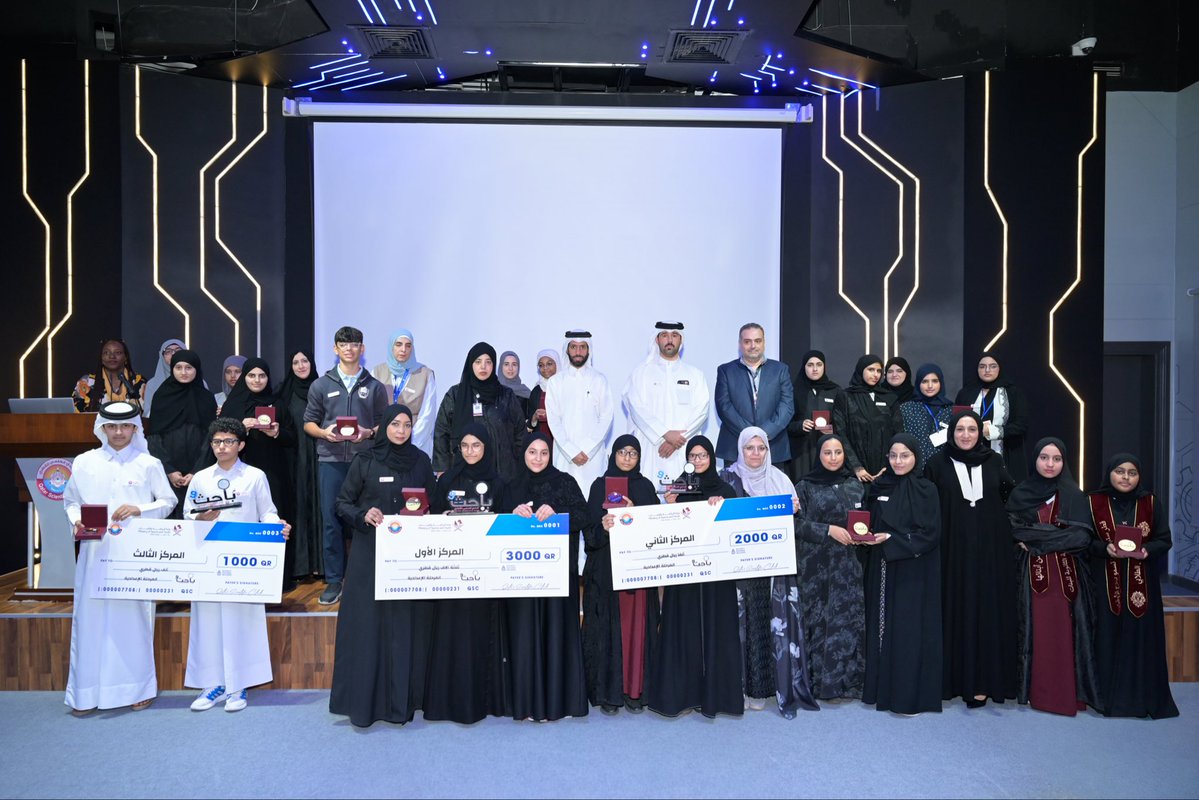
Picture: QNA/ X
Doha, Qatar: The Qatar Scientific Club honored winners of the 9th Scientific Exhibition for Innovation and Research, organized in cooperation with the Ministry of Education and Higher Education.
The exhibition featured 61 projects and scientific studies that advanced to the final round from nearly 290 submissions that underwent multiple stages of evaluation and judging, as part of the club's efforts to promote a culture of scientific research and innovation among students and support the goals of Qatar National Vision 2030.
The exhibition drew broad participation from students across different educational levels.
The first day was dedicated to presenting research projects from the "Researcher" competition for primary and preparatory students, while the second day featured projects from the "Researcher" and "Innovation" competitions for secondary school students.
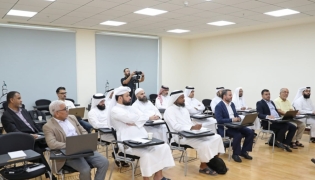
Representatives from the Ministry of Education and Higher Education and the Ministry of Sports and Youth attended the event, along with school administrators, supervisors and participating students.
At the conclusion of the exhibition, officials from the Qatar Scientific Club and the Ministry of Education and Higher Education honored winning students and gold medal recipients.
Organizers also praised the efforts of judging committees and technical teams involved in evaluating the projects and research submissions.
In the school innovation competition, first place went to the project "Artificial Intelligence and Machine Learning for User Behavior Analysis in Cybersecurity" from Qatar Science and Technology Secondary School for Boys.
The project "NeuroStride," focused on the early detection of Parkinson's disease using artificial intelligence, took second place, while a project designing an integrated robotic system equipped with an automatic soil-feeding mechanism from Qatar school for girls placed third.
In the "Researcher" competition for the secondary level, first place was awarded to the study "Automated Irrigation System Using Open-Source Technology" from Qatar Science and Technology Secondary School for Boys.
A study on detecting myopia using neural networks placed second, while a project designing a technological system to reduce impulsive behavior among people with autism placed third.
At the preparatory level, the research project "Rafi," designed to support communication for children with Down syndrome using technology and artificial intelligence, won first place.
A project converting sign language into written and spoken language using artificial intelligence placed second, while a project on safe vehicle speed control and emergency health alerts placed third.
At the primary school level, first place went to a project designing a sustainable smart home integrating renewable energy, artificial intelligence and smart agriculture.
A project producing bioplastic from bananas took second place, while the "Drink Link" smart project placed third.
In a statement issued Saturday, Deputy Executive Director of the Qatar Scientific Club, Abdulrahman Saleh Khamis, said the school innovation competition aims to foster a culture of innovation and encourage students to transform their ideas into models and projects that can be developed and applied.
He said the initiative contributes to preparing a generation capable of supporting the knowledge economy and advancing the goals of Qatar National Vision 2030.
He also praised the advanced level of the participating projects and the ongoing cooperation with the Ministry of Education and Higher Education and the Ministry of Sports and Youth.
Director of Administrative and Financial Affairs at the Qatar Scientific Club, Fatima Al Muhannadi, said the "Researcher" competition is being held for the ninth consecutive year since its launch in 2017.
She said the two competitions have become an important scientific platform for developing students' research and innovation skills by combining scientific methodology with practical applications and modern technologies.