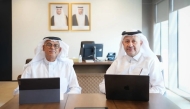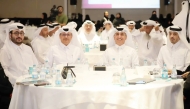
Geneva: The State of Qatar convened a high-level event alongside the Seventy-Ninth World Health Assembly to explore healthy longevity as a lifelong investment strategy, engaging ministers, leaders, and health experts from around the world.
The high-level event was co-sponsored by Japan, the Republic of Finland, the Kingdom of Thailand, the World Federation of Public Health Associations (WFPHA), the International Federation on Ageing (IFA), and the World Organization of Family Doctors (WONCA). This diverse international representation demonstrates a unified commitment to narrowing the disparity between life expectancy and healthy life expectancy, and to promoting healthy longevity as a central objective in global health and development.
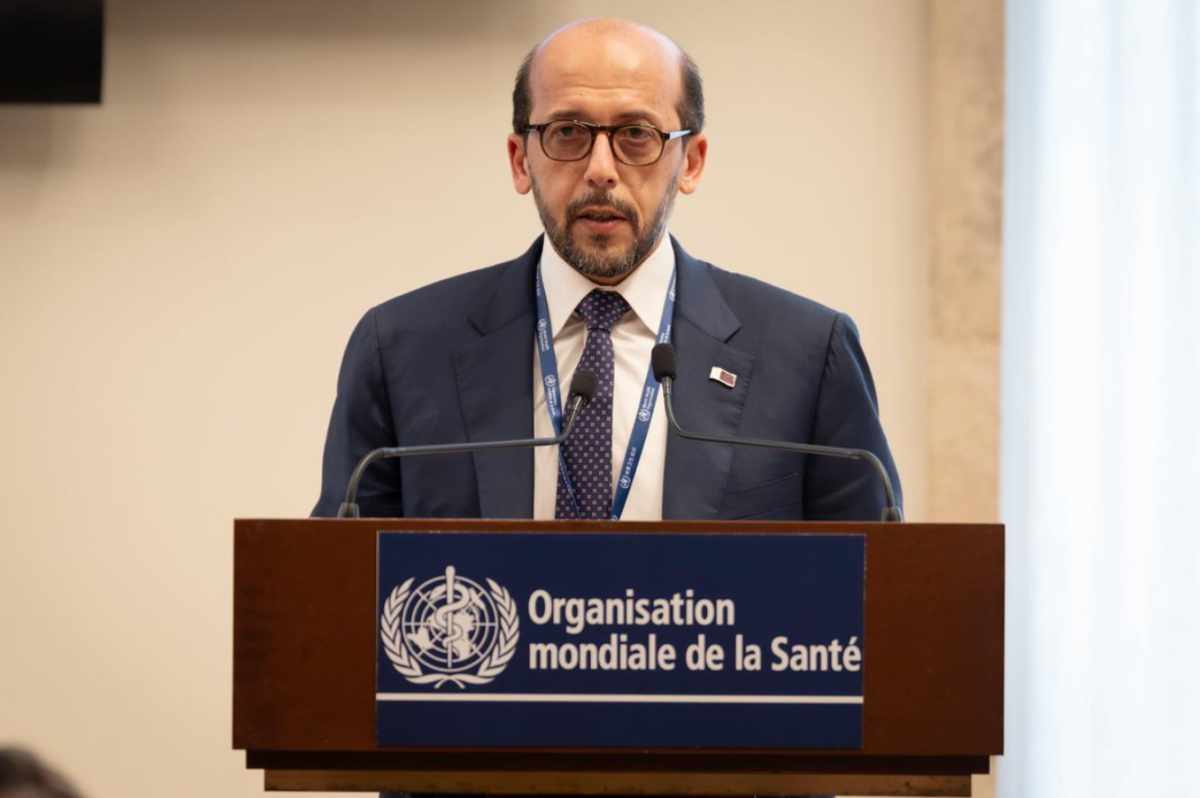
In his opening speech, Minister of Public Health, HE Mansoor bin Ebrahim Al Mahmoud, emphasised that healthy longevity represents both a national commitment and a global necessity.
He stated that Qatar's approach is grounded in a prevention-focused strategy and an ambitious vision to serve as a global platform integrating science, policy, finance, and innovation. Additionally, he underscored the contribution of Qatar's WHO Collaborating Centre on Healthy Ageing in advancing the Organisation's programmes in this domain.
His Excellency emphasised that the primary objective is not only to increase life expectancy, but also to enhance the quality of those years by promoting health.
He further highlighted that achieving this goal necessitates coordinated public policy initiatives, a focus on preventive measures, the development of primary health care, and the expansion of cross-sector partnerships.
The Minister further pointed out that adopting this approach reflects a growing recognition that healthy longevity is not solely a health matter, but an investment in people, productivity, the well-being of societies, and their capacity to achieve sustainable development and long-term economic and social resilience.
The high-level event highlighted the importance of adopting an integrated and comprehensive approach that links prevention, primary health care, governance, financing, and innovation, thereby improving health outcomes across the life course and enhancing health systems' ability to respond to rapid demographic transitions.
Dr. Hanan Balkhy, WHO Regional Director for the Eastern Mediterranean, reviewed health and epidemiological factors affecting healthy longevity in a region marked by diverse health conditions. She observed that the Eastern Mediterranean Region exemplifies global challenges, as it includes both countries with advanced health systems and those facing conflict or limited resources.
Dr Balkhy stressed the importance of strengthening primary health care to reduce the gap between life expectancy and healthy life expectancy, and identified prevention, early detection, management of non-communicable diseases, and universal health coverage as essential pillars.
Dr. Hanan stressed the importance of strengthening primary health care to reduce the gap between life expectancy and healthy life expectancy, and identified prevention, early detection, management of non-communicable diseases, and universal health coverage as essential pillars of this approach.
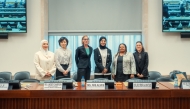
During a high-level panel discussion moderated by Dr. Salim Salama, Chief Executive Officer of the World Innovation Summit for Health (WISH), participants discussed how to turn the concept of healthy longevity into actionable policies by connecting prevention, primary health care, governance, financing, and digital technologies.
Professor Bettina Borisch, Executive Director of the World Federation of Public Health Associations, addressed the importance of health determinants and the need for healthy longevity policies to incorporate equity and fairness, ensuring that investments and services reach all groups, including those most in need and at greatest risk.
Gregor Sneddon, Secretary-General of the International Federation on Ageing, advocated for institutional measures to address ageism, identifying it as a significant obstacle to achieving healthy longevity.
He highlighted the necessity of recognising older persons as active contributors to society and as participants in the development of ageing and health policies, rather than solely as recipients of care.
Dr. Masami Sakoi, Vice-Minister for Health and Chief Medical & Global Officer at Japan's Ministry of Health, Labour and Welfare, presented Japan's experience as a leading example in longevity. He emphasised that Japan's case demonstrates a strong connection between healthy longevity, labour market participation, and economic stability.
He further noted that Japan's accumulated expertise and sustained investments offer important lessons for countries in the early phases of demographic transition.
Dr. Heli Hatunen, Senior Ministerial Adviser at Finland's Ministry of Social Affairs and Health, described Finland's approach to the welfare economy, which incorporates health and wellbeing into public policy across multiple sectors. She emphasised that prevention should be viewed as a long-term investment that yields benefits for individuals, society, and the economy, rather than as a burden on public budgets.
Dr. Amporn Benjaponpitak, Director-General of the Department of Health at the Ministry of Public Health, presented Thailand's experience. She underscored the significance of developing extensive networks of community health volunteers as an effective strategy to enhance prevention at the community level within a universal health coverage framework.
Additionally, she discussed the role of digital health tools in broadening access to health services, stressing that such advancements should promote health equity rather than exacerbate existing disparities.
Participants affirmed that healthy longevity is an issue at the intersection of health, social, and economic priorities, and that addressing it requires integrated visions that transcend narrow sectoral solutions and move towards more comprehensive and sustainable public policies.
The high-level event highlighted Qatar's expanding influence in this domain, reinforcing its status as a global centre for dialogue and coordination on healthy longevity. By providing a platform that integrates science, policy, finance, and innovation, the event facilitated the exchange of expertise and promoted international cooperation on this critical issue.
The event concluded with several outcomes and future steps. Foremost were reinforcing inter-regional dialogue on longevity governance, integrating health determinants into public policies, and maintaining connections with upcoming global events and initiatives, including the World Innovation Summit for Health (WISH).
This high-level event contributes to ongoing international initiatives to redefine the concept of ageing and health in alignment with global demographic changes. It also emphasises that investment in health throughout the life course is essential for achieving development, well-being, and sustainability.