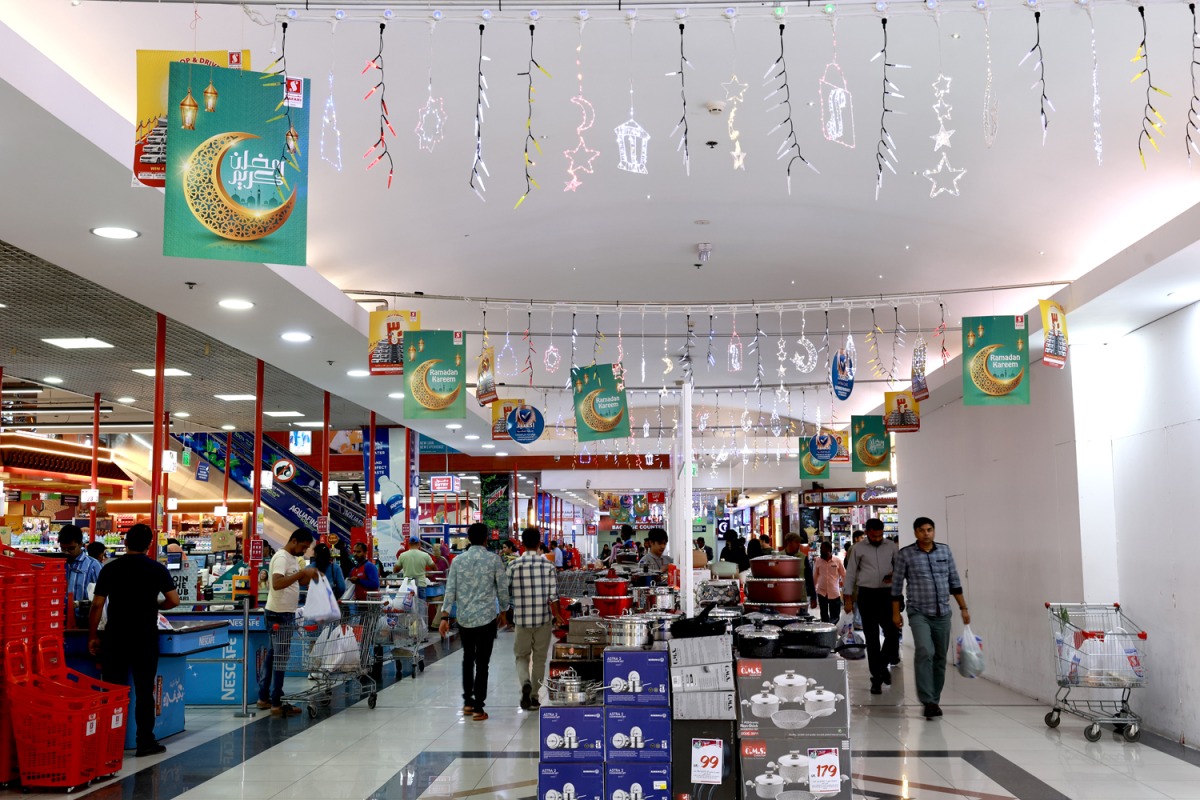
Families shopping ahead of Ramadan at a mall in Qatar.
Doha, Qatar: Following the Ministry of Commerce and Industry’s (MOCI) announcement of a price-reduction initiative covering over 1,000 consumer goods in Ramadan, Qatar’s diverse expatriate community has welcomed the move with widespread relief.
Speaking to The Peninsula, expats and residents note that the discounts are crucial for managing household budgets during a period of increased social and charitable spending.
“With three school-aged children, our grocery bill usually skyrockets because of the special meals and the constant cleaning,” said Maria Santos, an expat from the Philippines.
“Seeing the discount stickers on the shelves gives me a sense of security. It means I don’t have to ‘shop around’ for the best deal; I know the price is fair and regulated across all major hypermarkets, and it takes the stress out of the month.”
For the millions of expats living in Qatar, Ramadan is a season of communal Iftars and early-morning Suhoors, and also traditionally brings a spike in grocery bills.
Mohan Kumar, a technician from India living in Najma, noted that the discounts allow him to maintain his traditions while still supporting his family back home.
“Ramadan is a time when we get together with our friends and roommates for Iftar every evening. Usually, the cost of oil, rice, and chicken goes up during this peak demand,” he said
Kumar further added, “With the discounted rates, I can buy everything I need for a proper meal and save money, and it’s a double blessing, because I can celebrate here and still send money home for Eid.”
This year’s government intervention, which includes slashing prices on staples like rice, milk, flour, and poultry, is being described as a vital support system for those living on fixed incomes.
Another resident, Sarah Thompson, explained that the price cuts have a ripple effect on community aid.
“Every year, my colleagues and I put together Ramadan food hampers for the maintenance staff in our office compound,” she said.
Thompson said, “Because the prices of flour, lentils, and dates are capped, we can now buy 30 percent more supplies than last year.”
“As an expat, sometimes you worry about being overcharged during busy seasons,” said Ahmed Atta, who works in a travel agency.
He also highlighted the importance of the Ministry’s ‘inspection campaigns’ to ensure retailers don’t hike prices under the table.
“But when you see the Ministry of Commerce and Industry being so vocal about inspections, it gives us huge confidence as we feel protected as consumers,” Atta added.
As the community is immersed in the spirit of fasting and reflection, Doha’s supermarkets remain bustling as shoppers experience more financial ease and focus on the festivities.