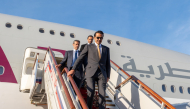
File photo
Doha, Qatar: Qatar is emerging not only as a major international transit hub but also as a leading force in global aviation policy and logistics, driven by liberalised air services agreements, active engagement with International Civil Aviation Organization (ICAO) frameworks, and closer alignment between aviation strategy and national economic objectives, stated aviation analyst and Ground Instructor at ICAO, Khamis Abdullah Alkhelaifi.
Speaking to The Peninsula on Qatar’s aviation strategy, Alkhelaifi said the country has “taken a clear and deliberate approach toward open skies-style agreements that prioritise unrestricted traffic rights and long-term network flexibility.” Among the key agreements concluded this year was the Qatar–Algeria Air Services Agreement, which allows airlines from both countries to operate unrestricted passenger and cargo flights. “This agreement strengthens bilateral ties and opens up new route opportunities for its national carrier into North Africa,” Alkhelaifi said.
Qatar also signed an ASA with Antigua and Barbuda, granting unlimited traffic rights and supporting the country’s expansion into the Caribbean. Similar unrestricted agreements were concluded with Cameroon and Dominica, expanding the country’s access to African and smaller island markets.
Alkhelaifi accentuated that these deals demonstrate Qatar’s strategy of “securing broad traffic rights with both major and emerging markets to future-proof its aviation network.” At the International Conference on Air Services Negotiations (ICAN 2025), the country further expanded its aviation diplomacy by signing additional ASAs and memoranda of understanding with countries including Uganda, Cabo Verde, Haiti, and Honduras, alongside cooperation agreements with Vietnam, South Africa, and Hong Kong.
“These agreements may not all translate into immediate routes, but they significantly expand future potential,” Alkhelaifi said. “They give Qatar Airways and designated carriers the flexibility to add destinations, increase frequencies, and carry more cargo as demand evolves.”
He noted that Qatar’s aviation policy increasingly emphasises Open Skies principles, favouring liberal frameworks over restrictive bilateral limits. “This approach allows the national carrier to optimise long-haul networks and compete globally, particularly in underserved or emerging markets,” the analyst said.
State backing for the aviation sector also plays a critical role, as Alkhelaifi pointed to policy frameworks that support fleet financing and long-term network planning, noting that strategic government support, including large aircraft orders, underpins capacity expansion in parallel with air services liberalisation. “The alignment between ASA policy and fleet growth is key to sustaining the airways’ competitive position,” he said.
Beyond bilateral agreements, Qatar has also sought to shape global aviation policy through its engagement with ICAO. This year, Doha hosted major ICAO conferences focused on aviation facilitation and digital transformation, including the ICAO Facilitation Conference (FALC 2025), which brought regulators and ministers from more than 120 countries.
One of the key outcomes was the adoption of the Doha Declaration on aviation’s digital future, which sets a framework for digital travel credentials, streamlined border processes, and improved passenger facilitation. “Hosting these forums strengthens Qatar’s influence in global aviation governance and supports harmonised safety and facilitation standards,” the aviation expert said.
Alkhelaifi noted that aviation policy is increasingly being linked to Qatar’s broader economic strategy. He further added, “These efforts create high-skill jobs, support infrastructure growth, and add value beyond passenger traffic as they ultimately enhance the competitiveness and financial performance of the aviation sector.”