Doha, Qatar: Belgium’s Minister of Security and Home Affairs H E Bernard Quintin, has praised Qatar’s role in international mediation and dialogue, calling for stronger cooperation to tackle transnational crime, cyber threats and risks to critical infrastructure.
Speaking at the Global Security Forum 2026 in Doha, Quintin said Qatar’s ability to maintain communication channels amid international tensions was increasingly important, highlighting shared security challenges facing the two countries.
“Doha has become a place for dialogue, even when international tensions make the dialogue particularly difficult,” he said. His remarks placed Qatar’s diplomatic role alongside a broader security argument: that the international connectivity underpinning economic prosperity also creates vulnerabilities that no country can address alone.
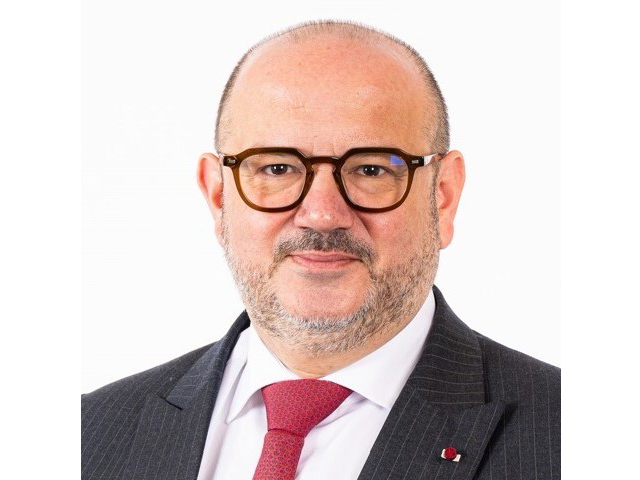
“At first glance, Belgium and Qatar may seem very different. One lies at the heart of Europe, the other at the heart of the Gulf. Yet, our two countries share one essential feature. Our openness to the world is the foundation of our prosperity and also of our security.”
Quintin pointed to Belgium’s position as a European transport, trade and institutional hub, highlighting the Port of Antwerp, Brussels’ international role and the presence of European Union institutions and NATO headquarters.
He drew a parallel with Qatar’s strategic location between East and West, describing connectivity as both an economic advantage and a security challenge.
“This connectivity is a tremendous strength, and it has made us rich. But it is also a vulnerability.”
The minister warned that international trade routes, digital technologies and transport infrastructure could be exploited by criminal networks involved in drug trafficking, cybercrime and human trafficking.
“Criminal organisations have long understood how to take advantage of our interconnectedness. They operate across borders, adapt quickly and exploit the gaps in our systems.”
He said countries must strengthen information-sharing between intelligence and police services, improve operational coordination, protect critical infrastructure and target the financial flows that sustain organised crime.
Quintin also praised Qatar’s diplomatic engagement, drawing on his experience as a former Belgian ambassador in the Central African Great Lakes region. “I am a witness of that as a former Belgian ambassador in the Central African Great Lakes region. I know the role of Qatar in this region perfectly and I salute it.”
He said Belgium’s security partnerships were anchored in the European Union and NATO, while Qatar had developed strategic partnerships and established a recognised role in international mediation. “Qatar’s role as a mediator and the holding of this forum in Doha are concrete illustrations of this approach.”
Addressing the broader international security environment, Quintin warned against countries turning inward in response to geopolitical tensions and cross-border threats. “On the contrary, isolation makes us more vulnerable. Our challenge, therefore, is not to give up our openness, but to protect it better. We do not have to choose between connectivity and security. We must guarantee both.”
He stressed that international cooperation was also essential to protecting maritime trade and freedom of navigation, particularly for economies dependent on international commerce.
Concluding his remarks, Quintin said no country, regardless of its power, could address transnational threats alone, emphasising the need for reliable partnerships and shared political commitment.