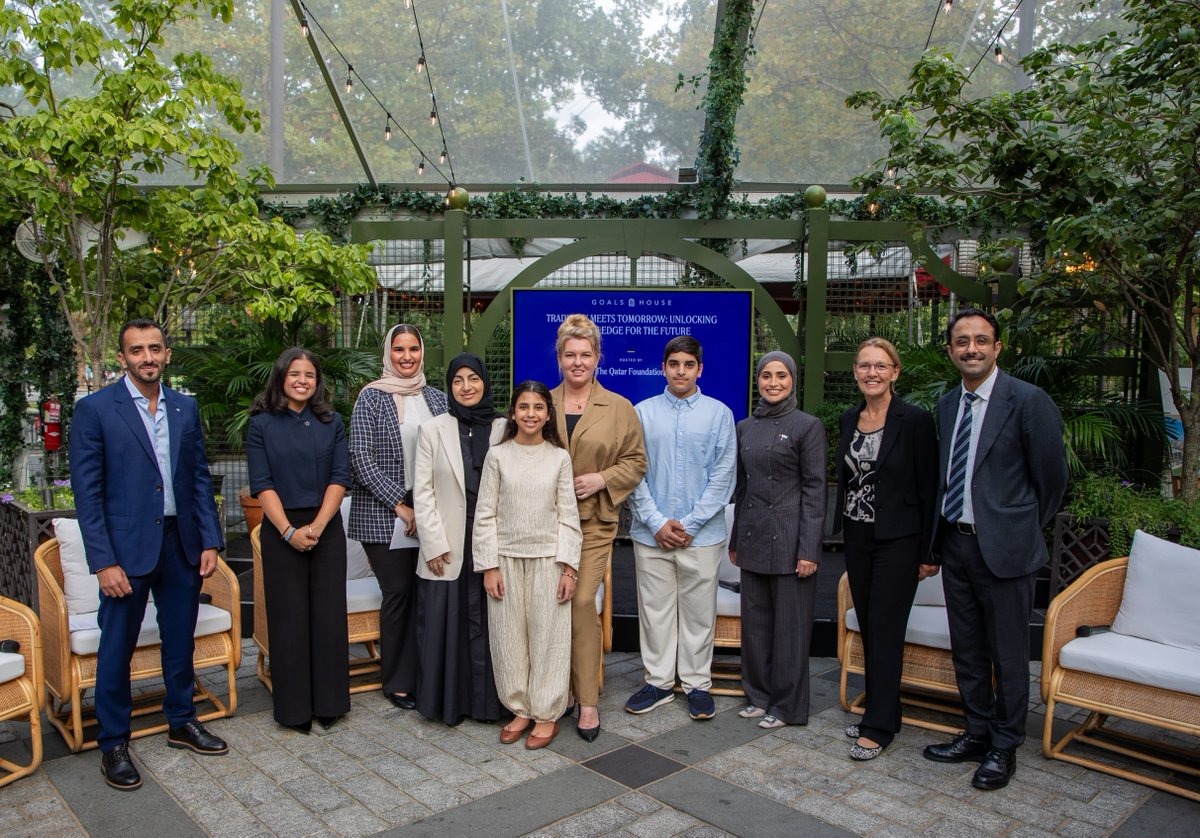
New York: As the 81st session of the United Nations General Assembly takes place, Qatar Foundation has fostered a global dialogue at Goals House in New York on how inherited knowledge, cultural identity, and local wisdom can help address some of the world's most pressing challenges.
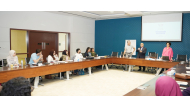
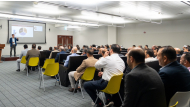
Titled 'Tradition Meets Tomorrow', and bringing together representatives from prominent international and academic institutions on the Green in the US city's Central Park reflected the spirit of the traditional Qatari majlis while aligning with the mission of Goals House, a convening platform where business, government, philanthropy, academia, and civil society leaders tackle global challenges through collaboration and dialogue.
Through discussions spanning sustainability, urban development, and education, participants explored how progress can be strengthened through a deeper understanding of culture, values, and heritage.
The discussion opened with reflections on how Qatar Foundation (QF) draws on heritage as a foundation for innovation and long-term development. It explored how communities can navigate complex global challenges by combining cultural values with forward-looking solutions, while emphasizing a message that resonated throughout the majlis – that every society possesses a rich inheritance of knowledge, traditions, and values that can serve as a guiding force for future innovation and development.
Reflecting on how a majlis serves as a natural space for the exchange of knowledge across generations, Sheikha Aisha Hassan Al-Thani, Manager of Strategic Curation at Qatar Foundation, said: "We often think of progress as something new, something that has never been done before. But I think it can be helpful to see progress as cyclical, drawing on the knowledge and traditions passed down through generations and applying them to today's challenges."
"We continue to build on what we know and learn from those who came before us. Rather than starting from scratch, progress comes from continuously evolving and building on that foundation."
The conversation also focused on the future of cities and sustainability through a session featuring experts from global and regional organizations, including QF's Earthna Center for a Sustainable Future.
Building on the majlis theme that local heritage can inform global solutions, speakers examined how traditional approaches to living in hot and arid environments can offer valuable lessons for communities adapting to the realities of climate change. They explored the role of local agency, climate-responsive design, and cross-city collaboration in creating urban environments that are environmentally sustainable, socially inclusive, and economically resilient.
"Climate is one of the greatest challenges facing humanity, but it cannot be the only lens through which we shape our cities," Helene Chartier, Director of Urban Planning and Design, C40 Cities, said. "When we transform a place, we must think not only about sustainability, but also about its social function, mobility, and the everyday needs of people.
"Creating great places requires a cross-sectoral approach that brings all of these elements together."
Dr. Samie Kayani, Sustainable Urbanism Specialist, Earthna, explained that the center's work is grounded in Qatar's heritage and aligns with the nation's development vision which recognizes the value of traditional knowledge.
"We work closely with government partners to co-create projects that respond to local needs, because there is no one-size-fits-all solution," he explained. "When we talk about traditional knowledge, the first step is understanding how it can be applied in ways that are relevant and impactful for each community."
Reinforcing knowledge as a driver of progress, the majlis also explored how education systems can remain rooted in culture, values, and identity while preparing young people for an increasingly complex future.
Speakers from QF's Pre-University Education and other value-based schools, alongside international partners, discussed how values-based education can be embedded across learning environments while remaining responsive to contemporary challenges.
The discussion examined how local and international partnerships can create learning environments that combine global expertise with cultural relevance and community needs; and emphasized that innovation and identity are not opposing forces, but complementary elements of meaningful educational transformation.
"Progressive education is often associated with what is newest. At Qatar Foundation, we are helping to frame progress differently – recognizing that heritage, values and inherited knowledge are not barriers to innovation, but part of the knowledge we innovate from," Elizabeth Kennedy, Director of Academyati, a QF school, said.
"What if values were not something we added to education, but something we designed education from? That shift changes the purpose of learning – placing the learner at the center and asking how we prepare young people to become capable, thoughtful and deeply human contributors to the world around them."
Maryam Al Hajri, Executive Director of Strategic Initiatives and Partnerships at QF's Pre-University Education, said: "Heritage is not separate from the future, it is part of who we are. By helping teachers integrate local knowledge, culture, and lived experiences into the classroom, we can bridge heritage and future aspirations and equip students to help shape the world ahead."
Alison Watson, Founder of Class Of Your Own and Creator of Design Engineer Construct! Learning Programme, said construction and the built environment should play a greater role in school curricula because they bring together subjects such as engineering, design, sustainability, climate action, and problem-solving, while exposing students to real-world careers. She believes too many students move through education focused solely on grades, without understanding how their learning can be applied to society's challenges or future opportunities.
"Education needs to have a purpose, and construction offers a powerful way to connect learning to the real world, helping young people see how the knowledge and skills they gain in school can be used to solve challenges and shape the future," she said.
The event ended with an interactive showcase of student-led projects and cultural activations, enabling participants to experience first-hand how traditional knowledge, craftsmanship, inclusive design, and experiential learning can inform the skills and solutions needed for the future.