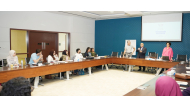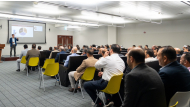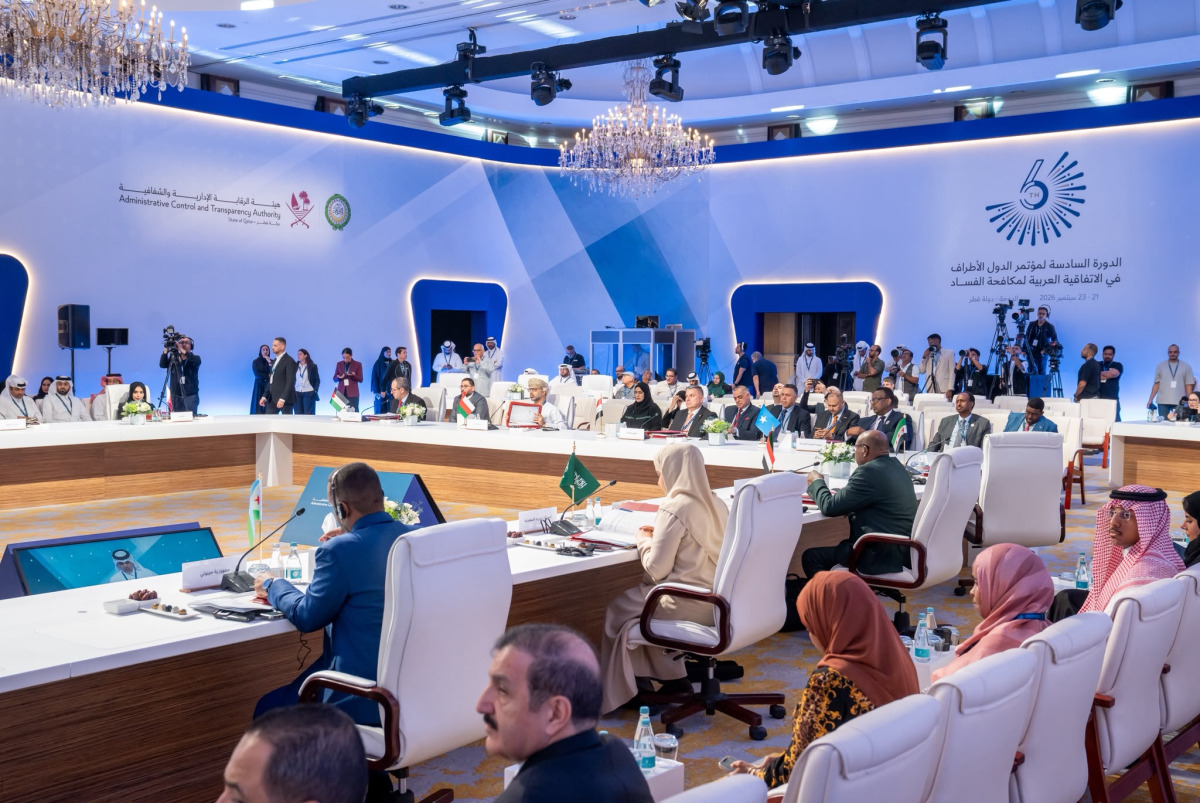
Delegates participate in a session during the conference yesterday.
Doha, Qatar: The sixth session of the Conference of States Parties to the Arab Anti-Corruption Convention opened in Doha yesterday, bringing Arab countries together to strengthen preventive measures, financial investigations, mutual legal assistance and transparency in beneficial ownership.
Hosted by Qatar over three days and chaired by Chairman of the Administrative Control and Transparency Authority (ACTA) H E Hamad bin Nasser Al Misnad, the conference provides a regional platform to advance implementation of the Arab Anti-Corruption Convention and enhance coordination and cooperation among its States Parties.
The opening session featured remarks by Adviser to the President of the Palestinian Anti-Corruption Commission and Chairman of the conference’s fifth session Saeed Shehadeh, and Supervisor of the Legal Affairs Sector at the Arab League and Head of the General Secretariat of the Conference of States Parties to the Arab Anti-Corruption Convention Minister Plenipotentiary Dr Maha Bakhit.
The first session reviewed the provisional agenda of the sixth session, while the second session continued consideration of its agenda items. The conference serves as an institutional Arab framework for following up on the implementation of the Convention, strengthening cooperation among States Parties and sharing expertise and successful practices in preventing and combating corruption.
Key issues on the agenda include strengthening the mechanism for reviewing implementation of the Arab Anti-Corruption Convention, enabling countries to assess progress, identify challenges and develop responses. Discussions will also focus on strengthening preventive measures, developing financial investigation mechanisms, accelerating mutual legal assistance procedures, and enhancing beneficial ownership transparency and disclosure of ultimate beneficiaries.
At the opening, Shehadeh expressed appreciation to Qatar for its hospitality and for the support it provided during Palestine’s presidency of the fifth session. He particularly commended Qatar’s technical and logistical assistance and its organisation and hosting of several activities and events related to the conference.
Shehadeh said Palestine had fulfilled its responsibilities during its presidency despite difficult circumstances, including measures taken against the Palestinian Anti-Corruption Commission by the Israeli occupation and the continuing developments and repercussions of the war. These circumstances, he said, created multiple challenges for the Palestinian presidency.
He also thanked Arab countries that supported Palestine in carrying out its responsibilities by hosting activities and facilitating meetings linked to the fifth session, given the impossibility of holding such meetings and events in Palestine under the prevailing circumstances. Shehadeh expressed hope that the sixth session would lead to further Arab cooperation and joint efforts in combating corruption.
Dr. Bakhit praised the efforts being made by participants to strengthen joint Arab action in combating corruption and address the challenges and responsibilities facing the region.
She stressed the importance of advancing legal and legislative systems and said the meeting’s work would contribute to strengthening Arab cooperation and improving frameworks for preventing and combating corruption.
The draft resolutions prepared for consideration at the session cover a wide range of issues aimed at activating the Arab Anti-Corruption Convention. The conference will also review the implementation of regional meetings, workshops and training courses included in the action plan adopted during the fifth session. Another key item is preparations for a regional expert meeting involving justice and interior ministries and anti-corruption bodies from Arab countries. The meeting will work towards developing a unified Arab guide for parallel financial investigations into financial corruption offences.
The agenda also includes several draft resolutions submitted by States Parties, including the Doha Declaration on strengthening preventive measures against corruption. The first session of the Conference of States Parties to the Arab Anti-Corruption Convention was held in Cairo in 2015.
Five sessions were held between 2015 and 2024, while 15 Arab countries had ratified the Convention by May 2024. The three-day Doha conference is expected to provide an opportunity for States Parties to review progress in implementing the Convention, exchange experiences and consider practical measures to strengthen regional efforts against corruption.