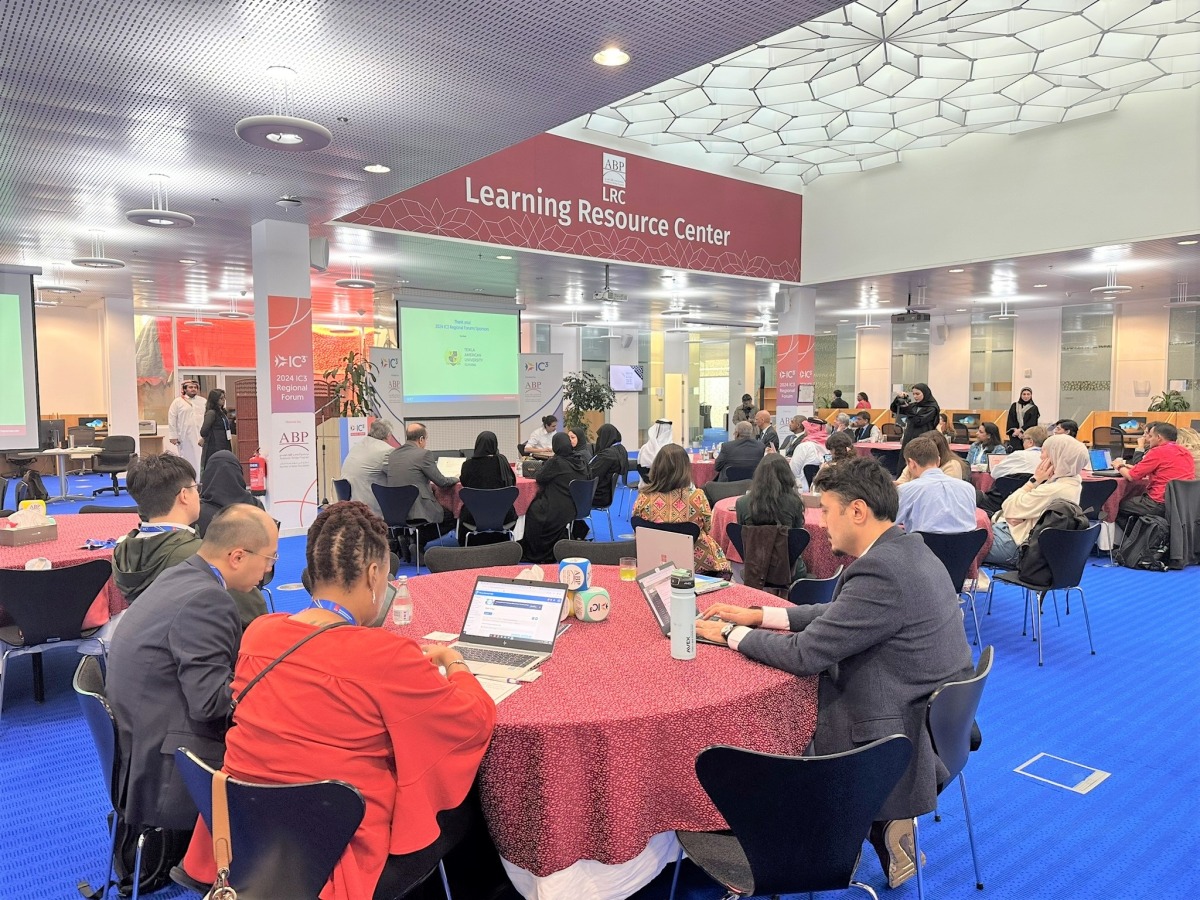
Participants during the forum.
Doha, Qatar: Consultants and experts specialising in pre-university education gathered at Qatar Foundation for an international forum designed to support educators in guiding young people as they make the step from high school into university life and seek out opportunities for knowledge.
The Academic Bridge Programme (ABP), Qatar Foundation’s (QF’s) pre-university program for high school graduates, hosted the International Career and College Counselling (IC3) Regional Forum Doha, the focus of which was to enhance and develop effective learning strategies for those in the field of education whose work focuses on vocational and university counselling.
“We are privileged to host educational professionals and leaders who are dedicated to shaping the future of education in our region,” said Dr. Saheim K Al Temimi, Director of ABP.
“At ABP, we recognise the importance of equipping our students not only with academic prowess but also with the skills, resilience, and adaptability necessary to thrive in a dynamic global landscape.”
Dr. Al Temimi explained that ABP’s commitment to excellence extends beyond the programme’s physical spaces, as it supports local schools and universities and fosters partnerships that contribute to the regional educational ecosystem.
“Through various initiatives and programmes, ABP actively contributes to the development of a skilled and knowledgeable workforce, and our collaborative efforts with local schools and universities aim to bridge gaps, enhance academic preparedness, and ultimately contribute to the success of students in their pursuit of higher education,” he said.
Francisco Marmolejo, President of Higher Education and Education Adviser at Qatar Foundation (QF), said: “The IC3 Forum provided a distinctive platform to gain insights and knowledge about best practices from counsellors aiding students in their transition from high school to university.
“It also served as an excellent chance to illustrate to delegates from over five countries the innovative environment at Qatar Foundation. This integrated environment includes offering students the ability to create a more tailored educational journey by selecting courses across various partner universities in Education City. Additionally, it presents numerous practical experience opportunities through the over 50 entities under Qatar Foundation’s umbrella,” he said.
Dr. Mohammad Al Kuwari, Director of Student Life at Qatar Foundation, said: “This initiative marks a significant step forward in enriching guidance for school students and creates a valuable platform for counsellors to collaborate and exchange vital insights.
“The effectiveness of counsellors is rooted in their robust communication abilities and deep comprehension of the challenges students face. They are an essential resource for students, and their participation in such initiatives substantially improves our students’ future prospects.”
“On the critical path bridging pre-university and higher education, we act as an essential connector. The more we engage in this role, the greater our impact in positively shaping the lives of our students.”
Dr. Al Kuwari explained that initiatives such as IC3 can open up “new horizons” for students, both within Qatar and globally, saying: “Mentors are crucial in this regard, as they assist students in identifying and pursuing future opportunities, providing guidance every step of the way.”
Ganesh Kohli, founder of the IC3 Movement, said: “Our initiative is fundamentally about enhancing the educational landscape.
“It’s crucial for educators and counsellors to continually evolve and learn. Many teachers hail from the 20th Century, and some of the materials they use are even from the 19th Century. This stark difference underscores the need for teachers to adapt and invest in their professional development. ”